Those involved in lighting procurement or engineering projects are frequently asked the same question: Can circular recessed panel lights be installed in gypsum board, PVC panels, or other types of suspended ceilings?
The answer is yes-but because these ceiling materials differ significantly in terms of composition, load-bearing capacity, and the methods required for cutting openings, choosing the wrong installation technique or aperture size can lead to issues ranging from loose fixtures and unsightly gaps to the light falling out or overheating. Below, we examine three common ceiling types and highlight several easily overlooked factors to consider during the selection process.
Understanding the Installation Principle of Circular Recessed Panel Lights
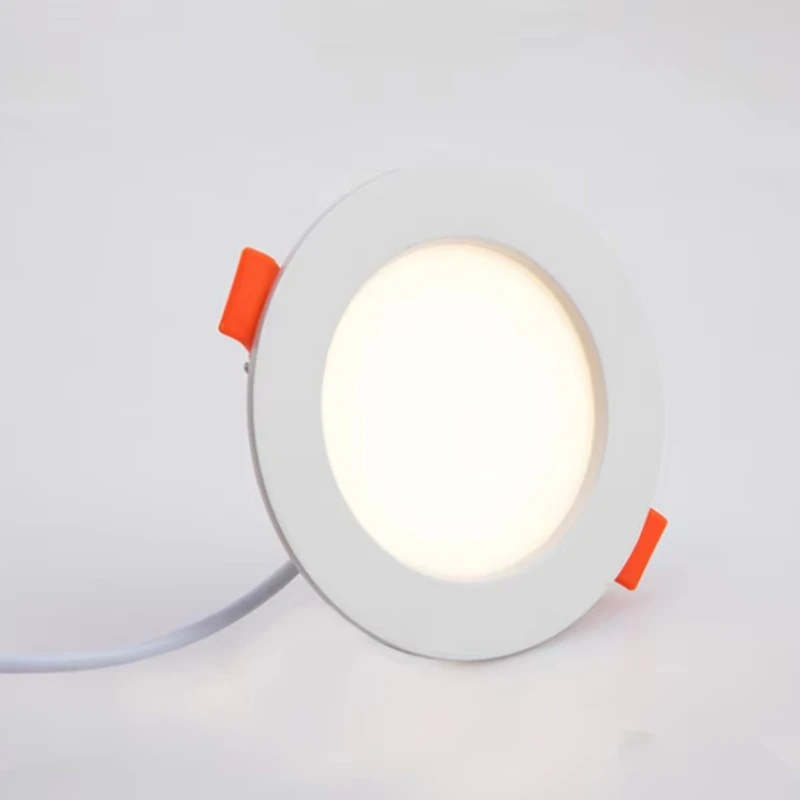
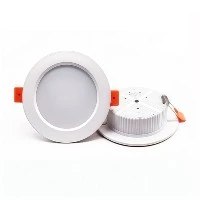
The basic design of a circular recessed panel light involves inserting the fixture body into an opening in the ceiling. It is held in place by two or three spring clips (tension springs) that grip the ceiling material from the inside. The outer rim of the light rests against the surface of the ceiling, concealing the edges of the opening.
Therefore, the feasibility of installation depends on two factors:
Whether the ceiling material is sufficiently thick and sturdy for the spring clips to "grip" it securely.
Whether the opening is cut to the correct dimensions-large enough to accommodate the fixture body, yet smaller than the light's outer rim.
Most panel light spring clips are designed to accommodate material thicknesses ranging from 8mm to 25mm. Always refer to the specific product's technical specifications for exact requirements.
Gypsum Board Ceilings: The Ideal and Most Common Choice
Gypsum board is the most suitable material for circular recessed panel lights. It offers a flat surface and consistent thickness (commonly 9.5mm or 12mm), and a hole saw can be used to create a clean, precise opening in a single pass.
Key Points:
Aperture Size: Follow the manufacturer's specified cutout dimensions. It is common for the required opening to be 5–10mm smaller than the outer diameter of the fixture; for example, a 6-inch light typically requires an opening of approximately 150mm. Do not rely on guesswork-measure carefully before cutting. Spring-clip stress: Gypsum board is relatively brittle; if the cutout is too large, the spring clips can easily crush the edges of the board. Ensure the cutout is precise-do not try to "enlarge" it later.
Heat dissipation: The space above a gypsum board ceiling is often an enclosed cavity, which can trap heat. When selecting LED panel lights, pay close attention to the heat dissipation design, and ensure the light fixture is not pressed directly against insulation material.
Driver placement: The LED driver is typically placed above the ceiling board. Be sure to provide an access panel during installation; otherwise, you might have to dismantle the ceiling if the driver fails.
PVC Ceilings: Installation is possible, but keep these points in mind.
PVC panels are lightweight and moisture-resistant, commonly used in kitchens, bathrooms, and balconies. While round panel lights can be installed, there are significant differences compared to gypsum board.
Key considerations:
Thin material: PVC panels are often only 7–10 mm thick-sometimes even thinner. If the thickness falls below the minimum range for the light's spring clips, the fixture will be loose; in such cases, you must choose a model with a smaller clamping range.
Risk of cracking: PVC can easily crack if too much force is applied during cutting. It is best to use an appropriate hole saw at a slow speed rather than applying excessive force.
Heat-induced deformation: PVC has limited heat resistance. If a high-wattage light with poor heat dissipation is used, the surrounding PVC may turn yellow or soften over time. For these areas, prioritize low-wattage lights with excellent heat dissipation.
Damp environments: In bathrooms and kitchens, opt for fixtures with a higher ingress protection (IP) rating-ideally IP44 or above-ensuring both the housing and the wiring connections are moisture-resistant.
Load-bearing capacity: PVC panels have a low load-bearing capacity. If a light fixture is relatively heavy, do not rely solely on the PVC panel for support.
Suspended Ceilings (Mineral Wool, Aluminum Panels, Light-Gauge Steel Grids): Consider the ceiling type.
"Suspended ceiling" is a broad term covering various systems, each with distinct characteristics that require individual consideration.
Mineral wool ceilings: These panels are relatively soft and thin. Cutting a round hole for a light fixture can easily cause the edges to crumble or flake. In most office spaces, square 600×600 panel lights are the standard choice, as they fit directly into the grid ceiling system. If you must install round lights, you will need to perform more precise cutting and, if necessary, reinforce the edges of the opening.
Aluminum clip-in ceilings: The panels are rigid, requiring high precision when cutting openings. Since the aluminum sheets are relatively thin, you must verify that the spring clips are compatible with the panel thickness. Also, ensure that any burrs around the cut edges are removed to prevent them from damaging the light fixture's wiring.
Light-gauge steel joist ceilings: These feature a framework structure, typically finished with gypsum board or other panel materials; the installation process is essentially the same as that described in point 2. A key consideration here is to position the lights to avoid the joists, as you don't want to hit the metal framework when cutting the opening.
Key Selection Criteria for All Ceiling Types
Regardless of the ceiling type, you should always confirm the following specifications with your supplier:
Cutout size: This is the top priority-it determines whether the fixture will actually fit.Ensure that the clamping range of the spring clips covers the actual thickness of your ceiling panels.
Fixture height: If there is limited space in the plenum (the area above the ceiling), a tall fixture may not fit; "ultra-slim" panel lights are a better, space-saving option.
Ingress Protection (IP) rating: Check the IP rating if the fixture will be installed in a damp environment; standard indoor ratings are usually sufficient for typical spaces.
Power and heat dissipation: Higher wattage requires better heat dissipation-this is especially critical for PVC ceilings and enclosed ceiling cavities.
Color temperature and luminous efficacy: While independent of the ceiling material, these factors directly impact the final lighting effect; it is advisable to request samples for verification before making a bulk purchase.
Summary
Round recessed panel lights can be installed in all three types of ceilings, though the level of difficulty varies:
Gypsum board: The easiest option-simply ensure accurate cutting and provide adequate space for heat dissipation and maintenance access.
PVC panels: Installation is possible, provided you account for panel thickness, manage wattage, ensure moisture resistance, and handle the cutting process with care.
General suspended ceilings: First, identify whether you are dealing with mineral fiber tiles, aluminum clip-in panels, or a light-gauge steel joist system, as the installation approach differs significantly for each. Ultimately, the success of an installation doesn't just depend on the light fixture itself; it hinges on whether the cutout dimensions, panel thickness compatibility, heat dissipation, and protection requirements are all properly aligned. Providing your supplier with details about your ceiling type and panel thickness before purchasing can help you avoid most potential rework.
Need advice on product selection or a price quote?
We offer a wide range of circular recessed panel lights in various sizes and power ratings. We can help you select the perfect model to match your specific ceiling type and panel thickness-and we also support sample testing and custom cutout dimensions.
If you are currently selecting products for a project or would like to inquire about bulk pricing, please send us an inquiry. Just let us know the ceiling material, panel thickness, and intended application, and we will promptly provide a tailored solution along with a price quote.