Fluorescent lamp has many defects and LED tube is safer
Compared with the previous generation of light source incandescent lamps, fluorescent lamps have excellent energy-saving effects. But as people's understanding of light gradually deepens, we find that fluorescent lamps also have irreparable defects. There are the following four defects
1. Mercury pollution Mercury, as a necessary intermediate for phosphors to emit light, is commonly found in fluorescent lamps. Working for a long time will increase the temperature of the fluorescent lamp and escape of mercury vapor. Mercury not only causes huge irreversible pollution to soil and water bodies, but also affects human health. Mercury, as a kind of heavy metal, can cause chronic mercury poisoning. The clinical symptoms are dizziness, forgetfulness, and even slight tremor in severe cases.
2. Infrasonic fluorescent lamp ballast will oscillate and emit infrasound when it is working. Infrasound is a band that humans cannot perceive. Long-term exposure to infrasound radiation can interfere with human nerves, causing symptoms such as dizziness, nausea and even depression.
3. Defects of stroboscopic fluorescent lamps. The stroboscopic is due to the use of alternating current in the fluorescent lamps, which causes short-term, imperceptible flicker when the current is commutated. The frequency of occurrence is twice the frequency of alternating current, that is, 100 Hz. The dimming and dimming of the light makes the ciliary muscles constantly contract and relax to adapt to the environment. Continuous and intense exercise for a long time makes the ciliary muscle fatigue, and the eyes appear sore and painful.
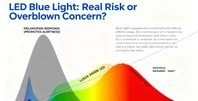
4. The color forming principle of the blue light blue fluorescent lamp is that electrons excite the phosphors of three colors to emit light. Blue light is one of the three colors. Due to this characteristic of fluorescent lamps, the result of uneven spectral distribution. Among them, the intensity of blue light, red light and green light each account for one-third, resulting in excessively high blue light intensity compared to general light sources. Blue light is the wave with the highest energy in visible light. Its energy can penetrate the cornea and lens and directly harm the retina. Long-term exposure to blue light can cause dry eyes, tearing, and even macular disease, which can lead to decreased vision.
The led tube overcomes the shortcomings of fluorescent lamps and is a great leap in the lighting industry. Energy-saving and environmental protection are the biggest advantages of LED tubes. As the cost drops, the advantages become more and more obvious.