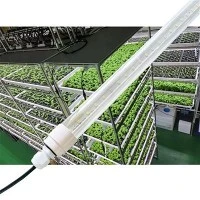
Growing tomatoes but getting no fruit? Maybe it's the light.
Anyone who's ever grown tomatoes probably knows this feeling: the plants look lush and green, leaves as thick as your palm – they look fantastic. But you wait and wait, and nothing happens – either few flowers, or flowers that drop off, or a few tiny fruits that taste sour and bland.
You've fertilized, watered, watched temperature and humidity – so what's wrong?
Chances are, you're giving them the wrong light.
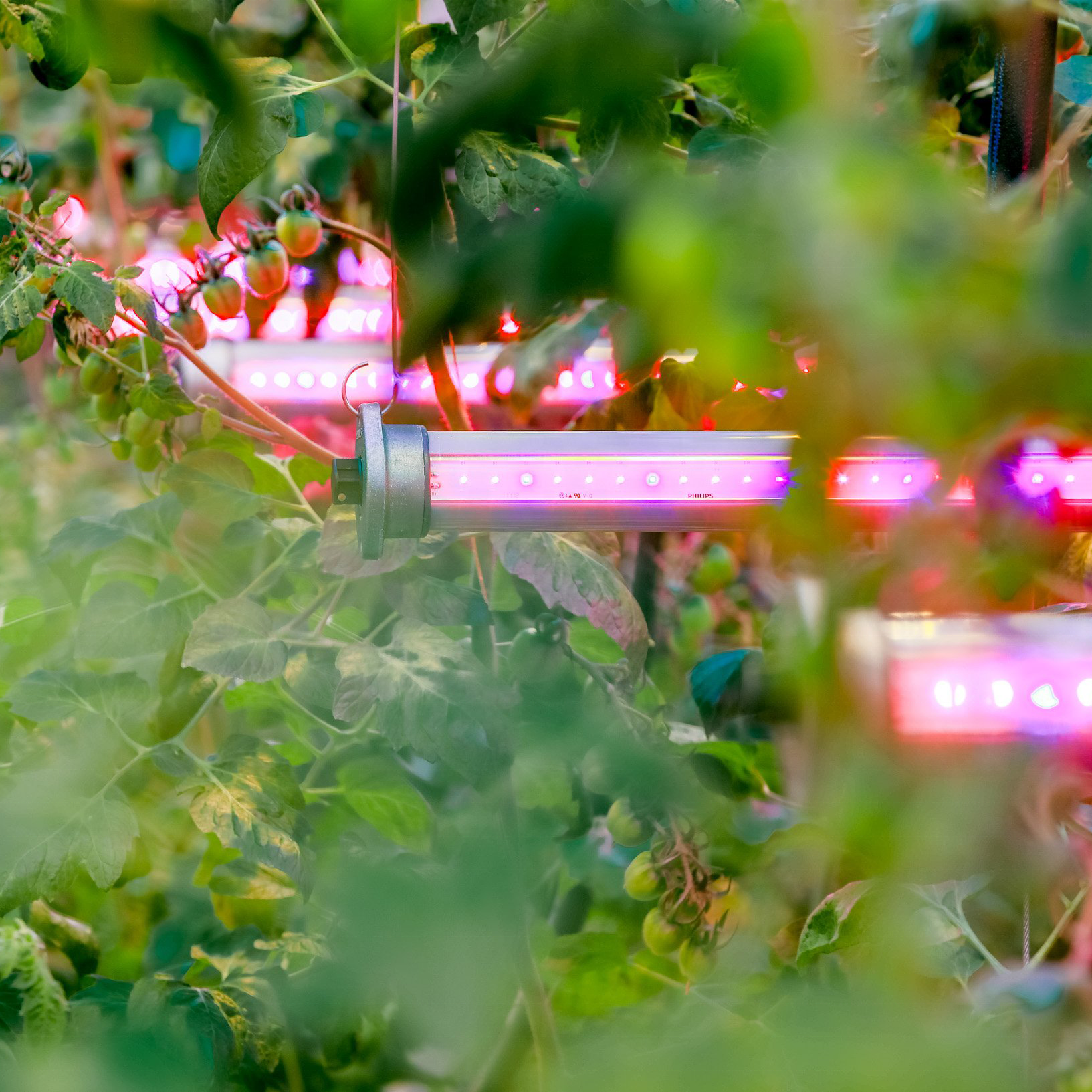
Tomatoes are light‑hungry beasts🍅
Tomatoes aren't like lettuce. With lettuce, you just need leaves. But tomatoes have to flower and set fruit. That means their light needs change completely at different growth stages.
A lot of people growing tomatoes on balconies or in small greenhouses use the same light from start to finish. They use one spectrum for seedlings, and keep using it through flowering. The seedlings look great, but when it's time to bloom, the light doesn't send the right signal, so the plant thinks the environment isn't right for reproduction – it keeps putting energy into leaves and stems, and never switches to fruiting mode.
This is one of the most common reasons tomatoes fail to fruit: the light signal for switching from vegetative to reproductive growth never happens.
Seedling stage: blue light builds a strong foundation
The seedling stage runs from germination to about 2‑3 weeks after transplanting. The goal is simple: short, sturdy plants with strong roots.
At this stage, you need blue light (450nm) most.
Blue light makes a huge difference in seedlings. It stops stems from stretching too much, preventing those tall, spindly, weak seedlings – what growers call "leggy." Leggy plants might look tall, but their stems are thin and internodes are long, so later they can't support the weight of the fruit.
Blue light also boosts chlorophyll production, making leaves thicker and greener. Thicker leaves photosynthesize better, storing more energy for flowering and fruiting later on.
For this stage, aim for a red‑blue ratio of roughly 60‑70% blue, 30‑40% red – blue dominant, with red as support. Run the lights 14‑16 hours a day at moderate intensity, around 200‑300 µmol/m²/s PPFD.
When done right, your tomato seedlings should be short and stocky, with tight internodes, thick leaves, and healthy white roots. That's the foundation you need for a good harvest later.
Flowering and fruiting: switch to red light to trigger blooms
Once your tomato plants start showing flower buds, you need to switch the light strategy immediately – from blue‑dominant to red‑dominant.
Why? Because red light (660nm) is the trigger that tells plants to flower and set fruit.
Red light activates a protein called phytochrome, shifting it from an inactive to an active state. That change sets off a chain reaction: faster flower bud differentiation, more flowers, and better fruit set.
In tomatoes, enough red light gives you these clear results:
- Earlier flowering – the first truss can appear 5‑7 days earlier with good red‑light supplementation.
- More flowers per truss, and fewer deformed blooms.
- Higher fruit set – less blossom drop, better pollination and fertilization.
- Better fruit quality – more sugar accumulation, faster lycopene synthesis, sweeter and redder fruits.
For this phase, adjust the red‑blue ratio to 60‑80% red, 20‑40% blue. Increase intensity to 300‑500 µmol/m²/s PPFD. You can shorten the photoperiod to 12‑14 hours a day – slightly shorter days mimic seasonal changes and actually encourage flowering.
One more detail: 660nm deep red works much better than 630nm standard red for tomatoes. That 30nm difference matters. When buying lights, check the spectrum graph – the red peak should be right around 660nm.
Don't forget photoperiod
Besides spectrum ratio, the number of light hours per day is also critical for tomato fruiting.
Tomatoes are sensitive to day length. If you give them too much light (say, over 17 hours a day), some varieties stay in "vegetative priority" mode – they keep growing leaves and never switch to fruiting. If the day is too short (under 10 hours), there isn't enough photosynthesis to fill the fruits, so they stay small and bland.
Aim for 12‑14 hours of light per day – that's a sweet spot for most varieties.
If you want to get fancy, giving a short red‑light pulse at night (2‑4 hours at very low intensity) can help move photosynthetic products from leaves to fruits, boosting fruit size. That's an advanced trick, but worth trying if you have the setup.
Practical tips if your tomatoes aren't fruiting
If you're facing this problem right now, here's a step‑by‑step checklist:
Step 1 – Check your light. Look at the spectrum graph. Is there a clear peak at 660nm red? If your light only has blue and generic white, you're short on red – add more.
Step 2 – Adjust the ratio. If your light lets you dim red and blue separately, crank red up to 60% or higher. If not, add a separate red‑only tube during flowering.
Step 3 – Adjust height and duration. During flowering, keep the light 30‑50 cm above the plant canopy, and run it 12‑14 hours a day. Too close and you'll burn the flowers; too far and they won't get enough.
Step 4 – Be patient. After adjusting the light, you should see changes in 7‑10 days – new flowers will look stronger and set fruit more easily.
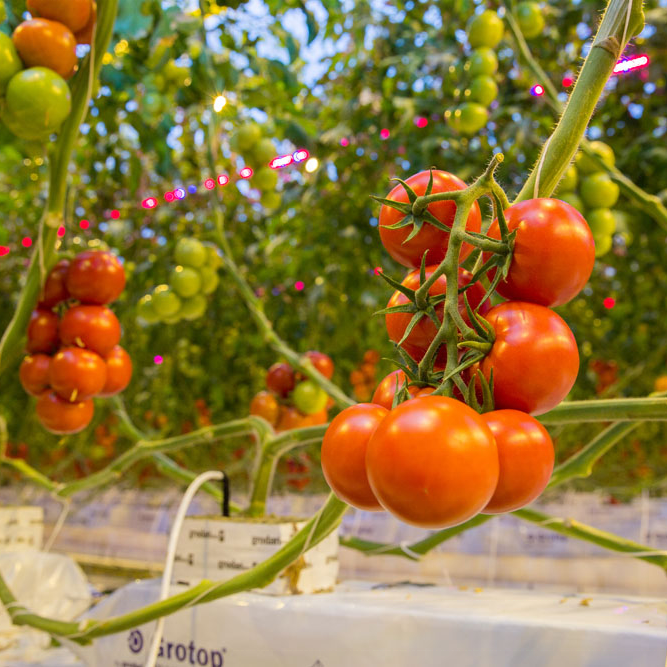
For tomatoes, light matters more than fertilizer
A lot of growers focus on fertilizer, watering, and pruning – but forget the basics: light.
If the light isn't right, plants can't use the nutrients you give them. If the light isn't right, the best‑looking seedlings will never give you fruit.
Remember this rule for tomatoes: blue light for strong seedlings, red light for heavy fruits. Make the switch when it's time, and your tomato plants will reward you with baskets of red, sweet fruits.
If you're not sure which spectrum fits your tomato variety, or if you want a custom light recipe for your specific setup, feel free to reach out – we've worked with hundreds of tomato growers and can help you avoid the common mistakes. No pressure, just friendly advice.