What kind of light does your growing scenario need?
A lot of people shopping for grow lights start by asking, "How many watts is this?" or "Is it bright enough?" But honestly, picking a grow light is a lot like buying clothes – it depends on the occasion. Whether you're growing tomatoes in a big greenhouse or just keeping a few succulents on your balcony, the requirements are totally different.
So let's talk about what kind of light different growing scenarios actually need.
First, two basic concepts
Before we dive into scenarios, let's get two terms straight. Once you understand these, you won't get fooled when shopping around.
One is spectrum. Plants mainly rely on two types of light for photosynthesis: blue light (around 450nm) and red light (around 660nm). Blue light helps with leaf growth and strong roots; red light promotes flowering and fruiting. A good grow light mixes these in a scientifically balanced ratio.
The other is PPFD. Sounds technical, but it simply means "how much usable light the plant actually receives." Wattage tells you how much electricity the light consumes – PPFD tells you what the plant gets. Keep that in mind, and you won't fall for the "higher wattage is better" trap.
Okay, now let's get into the real stuff.
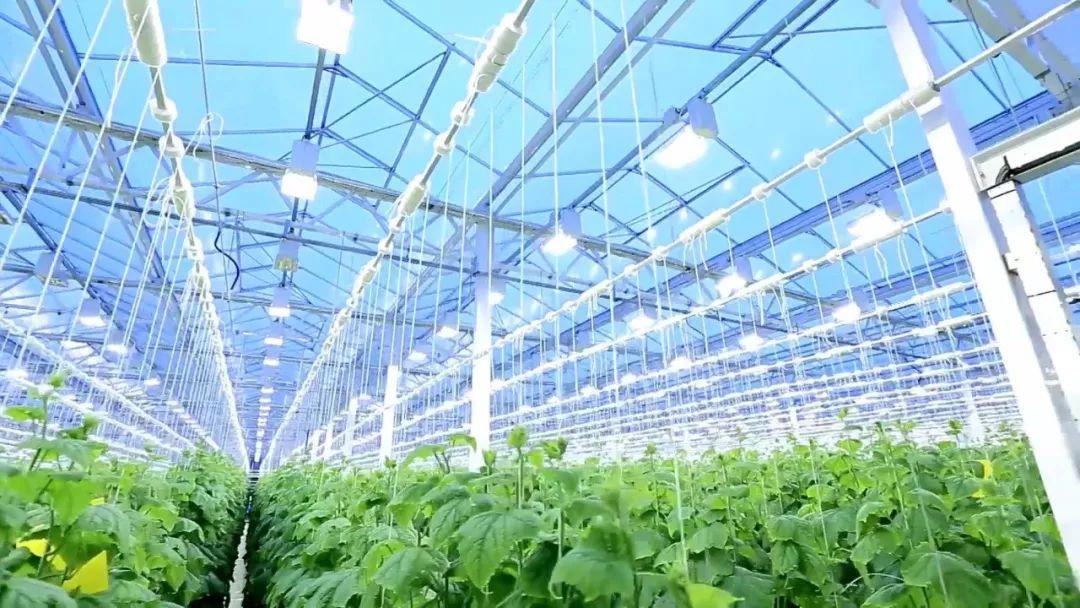
Scenario 1: Greenhouses – you want energy savings + high yields
Greenhouses are currently the biggest market for LED plant lighting, taking up over 60% of the share. Why? Because greenhouses already have natural sunlight – supplemental lights are there to fill the gaps on cloudy days, early mornings, evenings, or in winter.
When choosing lights for a greenhouse, two things matter most: energy efficiency and results.
Compared to old-school high-pressure sodium (HPS) lights, LEDs have clear advantages. At the same light intensity, LEDs consume 30% to 50% less power than HPS. If you run them 12 hours a day, that adds up to serious savings per square meter per year. Plus, LEDs last up to 50,000 hours, while HPS only lasts about 10,000–24,000 hours – over the long run, LEDs win on total cost.
As for spectrum, greenhouse supplemental lights don't need to produce the full spectrum all by themselves – sunlight already provides most of it. The grow light mainly adds extra red and blue light. For fruiting crops like tomatoes and strawberries, you want more red (660nm) to boost flowering and fruit set. For leafy greens like lettuce and spinach, a higher blue (450nm) ratio helps keep them compact instead of growing too tall and leggy.
The trend now is towards higher wattage – 600W to 1500W fixtures are becoming mainstream. Also, dimmable and tunable-spectrum lights are gaining popularity – one spectrum for seedlings, another for flowering, all in one fixture.
Bottom line for greenhouses: focus on efficacy (PPE) and energy consumption – LEDs win in the long run.
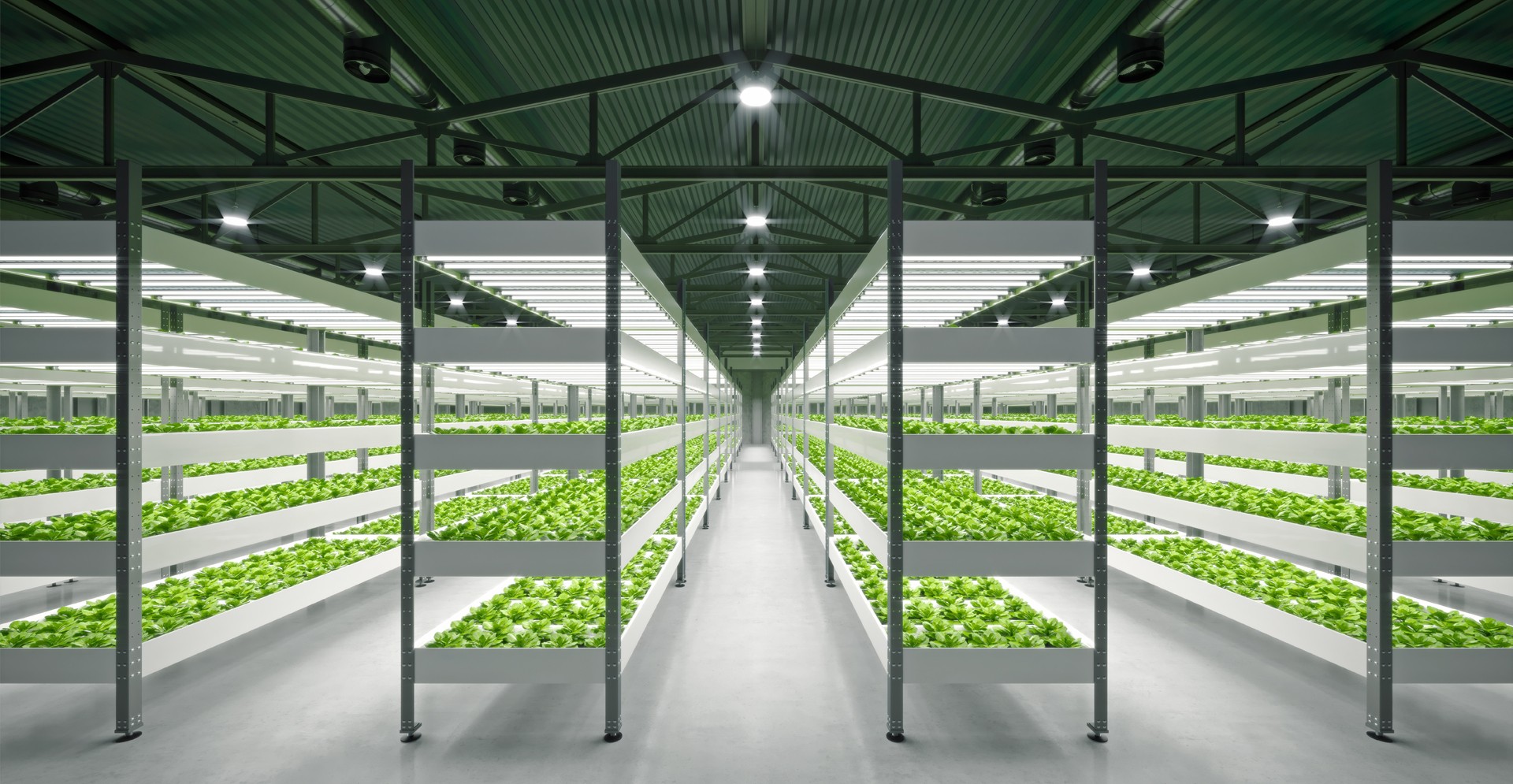
Scenario 2: Vertical farms / plant factories – you need precision and uniformity
Vertical farms are a completely different story. Greenhouses at least get natural light – vertical farms rely entirely on artificial light. The light is the plant's "sun," so there's no room for compromise.
Three keywords for vertical farm lighting: high efficacy, high uniformity, and low heat.
High efficacy is obvious – you're paying for electricity, so the higher the efficacy, the lower the running cost. Top commercial operators now look for 2.6 to 3.2 µmol/J or even higher. Also, because vertical racks are stacked tightly, lights have to be slim and dissipate heat well – otherwise heat buildup can stress the plants.
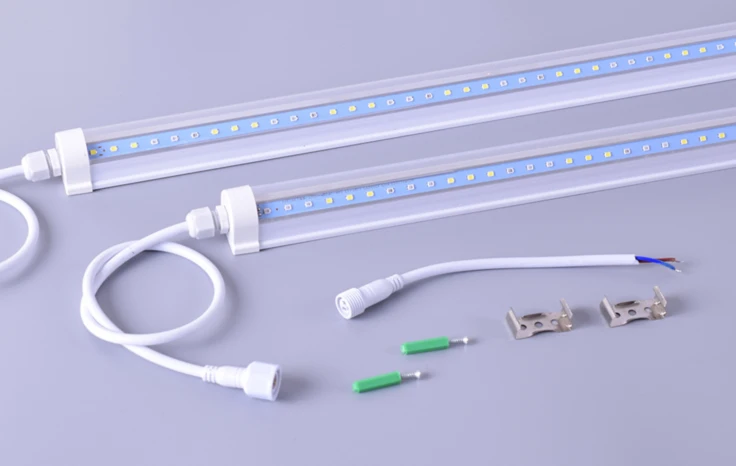
Uniformity matters a lot too. Every plant on every shelf needs even coverage – no bright spots and dark corners. That's why bar-style lights are the go‑to choice for vertical farms – they can be mounted side by side to cover the entire growing tray.
Another thing: vertical farms are growing more diverse crops nowadays – not just lettuce, but strawberries, onions, even medicinal plants. Different crops need different light recipes, so being able to tune the spectrum is a big plus.
Bottom line for vertical farms: efficacy and uniformity are non‑negotiable; tunable spectrum is a great bonus.
Scenario 3: Home gardening / balcony growing – you want something that works without breaking the bank
Now let's talk about us regular folks. Growing a few herbs on the balcony or keeping some potted flowers – it's a whole different scale compared to the previous scenarios. Under 50 watts is usually enough.
For home use, the best bet is a full‑spectrum LED. Why? Because it looks like white light – not harsh on the eyes, and it doesn't look out of place in your living room or balcony. Red‑blue "blurple" lights may be more efficient for photosynthesis, but they look like a nightclub – not ideal for home settings.
How much power do you need? Here's a rough guide:
- A few low‑light houseplants like pothos or spider plants: 10–20W is fine
- Growing herbs or leafy greens in a small hydroponic setup: 20–50W
- If you want to grow fruiting plants like tomatoes or peppers, or have a larger setup: consider 50W or more, or use multiple tubes
One more thing that's often overlooked: mounting height. Keep the light too close and you'll burn the leaves; too far and it won't be effective. A good rule of thumb is 20–50 cm above the canopy. Also, running the light for 10–14 hours a day is generally enough.
Bottom line for home use: full spectrum, moderate power, and something that looks good – that's all you need.
A few final honest thoughts
When it comes to grow lights, there's no "best" light – only the most suitable light for your situation.
If you're a greenhouse grower, don't buy a tiny household lamp – it won't cut it. If you're a balcony hobbyist, don't fall for "1000W" marketing hype – you don't need that much power, and it'll just waste electricity.
First, figure out where you're growing, what you're growing, and your budget. Then start comparing lights. Ask yourself: Is the spectrum right? Is the power enough? Is the protection rating adequate? Once you have those answers, choosing the right light becomes much easier.
Get the light right, and your plants will thank you. I hope every plant you grow gets the light it truly deserves.
If you're still not sure which light fits your setup, or if you'd like a custom solution for your specific growing scenario, feel free to reach out – no strings attached, and no pressure to buy. Sometimes a second opinion is all you need. 😊