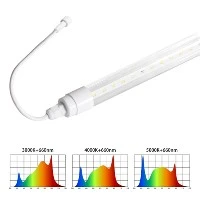
Many farmers use grow led lights indoors to cultivate plants, green veggies, and blossoms in an effort to lengthen the growth season. To provide the required illumination for interior plant development in the past, producers used conventional lamps.
An innovative technical product, light-emitting diode (LED) grow lights are similar to the small conventional light bulbs now used for general illumination in many houses.
Typically used to provide enough light for interior and outdoor plant and floral growth. It is a substitute for metal halide and high-intensity discharge (HID) illumination, which usually consume up to 75% more electricity and produce more heat than LED plant growth lights. LED plant development lamps are typically energy-efficient and simple to install, whether they are used for business or non-commercial purposes. To optimise power bill reductions, they can also be coupled with solar and wind energy technologies.
Brightness is typically expressed in terms of light or luminosity by LED producers. When the LED lights are on, the luminance of the space is what is being measured. However, since it is not dependent on PAR, a portion of the spectrum that is used by plants, this does not represent the development of plants. The capacity of the light to produce vegetation is typically best measured using micro Einstein analysis. Luminosity and lux readings frequently misrepresent the amount of light received by plants because human eyes cannot see more than 60% of the light produced by LED plant lights.

What distinguishes grow LED lighting from conventional incandescent lighting?
LED grow light are energy-saving and robust. According to estimates, it uses between 60% and 75% less electricity than typical grow lamps. Furthermore, the heat produced by conventional grow lamps has the potential to burn or dry out plants. LED lighting generates virtually no heat, which lessens the need for water and prevents heat-related plant harm. Additionally, LED lights don't need costly ballasts or fans.
Another benefit of LED lights is that they are readily changed to provide the sort of light needed by specific plants.
Although grow lights have a lesser intensity than incandescent bulbs, the kind of light they generate is easier for plants to consume. All the hues of the rainbow are used by plants, but research has shown that blue and red are the colours that promote plant development the most. While some plants, like African violets, need more red light to blossom, others, like verdant foliage veggies, do better with a lot of blue light.
While LED lights are more expensive up front than incandescent plant growth lights, they typically end up saving more money over the course of their full lifespan. The benefits are greatest for producers who have significant interior growing initiatives or who intend to use indoor sowing for an extended length of time.
How many watts are there in a led grow light?
The most popular wattages for LED grow lamps are 100W, 200W, 400W, 600W, 800W, 1000W, and up to 1500W. In order to optimise plant development, the novel "UFO" style grow light offers three regions of colour, including red, blue, and white light. Other designs include led screens with numerous lights. Fans and ballasts are not necessary for LED lighting. Our LED grow lamp can be used immediately after being plugged in.
LED grow light UFO 1. The complete spectrum white and red colours used to create the UFO-shaped grow lights are available in both standard operating voltages of AC100-277V and high voltages of 347-480 VAC.
2. The available wattage ranges from 100 Watt, 150 Watt, 200 Watt, 240 Watt, and 300 Watt.
2. The lamp has a plastic glass that is enclosed and a die-cast metal frame for our UFO led grow light.
3. The ETL, FCC, CE, ROHS, and ISO 9001 complete certifications for our UFO Grow light attest to its consistently high quality.