How Much Power Do Stadium Floodlights Use?
In order to transform night into day for sporting events, concerts, and other big gatherings, stadium flood lights are technical wonders. Their capacity to provide unmatched brightness across large areas is essential for broadcast quality, player performance, and fan visibility. One important topic that frequently comes up is how many watts these strong lights use. Because different locations and events have distinct needs, the answer varies greatly, ranging from a few hundred watts for tiny local fields to tens of thousands for big stadiums. Investigating the function, technology, and variables that affect stadium flood lights' power requirements is necessary to comprehend its wattage.
The Wattage Range: From Neighborhood Fields to Super Stadiums
Stadium floodlights vary widely in wattage, depending on the size of the stadium, the sport, and how it is used. At the lower end, flood lights of 400–1,000 watts per fixture are commonly used in high school stadiums and community sports fields. These spaces don't need to be as intense as professional arenas because they hold amateur sports, kids leagues, and modest parties. For instance, a baseball diamond or soccer field where the main objective is to guarantee that players can see the ball and avoid collisions may be adequately illuminated with a 400-watt LED flood light.
Moving up, flood lights with 1,000–2,000 watts are frequently chosen for mid-sized professional events and collegiate stadiums. Competitive games with bigger crowds and sporadic TV coverage are held at these venues. Whether LED or metal halide, a 1,500-watt lamp produces more consistent, brighter light, minimizing shadows and guaranteeing that fans in the stands can see the action well. These greater wattages assist keep visibility even in the darkest hours for sports like rugby and football, which need quick movements over wide fields.
At the highest level, flood lights with wattages ranging from 2,000 to 5,000, and occasionally even more, per fixture are used in big professional stadiums and international sites that host events like the Olympics, World Cup, or NFL games. To achieve broadcast requirements, which call for clear, high-definition images free of motion blur, these stadiums must have extraordinary brightness. An area the size of multiple football fields can be illuminated by a single 5,000-watt LED flood light, guaranteeing that both live spectators and viewers at home can see every inch of the field.
It's crucial to remember that the number of lights utilized affects overall power usage in addition to the wattage of each individual fixture. A major professional arena may have 100+ lamps, reaching 200,000–500,000 watts (200–500 kilowatts) or more when all lights are on. In contrast, a modest stadium may have 20–30 fixtures, totaling 8,000–30,000 watts (8–30 kilowatts).
Technology Is Important: Comparing LED and Conventional Lighting
Wattage needs are greatly influenced by the type of lighting technology used. Metal halide and high-pressure sodium (HPS) lights, which are less energy-efficient than contemporary alternatives, were used in stadiums for many years. An LED fixture with the same lumen output may require 500–800 watts, but a metal halide flood light with 100,000 lumens (a measure of light output) would use 1,500 watts. Stadium lighting has been transformed by the switch to LEDs, which enables venues to produce brighter illumination with lower wattages and lower energy costs.
Once the industry standard, metal halide lamps produce bright light by running an electric current through a mixture of gasses. However, they have a number of disadvantages, including a shorter lifespan (usually 10,000–20,000 hours), low energy efficiency, and lengthy warm-up times (up to 15 minutes). About 160,000 lumens may be produced by a 2,000-watt metal halide light fixture, which is typical in older stadiums, however a large portion of this light is squandered as heat.
LED flood lights, on the other hand, are significantly more efficient since they use more light instead of heat. The luminous output of a 2,000-watt metal halide lamp may be readily matched or surpassed by a 1,000-watt LED light. Additionally, LEDs have a lifespan of 50,000–100,000 hours, dimming choices, and instant-on capabilities, which lowers maintenance expenses. For instance, Wembley Stadium in London upgraded its lighting in 2014 by replacing its 1,000-watt metal halide lights with 600-watt LEDs, which improved light quality and reduced energy use by 40%.
As a result of this shift, contemporary stadiums frequently utilize less electricity while providing better lighting than their forebears. Today, a professional football stadium might utilize 1,500-watt LEDs to provide superior brightness while using 40% less electricity than 2,500-watt metal halides. Wattages will probably continue to drop as LED technology develops, and even more energy-efficient lights may soon be available.
Requirements Particular to Sports: The Reasons Behind Wattage Variability
The wattage of flood lights is directly impacted by the varying illumination requirements of various sports. Brighter, more consistent light is necessary for sports using tiny objects (such as hockey pucks or tennis balls) or played at fast speeds so that players can precisely follow the action. In general, lux, a measurement of illuminance, is used to assess lighting standards; greater lux levels necessitate larger wattages.
Football (Rugby or Soccer): Large fields, up to 100 meters long, are used for these sports, and players and balls move quickly. The playing field needs 1,000–2,000 lux for professional matches. Stadiums do this by using flood lights, which are placed on tall poles surrounding the field to reduce shadows and have wattages ranging from 1,000 to 3,000 per fixture. For instance, 2,000-watt LEDs placed in clusters may be used in a Premier League stadium to provide uniform lighting around the field.
Baseball: The infield (home plate, pitcher's mound) and outfield require special lighting for baseball fields. Because of the rapid pitching and hitting, the infield needs higher lux levels (1,500–3,000 lux), but the outfield needs 500–1,000 lux. In order to prevent glare for hitters, flood lights, which are typically 1,500–2,500 watts, are installed on poles behind home plate and along the foul lines.
Tennis: To follow the tiny, fast ball, tennis courts-indoor or outdoor-need accurate illumination. Wimbledon and other professional competitions demand 1,000–2,000 lux with stringent glare restrictions. Usually ranging from 1,000 to 1,500 watts, flood lights are angled to light the tennis court without blinding players or spectators.
Basketball: While outdoor courts, such as those found in parks or community centers, rely on flood lights, indoor basketball arenas employ a combination of flood lights and ceiling lights. 500–1,000 lux are needed for professional outdoor basketball, and 400–1,000 watt lamps affixed to poles around the floor are used.
Motorsports: In order to illuminate large, wide areas and fast-moving cars, racetracks like those used by Formula 1 or NASCAR require exceptionally strong lighting. Here, lux levels can surpass 3,000, necessitating 3,000–5,000 watt floodlights. To ensure that drivers and cameras can catch every detail, these fixtures are frequently positioned in staggered intervals throughout the track to prevent dark patches.
Wattage requirements are further increased by broadcast requirements. Higher lux levels (2,000–5,000 lux) are required for television broadcasts, particularly those with 4K or 8K resolution, in order to prevent grainy imagery. This is why, in order to comply with stringent broadcast requirements, important events like the Super Bowl or Champions League finals employ some of the greatest power flood lights, sometimes 2,500–5,000 watts per fixture.
Aspects Other Than Wattage: Distribution and Positioning of Light
The efficiency of a flood light is not just determined by its wattage. Illumination quality is equally affected by the distribution of light, including its coverage, angle, and direction. A well-designed lower-wattage lighting with a wide beam can effectively cover more space than a high-wattage lamp with a tight beam, which may waste light.
Beam Angle: Flood lights that have a narrow beam angle (15–30 degrees) focus light in a limited area, which makes them perfect for focusing on particular areas, such as the baseball pitcher's mound. Light is dispersed across greater regions at wider angles (60–120 degrees), making them ideal for football fields or outfields. In order to balance intensity and coverage and lessen the need for unnecessarily high wattages, stadiums frequently mix beam angles.
Pole Positioning and Height: Flood lights may spread light over longer distances with taller poles (40–60 meters), which means fewer fixtures are required. A pole-mounted 2,000-watt LED at 50 meters, for instance, may light up a bigger area of a football field than the identical fixture at 30 meters, reducing the amount of power needed overall. Additionally, careful positioning minimizes glare by directing light onto the field rather than into the eyes of onlookers or broadcast cameras.
Lighting Control Systems: Smart systems are used in modern stadiums to modify light output according to demand. Lights may run at 50% wattage during practice sessions to conserve energy, then flip to full power during games. Wattage is a variable measure rather than a fixed one since dimming capabilities allow even high-wattage lights to not always use their maximum power.
A stadium with efficient beam angles and pole positioning may reach the same lux levels with lower-wattage bulbs than one with subpar design, which explains why two stadiums of comparable size may utilize different wattages.
Regulatory and Environmental Aspects
Stadium flood lights must adhere to municipal and environmental guidelines, which might affect wattage selections, in addition to brightness requirements. Stadiums are being forced to strike a compromise between sustainability and performance as worries about light pollution, energy use, and carbon emissions mount.
Light pollution: When too much light spills into nearby communities, it can upset locals and damage wildlife. Many areas have laws that restrict glare and upward light output, or "skyglow." Stadiums utilize shielded flood lights to comply, which guide light downward so that the field is illuminated with a greater percentage of the fixture's energy rather than wasted upward. In order to maintain the necessary lux levels, this emphasis on efficiency may demand somewhat higher wattages in shielded lights; nevertheless, the environmental effect is decreased in exchange.
Energy Efficiency Standards: Energy-efficient lighting is becoming more and more required by governments and athletic associations. Due to its decreased energy use, the International Sports Federation (ISF) advises using LED lighting in new stadiums. High-wattage metal halide lights are being phased out in the European Union due to the EcoDesign Directive, which establishes minimum efficiency requirements for lighting. Stadiums are encouraged by these laws to use lower-wattage LEDs, even if doing so requires adding more lights to fulfill brightness requirements.
Sustainability Objectives: By deploying solar panels, wind turbines, or renewable energy credits to offset floodlight energy usage, several stadiums are attempting to lessen their carbon impact. These objectives are supported by lower-wattage LEDs: a stadium may reduce its lighting-related emissions by 50% by switching to 1,000-watt LEDs from 2,000-watt metal halides. For instance, the NFL's Falcons' home stadium, Mercedes-Benz Stadium in Atlanta, is one of the most environmentally friendly sports facilities in the world because to its 1,500-watt LEDs and solar panels.
Stadiums are now selecting lights that provide the necessary brightness while reducing their environmental effect, making wattage selection more about responsibility than just performance.
In summary: Wattage as an Instrument, Not a Law
What is the wattage of stadium floodlights? From 400 watts for neighborhood fields to 5,000 watts for major arenas, the answer is as diverse as the stadiums themselves. LED technology is propelling a trend toward lower wattages without compromising brightness. Stadium size, sport, broadcast requirements, and efficiency are all reflected in wattage.
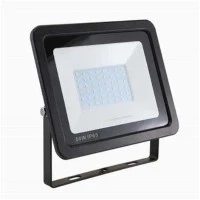
In the end, the "right" wattage is one that strikes a balance between energy consumption, lighting quality, and regulatory compliance. As LED technology advances, we may anticipate even more energy-efficient lights that generate brighter, more consistent light with less watts. The flood lights above are an example of technical innovation, demonstrating that electricity isn't only about watts but also how efficiently they're used, whether you're watching the Olympics or a high school football game.
The ability of stadium flood lights to make every pass, goal, and home run visible-converting a night into a stage where athletes shine-is ultimately what counts, not just their power.
more detail about it: https://www.benweilight.com/industrial-lighting/led-stadium-light/stadium-lights-led-in-led-flood-lights.html