Is It True That Fish Are Attracted to Underwater Lights
A familiar glow can frequently be seen penetrating the surface of the water when fishermen throw their hooks into the murky waters at nightfall. This glow is an underwater light that is submerged to attract fish that are difficult to catch. A question that has been argued by fisherman, aquarists, and marine enthusiasts for decades is whether or not these lights actually attract fish, or whether or not their popularity is only a fiction. The solution, which is based on both biological and optical principles as well as observations made in the actual world, exposes a complex interaction between aquatic life and artificial light. It is true that underwater lights are excellent in attracting fish; nevertheless, the degree to which they are successful is contingent upon a complex interaction between biological adaptations, light qualities, and environmental variables.
How Fish See the World Scientifically
It is necessary to first investigate the way in which fish sense light in order to comprehend why underwater lights could attract fish. Fish often have a wider variety of photoreceptors than people do, which enables them to detect wavelengths that are not visible to our eyes. This is in contrast to humans, who rely mostly on three different types of cone cells for color vision. A great number of species, particularly those that live in shallow waters, have developed the ability to detect ultraviolet (UV) light. On the other hand, deep-sea fish may give more importance to blue and green wavelengths, which are colors that go the farthest through the water.
The eyes of fish are likewise suited to operate in low-light environments. Because rod cells are able to function in low-light conditions, the majority of species have a high density of rod cells, which makes them sensitive to even very low-level light sources. In murky waters or throughout the night, light can signify the availability of food supplies, safe homes, or even the presence of predators. This sensitivity is essential for survival. For instance, minnows and shad are known to congregate around lights because their eyes are tuned to detect the bioluminescence of plankton, which is their major source of nutrition and frequently glows when it is disturbed.
But not every fish reacts in the same manner to the same thing. There is a possibility that predatory species like as bass or walleye are drawn to lights not because of the light itself, but rather because of the younger fish that congregate there. However, certain species that live on the bottom, such as catfish, are more reliant on their sense of smell and touch than their eyesight, which makes it less likely that they would be drawn by light alone. The presence of this variety emphasizes the significance of species-specific behavior in comprehending the Ð引力 (appeal) of light.

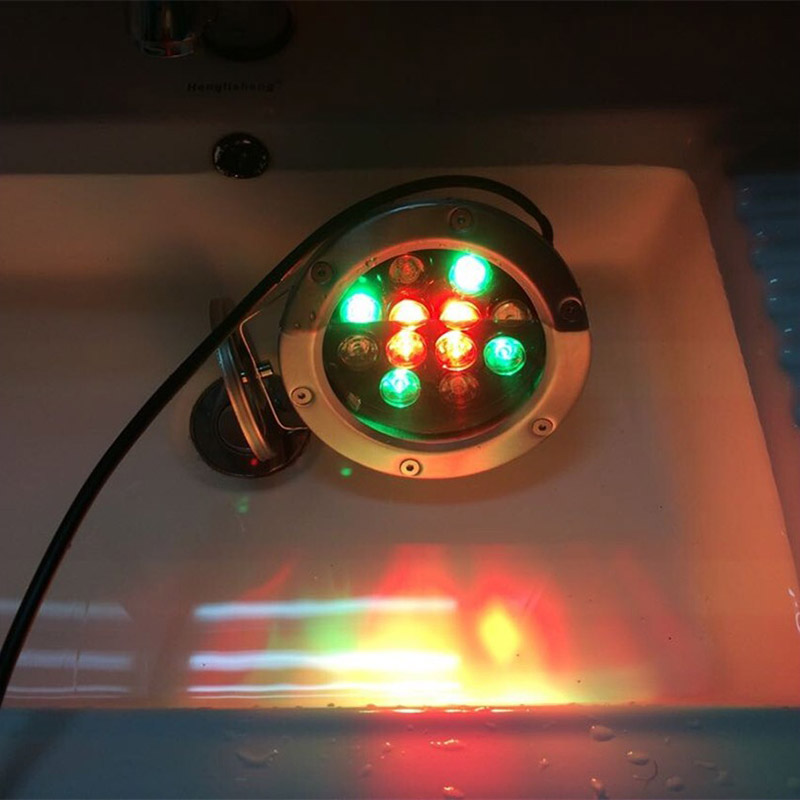

Why Fish Are Attracted to Lights: The Mechanisms at Work
Underwater lights are able to attract fish through a number of different processes that are associated with one another. The most important of these mechanisms is their capacity to imitate natural light signals. In the natural world, the act of sunlight passing through water causes a variety of organisms to engage in feeding behavior. Fish utilize the shifting light to hunt or escape predators, therefore the hours of dawn and dusk, when the intensity of the light changes, are the times when they are most likely to be eating. Fish can be tricked into entering a feeding mode even when it is dark because artificial lights can imitate these changes and have the same effect.
The so-called "food chain effect" is still another important aspect. Plankton, which are microscopic creatures that are at the base of the aquatic food chain, are drawn to exposure to light. A significant number of plankton, particularly phytoplankton and zooplankton, are phototactic, which means that they travel in the direction of light. Following the arrival of smaller fish to feed on the plankton, larger predators will next arrive to consume the plankton. Because of this cascade, a feeding hotspot is produced, and the light serves as a stimulant for this process. Submerging a light in water allows anglers to create a small habitat that attracts fish from far and wide. Anglers frequently take advantage of this phenomenon.
Fish behavior can also be influenced by light through the circadian cycles they use. A great number of species have internal clocks that are controlled by light, and these clocks determine when they should move, feed, or rest. These rhythms can be thrown off by a sudden fast flash of light in the darkness, which might elicit feelings of interest or urgency. For example, salmon, which navigate by utilizing the sun and the magnetic field of the earth, may study the possibility of employing artificial lights as a navigational aid, particularly when they are in seas that they are not acquainted with.
Additionally, there are fish who believe that light is a safe environment. When predators are exposed to light in open water, smaller fish are better able to identify potential dangers at an earlier stage. Around lights, schools of baitfish frequently congregate, using the glow as a defense mechanism against predators that are active at night. Because of the dependability of this behavior, throughout the course of several decades, professional fishermen have been using underwater lights to concentrate fish before catching them.
The Influence of Certain Factors on Effectiveness
While underwater lights have the potential to be powerful instruments, their effectiveness is contingent on a number of factors, the first of which is the hue of the light. The wavelengths of red and orange are easily absorbed by water, rendering them ineffectual beyond a few feet due to their limited range. Blue and green lights, on the other hand, are able to penetrate deeper; by way of illustration, green light may be seen at depths of fifty feet or more in water that is clear. It is for this reason that the majority of fishing lights are green or blue: they extend further, luring plankton and fish across a wider region with their presence.
Intensity of the light is also important. An excessively bright light can either make fish uncomfortable or warn them to potential danger, whereas a low light may attract smaller fish without causing bigger fish to become frightened. Studies have found that the optimal level of intensity for freshwater species like bass is anywhere between fifty and one hundred lumens. This level of intensity strikes a balance between visibility and subtlety. In saltwater, where the water is more transparent, it may be necessary to use greater intensities in order to penetrate further.
There is also a role played by the surroundings. Light scatters more when it is in murky or turbid water, which reduces the effective range of the light. In this context, lights with shorter wavelengths (like green) or those with a higher intensity are more effective than those with longer wavelengths because they are able to penetrate particles more effectively. It is possible for even low-intensity lights to go a great distance in water that is crystal clear; nevertheless, this may cause fish to become more afraid of them since predators will be able to notice them more quickly.
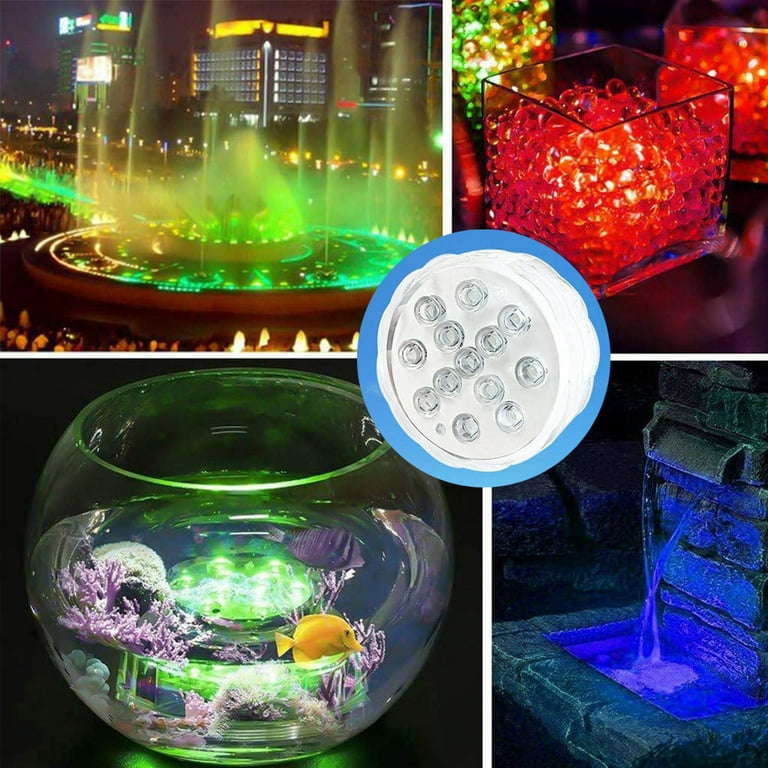
Another consideration is the time of day. During the night or during the dawn or dusk hours, when there is less natural light, underwater lights are at their most effective. During the daylight hours, artificial lights are frequently overpowered by sunlight, which makes them less obvious to fish. There are few exceptions to this rule: lights that are strategically positioned can still attract fish throughout the day, even in locations that are dark or deep, where sunlight is scarce.
Applications in the Real World: anything from fishing to aquaculture
Due to the fact that they are able to attract fish, underwater lights have become quite useful in both recreational purposes and commercial applications. Submersible LED lights are a popular equipment among fisherman, particularly for activities that take place during the night. There is a concentrated area of activity that is created by these lights when they are attached to fishing lines, boats, or docks. Lights and bait are frequently used together by experienced anglers in order to take advantage of the feeding frenzy that they cause. As an illustration, in freshwater lakes, illuminating a green light near the surface can attract shad, which in turn attract largemouth bass. This tactic has been shown to be effective in a number of studies that have been conducted on fishing.
In aquaculture, the usage of underwater lighting is employed to accelerate the pace of growth. Tanks or net pens are used by farmers to produce fish such as tilapia or salmon. They use scheduled light cycles to imitate longer days in order to do this. In this way, more frequent feeding is encouraged, which speeds up the development process. Additionally, lights assist in directing fish to feeding stations, which helps to reduce food waste and ensures that food is distributed evenly. Blue lights are frequently utilized in shrimp farms in order to attract plankton, which serves as a natural additional source of nutrition for the shrimp.
Underwater lights are another tool that aquarium enthusiasts use to improve the appearance of their tanks as well as the behavior of the fish. Light-emitting diode (LED) lights that have the ability to change colors can simulate reef habitats, which can stimulate the growth of coral and make fish such as clownfish and tangs more active. It has been observed by some hobbyists that some species, such as tetras, become more lively and sociable when exposed to particular light spectrums. This observation lends credence to the notion that light effects not just movement but also general well-being.
Having said that, there are some qualifications. An excessive amount of underwater lighting might be detrimental to natural habitats. Artificial light has the potential to disrupt the natural cycles of fish spawning and the relationship between predators and prey in delicate ecosystems such as coral reefs. For instance, excessive exposure to light for an extended period of time may lead certain species to postpone migration or abandon breeding locations. Responsible use, which includes limiting the length of light, selecting alternatives with low intensity, and avoiding environmentally delicate zones, is vital in order to reduce the amount of damage caused.
Lights are a tool, not a guarantee, as the conclusion states.
So, do lights that are submerged in water actually attract fish? The data unequivocally demonstrates that they are effective; nonetheless, their efficacy is contingent upon the species, light characteristics, and ambient circumstances. Through the utilization of fish's visual adaptations, the imitation of natural cues, and the activation of food chain reactions, underwater lights are possible to generate dependable hotspots for aquatic vegetation and animals. It is essential to have a solid grasp of how light influences the behavior of fish, regardless of whether you are an angler who is pursuing bass, a farmer who is farming tilapia, or a hobbyist who is caring to an aquarium.
Having said that, doing nothing is not a miracle answer. While a green LED may work great for shad, it may not be able to attract catfish. Similarly, a bright light in clear water may be able to drive away trout who are afraid of the light. Experimentation is the most effective method; make adjustments to the degree of color and intensity, see how different species react, and adjust to the conditions of the water. In the end, underwater lights are a tool-one that, when utilized appropriately, has the potential to transform a peaceful evening spent on the lake into a catch that will be remembered for a long time.
the best quality underwater: https://www.benweilight.com/professional-lighting/underwater-led-lights.html