How to choose between integrated and G13 interface LED tubes?
In office lighting, industrial plants, underground garages, and many other venues using T8/T5 fluorescent tubes, LED retrofit projects have become a key way to reduce energy costs while improving illumination. However, many users are often confused by two terms: "integrated LED tube" and "G13 LED tube." Although they sound similar, they represent fundamentally different product structures and selection logics.
This article explains the technical differences between the two and provides clear, actionable recommendations for typical retrofit scenarios.
1. Clarifying the Core Concepts: "Structure" vs. "Interface"
In the field of LED tubes:
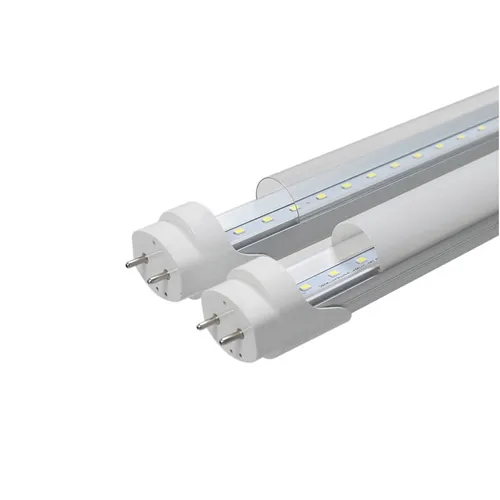
- G13 refers specifically to the physical pin interface standard on both ends of a tube (pin center distance 13mm). It was the standard for T8 fluorescent lamps and remains the most common interface for separable (non‑integrated) LED tubes. The G13 interface is responsible for mechanical retention and electrical connection of the tube.
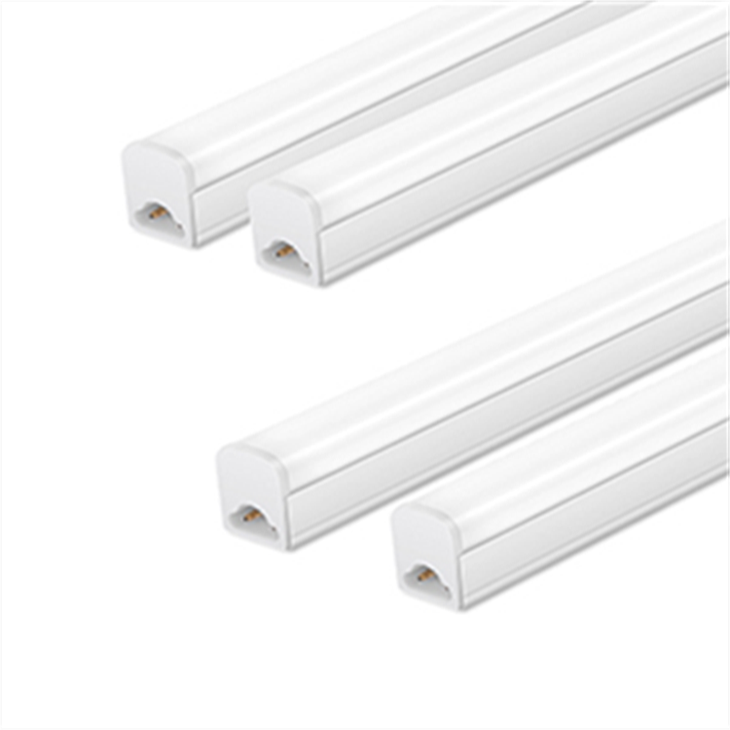
- Integrated means that the LED light source, the housing (or bracket), and the driver are combined into one inseparable fixture. The user can connect it directly to the mains without needing an external支架 (bracket). "Integrated" describes a product form – a complete linear luminaire.
To put it simply: G13 is a "pin specification", while integrated is a "product architecture". A separable LED tube may have G13 pins, but an integrated tube has no removable tube at all.

2. Technical Characteristics and Applicable Scenarios
2.1 G13‑Based Separable LED Tubes
These products keep the same physical dimensions and interface as traditional fluorescent tubes, aiming for low‑cost, low‑barrier replacement.
Advantages:
- Reuses existing luminaire housing and reflectors – lower material cost.
- Tubes can be replaced individually – low maintenance cost.
- One tube can be replaced without affecting other lights on the same circuit.
Disadvantages:
- Requires modification of the original fixture (usually removal or bypassing of the ballast and starter).
- Requires basic electrical knowledge from the installer.
- Aging or loose lampholders may cause poor contact.
2.2 Integrated LED Tubes
An integrated LED tube is essentially a complete linear LED luminaire – the light source, driver, and housing are not separable.
Advantages:
- No rewiring of existing fixtures – plug‑and‑play connection to mains.
- Compact, clean appearance; can be mounted with clips, magnets, or chains.
- Easy to achieve high ingress protection (e.g. IP65) – suitable for damp or dusty areas.
Disadvantages:
- Higher initial cost than separable solutions.
- Requires removal of old brackets or drilling new mounting holes.
- If the built‑in driver fails, the whole unit must be replaced (unless a repairable design is used).
3. Selection Strategy for Three Typical Retrofit Scenarios
Choosing the wrong solution can increase costs and create safety hazards. Below are the three most common scenarios.
Scenario A: Existing fluorescent fixtures are in good condition; lowest‑cost mass retrofit is desired
- Typical locations: Factory workshops, underground garages, school classrooms with T8 fixtures.
- Recommended solution: G13‑based separable LED tubes (single‑end feed, ballast‑bypass type).
- Procedure:
Remove the old fluorescent tube, starter, and ballast.
Rewire so that mains power is connected directly to one end of the lampholder (single‑end feed).
Install the new LED tube.
- Result: Reuses the original housing, reflector/lens. Lowest per‑fixture material cost. Fastest retrofit speed (a skilled electrician can complete 2‑3 minutes per fixture).
Scenario B: Old fixtures are rusted / damaged, or the user wants to avoid rewiring
- Typical locations: Bent or corroded fixtures, loose lampholders, aged wiring.
- Recommended solution: Integrated LED tube.
- Procedure:
Remove the entire old fixture.
Fix the integrated LED tube to the mounting surface (using magnetic mounts or screws).
Connect directly to the 220V mains supply.
- Result: Eliminates all problems caused by old fixtures. No electrical rework inside the old housing. Clean and safe.
Scenario C: Damp, dusty, or wash‑down environments (kitchens, basements, grain depots)
- Typical locations: High humidity, heavy dust, or areas requiring water resistance.
- Recommended solution: Integrated LED tube (IP65 or higher).
- Reasoning: G13 lampholders have exposed metal contacts, which can oxidize, leak current, or short‑circuit in wet/dusty conditions. The sealed housing of an integrated tube provides reliable protection.
4. Critical Safety Warning: The "Red Line" for G13 Retrofits
When using G13‑based LED tubes, the most overlooked risk is the feeding method. Three types exist on the market – they must be strictly distinguished.
| Type | Feeding method | Safety | Current status |
|---|---|---|---|
| Double‑end feed | L and N connected to opposite ends | High shock risk | Largely phased out – prohibited |
| Single‑end feed + retain ballast | One end fed; requires electronic ballast | Flickering, ballast failure prone | Not recommended |
| Single‑end feed + ballast bypass | One end fed; all ballasts removed | Safe – mainstream | Recommended |
Industry advice:
- Regardless of product claims, always remove the original magnetic or electronic ballast and rewire the mains directly to one end of the lampholder (single‑end feed).
- Check the product datasheet before purchase to confirm it supports "ballast‑bypass single‑end feed".
- All work must be done with power off and by a qualified electrician.
5. Future Trends: Integrated and Smart Modular Designs
Based on product trends at lighting exhibitions over the last three years:
- Integrated LED tubes are gaining share in mid‑to‑high‑end commercial projects, premium offices, and smart lighting applications – especially those with dimming, color tuning, and integrated sensors.
- G13‑based separable tubes will remain dominant in the huge stock‑replacement market, thanks to their low cost. Their focus is shifting toward "single‑end feed + ballast‑bypass" designs.
At the same time, a new type of integrated tube with a replaceable driver is emerging – it looks like an integrated unit, but the driver connects via a pluggable interface, balancing convenience and serviceability.
6. Quick Reference Table
| Your situation | Preferred solution | Key reason |
|---|---|---|
| Old fixture intact + you can safely rewire + lowest cost priority | G13 separable LED tube | Reuses existing housing; lowest per‑tube cost |
| Old fixture damaged / you don't want to rewire / simple installation required | Integrated LED tube | No old‑wiring handling; just connect and use |
| Damp, dusty, outdoor, or kitchen environment | Integrated LED tube (IP65) | Sealed protection – no corrosion or leakage |
| High‑bay / large‑scale maintenance project (external driver preferred) | Separable (G13 + external driver) | Easy driver replacement; tubes replaceable individually; low long‑term maintenance cost |
summary
LED tube retrofits are not complicated, but the selection logic must be clear. Integrated vs. G13 is not about which is inherently better – it is about which better fits your site conditions, budget, and maintenance strategy. Understand the structure, distinguish the interface, follow the wiring rules, and you can truly achieve both cost savings and peace of mind in your energy‑saving retrofit.
If you need detailed wiring diagrams or a cost estimate for a bulk retrofit, please leave a message or contact us for a full proposal.