Choosing a good quality LED tube requires comprehensive consideration from multiple aspects, including light efficiency, color rendering, heat dissipation, brand, certification, etc. The following is a detailed purchase guide:
1. Look at the light efficiency (lm/W)-energy saving
The higher the light efficiency, the more energy saving. Generally, the light efficiency of high-quality LED tubes is above 100lm/W, and high-end products can reach 140-160lm/W.
Calculation formula: Light efficiency (lm/W) = Luminous flux (lm) ÷ Power (W)
For example: 20W LED tube, luminous flux 2800lm, light efficiency = 2800/20 = 140lm/W (qualified)
Low-end products may only have 70-80lm/W, power consumption and low brightness.
2. Look at the color rendering index (CRI, Ra) - color authenticity
Color rendering index (Ra) ≥80 (supermarkets recommend ≥85, fresh food area ≥95), the higher the color, the more realistic it is.
Low-end LEDs may only have Ra<70, and the color will be distorted when irradiating food and clothing.
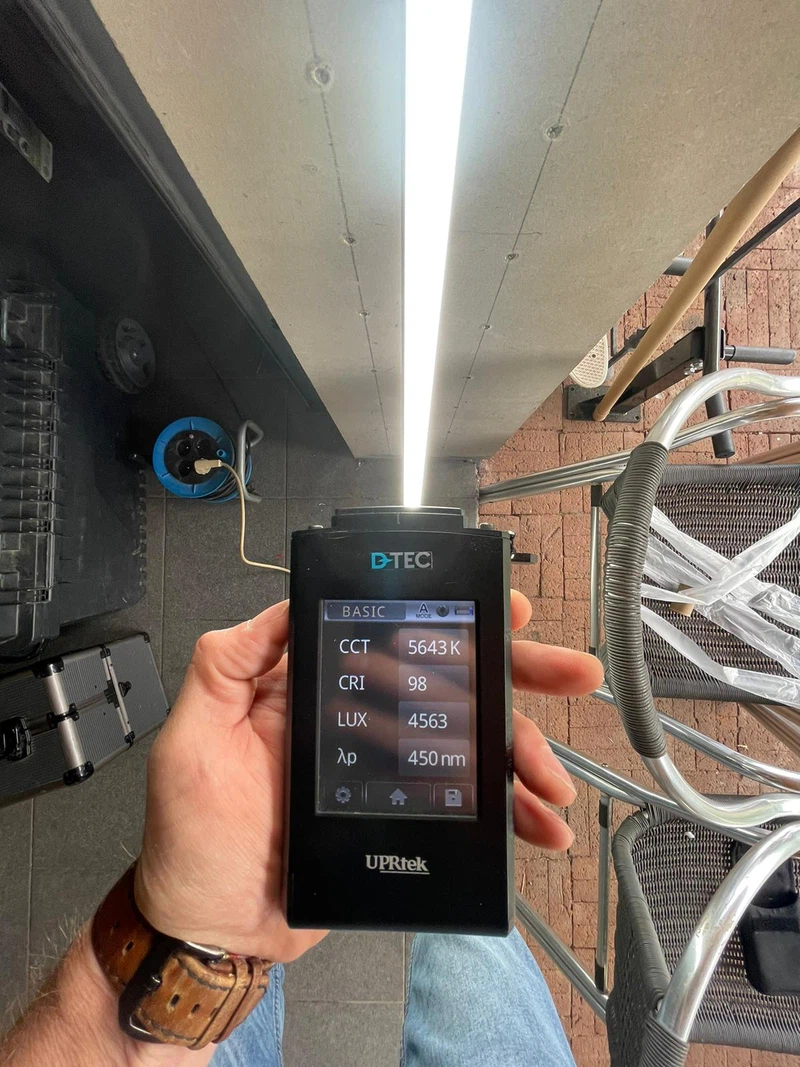
3. Look at the color temperature (K) - whether the light is warm or cold
3000K (warm yellow light, suitable for home and restaurant)
4000K (natural light, suitable for office and general areas of supermarkets)
5000K-6500K (cold white light, suitable for fresh food areas and warehouses)
Recommendation: Choose 4000K-5000K for the main area of supermarkets and 5000K-6500K for the fresh food area.
4. Look at the brand and chip
High-quality brands: Philips, Osram, Panasonic, NVC, Sanxiong Aurora, Sunshine Lighting, etc.
Chip brand:
High-end: Cree, Osram, Lumileds
Mid-range: Epistar, Sanan
Low-end: unknown brand chips (short life, fast light decay)
5. Look at the heat dissipation design - affecting life
Aluminum heat dissipation shell is better than plastic shell (poor heat dissipation, fast light decay).
The lamp beads are arranged evenly to avoid local overheating.
The brightness of inferior LEDs will drop significantly after 1-2 years (severe light decay).
6. Look at the LED power supply
Constant current LED power supply is more stable and has a longer life than RC drive.
Brand power supply: such as Inventronics, Mean Well, etc.
Inferior power supply is easy to cause flicker and burn lamp beads.
7. Look at certification and quality assurance
Safety certification: CE, RoHS (EU environmental certification), UL (US certification), CCC (China Compulsory Certification).
Warranty period: high-quality brands usually provide 3-5 years of warranty, while inferior brands may only provide 1 year.
8. Other precautions
✅ Strobe test: use the mobile phone camera to point at the LED tube. If there are stripes flashing, it means that the driver is poor.
✅ No blue light hazard: choose RG0 (no hazard level), especially in children's areas.
✅ Replace T8 fluorescent lamps: pay attention to compatibility (single-ended/double-ended power supply, whether the starter needs to be removed).
Key points for purchasing high-quality LED lamps
Items High-quality standards Low-end performance
Luminous efficiency ≥100lm/W <80lm/W
Color rendering index Ra≥85 Ra<70
Color temperature 4000K-6500K (as required) Severe color deviation
Chip Cree/Osram/Lumileds Miscellaneous brand chips
Heat dissipation Aluminum shell + reasonable structure Plastic shell
Drive Constant current drive (brand power supply) Resistor-capacitor drive
Certification CE/RoHS/CCC/UL No certification
Warranty 3-5 years 1 year or none
Purchase channels: Official flagship stores, professional lighting suppliers, avoid low-priced and low-quality products.
The LED lamps selected in this way are not only high in brightness and long in life, but also truly save electricity and money!