This year has so far placed a lot of emphasis on environmental awareness and the harm our behaviours are causing to the ecosystem. According to the most recent UN study, single-use plastic is rapidly harming the seas and endangering over 1 million species, while global warming is beginning to affect people closer to home.
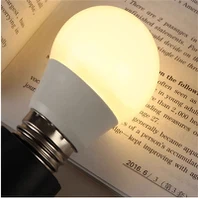
Although the London Extinction Rebellion created a lot of controversy, it eventually brought some of the major environmental problems into the open. We would all need to start making small adjustments to our daily lifestyles if we wanted to save the world, beginning with something as simple as switching to eco-friendly lightbulbs.
Why Make the Switch to Green Light Bulbs?To begin with, incandescent lamps are not long-lasting. You undoubtedly already know that you should always keep a few extras in your home in case a light bulb fails when you flip the switch to use the bathroom in the middle of the night. They can easily shatter. Additionally, they use a lot of energy and are expensive in the long haul.
Simply because they consume less energy to operate, environmentally responsible LED light bulbs are beneficial to the ecosystem. Compared to incandescent lamps, the energy gain is between 25% and 80%. The typical annual savings from moving to eco-friendly light bulbs is up to £70. Imagine how much less energy would be used if every home converted to eco-friendly light bulbs. It might not seem like much.
Eco-friendly light bulb types
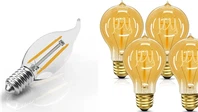
Halogen incandescent, LED, and CFL are the three major kinds of environmentally friendly light bulbs that are currently on the market.
Less power is used by halogen electric lights, but they are still not as energy-efficient as LED and CFL. To put it into context, halogen incandescent light bulbs require 42W, CFLs require 15W, and LEDs require 12W in order to produce the same level of brightness as a 60W incandescent light bulb.
Halogen incandescent lights are just as long-lasting as conventional incandescent lights in terms of lifetime. CFLs have a 10-year lifespan, whereas LEDs can be used for up to 25 years.
How Do I Choose?
You would need to consider the brightness in order to choose which one is ideal for you if energy usage and longevity aren't major concerns for you. In the past, a light bulb's intensity—which is truly its energy consumption—was calculated in watts. It makes sense that a light source would produce more luminosity the more energy it used. However, as was previously demonstrated, watts are no longer the appropriate unit for measuring strength, so we now measure luminosity in lumens.
Different eco-friendly light bulb types have varying intensity counts. For use at home, you require roughly 500 lumens, whereas big, dark areas require 1000 lumens. In general, all three can give you the same amount of illumination. There is only one variation here: CFL takes a few minutes to achieve its utmost brightness, whereas LED and halogen incandescent lights do so instantly when the switch is turned on.