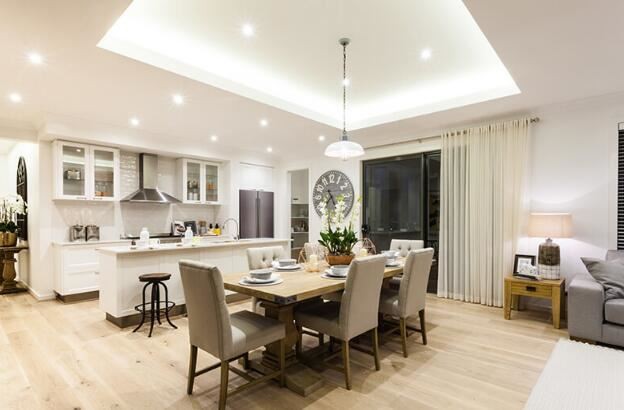
Lighting your dining room is not as simple as you think, but you don’t have to overcomplicate it either. To create a properly laid-out lighting layer, you need to go beyond the traditional overhead general lighting. You need to add more light sources for task, accent, and ambient lighting that will make your space feel fuller and more alive. Here are some guidelines that you can follow:
Ambient Lighting
Ambient lighting helps set the mood of the space, making it more homey than clinical. With this lighting, you can settle for a less intense light but make sure that you have enough coverage. You don’t want to have one section of your dining area looking all cosy and relaxing and the other section completely lacking brightness. Ambient lighting gives you a general idea of the space, but it’s not enough to see finer details.
Task Lighting
What ambient lighting cannot provide; task lighting can supplement. As for this layer, it’s more specialised and has a sole purpose, to adequately illuminate what you’re doing. It can be your dining table pendant light or ceiling spotlights that provide focused lighting on your space. You need this for when you help your children do their homework or icing cupcakes for their project!
Accent Lighting
When it comes to accent lighting, think of it as adding accessories to elevate the beauty of a room. You don’t need them to be functional but add more definition and character to your dining room. Here, you can go crazy with the fixtures since there’s no particular purpose but to glam up the space. Go big and bold with the designs of your lamps and satisfy your aesthetic desire!