In your establishment, insects are frequently more than simply a nuisance. If they are not controlled, they can endanger public health, cause serious harm to infrastructure and the food supply, and bring about harsh punishment from the local government.
Hence, whether your business is new or well-established, and whether it is a school, clinic, hospital, workplace, restaurant, or any other facility, insect and pest control solutions should be at the top of your list of critical services.
Contrary to humans, several kinds of flying insects, including house flies, bluebottles, wasps, and mosquitoes, can see ultraviolet light. In particular, the 365-nanometer area has a great appeal for these bugs. This knowledge has been applied for almost 20 years in the battle inside against dangerous flying insects.
Using UV light fly traps is one fantastic way to get rid of them. Let's quickly go over all the specifics of this approach and how it can help your company manage pests.
The Impact Of Light On Insect Behavior And Development
Here is the information you need to know if you're wondering whether or not flies are drawn to UV light or why they are. Light affects insect behavior and development in a variety of ways that fall into a wide range of categories. One of the most frequent reactions to light is phototaxis. Insects exhibit the following phototactic behaviors:
Pests can be captured using the attraction reaction, but different species require different wavelengths and intensities to be effective.
Repulsion (i.e., avoiding light): By illuminating an agricultural area with light at repellent wavelengths and intensities, pests can be kept out.
These responses to light are greatly influenced by light intensity, wavelength, combinations of wavelengths, exposure time, source direction, contrast of light source strength, and color to ambient light. Moreover, the impact of light on insect behavior varies both qualitatively and quantitatively depending on the light source.
How Effective Are Fly Light Traps?
It is common knowledge that insects will fly toward streetlights or other types of outdoor lighting at night. This inherent phototactic tendency is the foundation for the engineering of electric insecticides. The insect assassins are the most effective outdoor fly control methods because they successfully attract insects like moths and beetles and keep them out of greenhouses and companies that are open at night. They are fitted with UV-emitting neon tubes. In recent years, there has been a lot of interest in pest management technology that employs insect responses to light as a "clean" kind of pest control that does not utilize synthetic pesticides.
Moreover, ultraviolet fly lights have been a tried-and-true pest management strategy for many years. The UV rays produced by the fly light trap lights attract flies and other pests to the trap. Depending on whether the fly trap uses high-voltage electricity or sticky glue-boards, the flies are then either zapped, possibly causing them to collapse and spray their body parts several feet from the zapper, or stuck in a coating of glue. A pan at the bottom of a UV light for electricity-powered flies will be used to collect the dead insects.
Alternatives for UV Light in Fly Tying come in many different sizes and shapes.
the wall
Fly light traps that are fastened to walls are often placed between three and five feet above the ground, which corresponds to the height at which flies usually fly. The businesses in the hospitality and healthcare sectors that must constantly manage flies gain the most from using this type of fly light trap.
a wall sconce
A wall sconce is roughly 6 feet above the ground, similar to a fly light trap set on the wall. On the other hand, these attractive fly light traps are perfect for collecting flies in busy public and commercial spaces, such restaurant entrances and hospital waiting areas.
the ceiling
Ceiling-mounted fly light traps can capture a variety of nighttime flying pests even though most flies are inert. The standard placement of these traps is at least 8 feet off the ground or 6 inches above non-food inventory shelves. In homes or workplaces with narrow hallways, ceiling-mounted fly light traps are preferred to wall-mounted traps primarily because they keep the flies below eye level.
Freestanding
When it comes to pest treatment in several rooms, freestanding fly light traps give home and business facility managers greater options. Depending on the extent of the infestation, these traps can typically be moved between shelves and countertops because they are lightweight. To use portable traps, however, requires special caution. If placed irresponsibly, portable fly light traps may draw unwanted bugs to busy locations.
Fly light traps, sometimes referred to as insect light traps (ILTs), have been used as a form of pest control for almost 20 years. These traps are particularly successful in commercial settings like restaurants, hospitals, and nursing homes where a large population of flies can cause issues.
Try these ideas out right now if you're having trouble with pest control in your facilities. The good news is that you've already found the appropriate page.
In Australia, Hospeco provides affordable hygiene products, such as the UV light Sticky Glue Board Insect Trap, that will keep your facility free of insects. Check out the information on our website as soon as possible, then place your order.
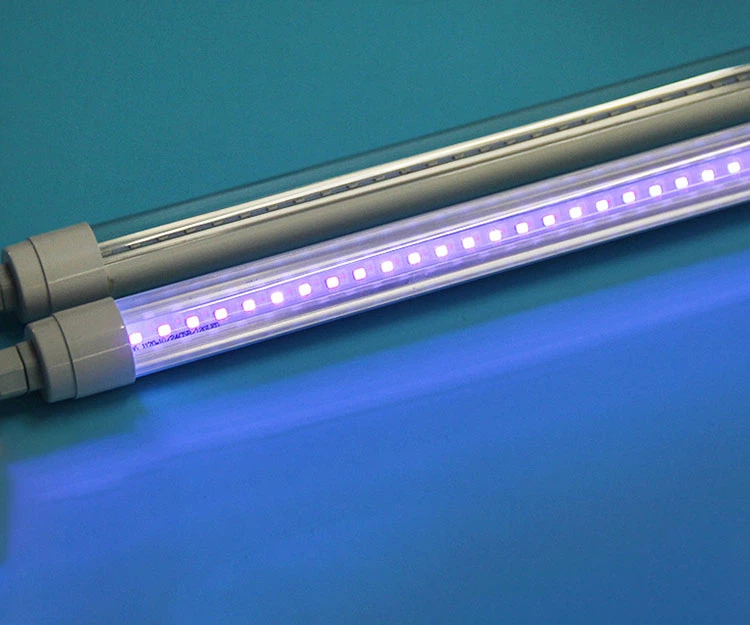
Benwei UV 120cm led tube black light Product Specification:
|
Item |
UV led light tube bulb T8 |
|
Input Volt |
AC85-265V |
|
Power |
10W,18W,24W |
|
Length |
60cm/2ft, 120cm/4ft, 150cm/5ft |
|
Bean Angle |
120°, 180° |
|
Lifespan |
50000 hrs |
|
Wavelength |
365nm 395nm 254nm 280nm |
|
Warranty |
3-5 years |