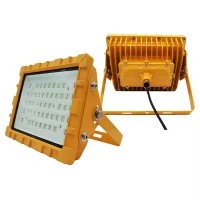

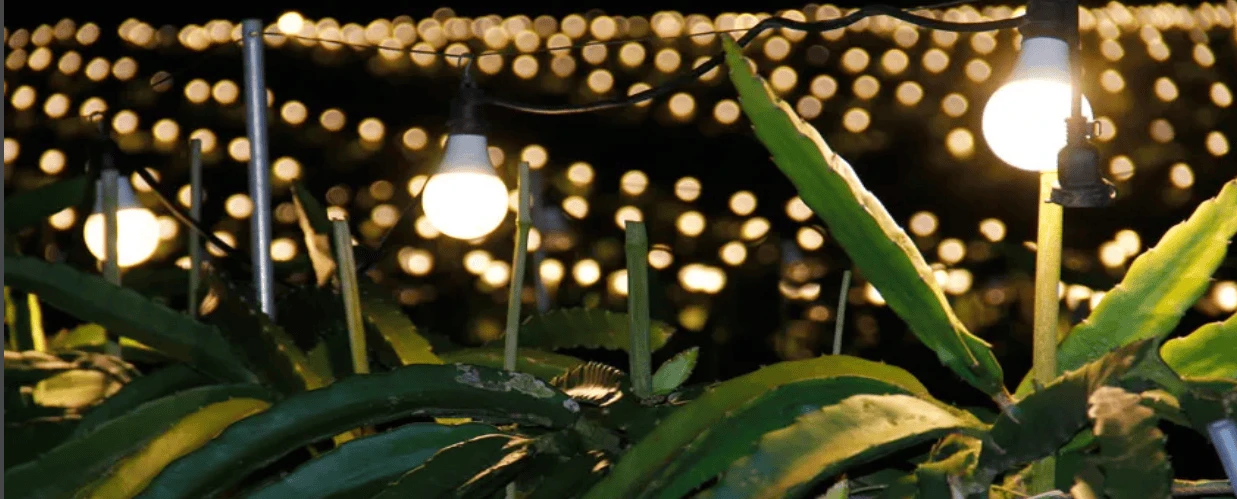
If you walk into a dragon fruit orchard in Guangxi or Binh Thuan Province, Vietnam, at night, what you see is not darkness but "a sea of stars on the ground." Tens of thousands of small lamps light up at the same time-growers call them "flower-forcing lamps." But a question confuses many growers: supplemental lighting products on the market range from 5W to 15W or even higher. Is a 5W lamp too low in power, unable to penetrate the canopy, and just a waste of money?
To answer this, you cannot look only at "wattage." You need to understand what dragon fruit actually needs at night and how much usable light a lamp can convert from electricity.
The "Night Shift Logic" of Dragon Fruit: It Does Not Want Brightness; It Wants "a Night That Is Not Long Enough"
Dragon fruit is a typical photoperiod-sensitive plant, and its flowering switch is controlled by phytochrome in the stems. After receiving red light during the day, inactive Pr is converted into active Pfr; at night, Pfr slowly reverts to Pr. When continuous darkness exceeds a critical value-about 10.5–11 hours-the Pfr level drops below the threshold, and the flower bud differentiation program is "switched off."
The essence of off-season production is to "cut the long night" around midnight, using 1–2 hours of light to interrupt darkness, artificially creating two "physiological short nights," keeping Pfr at a relatively high level, and thus "waking up" the flowering signal again. Therefore, dragon fruit supplemental lighting never aims to "turn the orchard into daytime." It aims to: at the right time, use enough effective photons to complete a precise physiological intervention.
This leads to the second question: what determines the "factory price" of effective photons?
The Light-Efficiency Ledger of a 5W Lamp: It Is Not About Lower Wattage; It Is About "How Much Effective Light Each Watt Can Deliver"
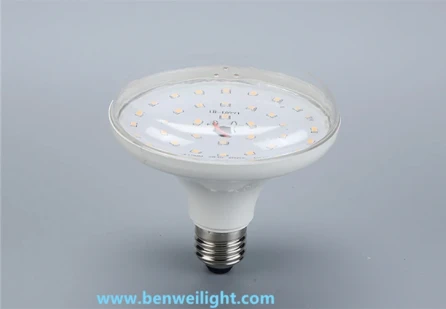
The core parameter of Benwei's 5W dragon fruit specialist lamp worth remembering is just one sentence: single-lamp PPF 8.2 μmol/s, 360° beam angle, SMD array with a diffuser. PPF measures the total amount of photosynthetically active photons emitted by the lamp per second, not the "brightness" perceived by the human eye. For dragon fruit flower forcing, the truly meaningful indicators are the photosynthetic photon flux density formed by the lamp at the canopy and how much electricity the whole orchard "burns" per hectare per hour and how many effective photons it gets back.
A very useful comparison was conducted in Binh Thuan Province, Vietnam: 5W red LED, 2 m spacing, density 1,785 lamps/ha, achieved a flower-forcing effect comparable to 9W yellow LED, 1.5 m spacing, density 2,380 lamps/ha; but the 5W scheme saved 48% electricity, reduced total production cost by 10.25%, and increased profit by 200–300 VND per kg of fruit. With the same flowering effect, fewer lamps, lower wattage, and a slower-spinning electricity meter-this is the first layer of logic that makes 5W lamps viable.
The table below lays out this ledger directly:
| Indicator | 5W Red LED | 9W Yellow LED | Direction of Difference |
|---|---|---|---|
| Installation spacing / density | 2 m / 1,785 lamps·ha⁻¹ | 1.5 m / 2,380 lamps·ha⁻¹ | 5W uses fewer lamps |
| Flower-forcing effect | Comparable to 9W scheme | Baseline | Equivalent |
| Relative power consumption | 48% lower | Baseline | 5W significantly saves electricity |
| Change in total production cost | −10.25% | Baseline | 5W is lower |
| Profit increment | +200–300 VND/kg | - | Positive gain for 5W |
Data source: 5W specialist LED dragon fruit flower-forcing trial in Binh Thuan Province, Vietnam.
Saving Electricity Does Not Mean Saving Photons: The Real Test of a 5W Lamp Is "Where the Light Arrives"
The reason 5W can do the job of 9W is that light is efficiently delivered to where it is needed. Dragon fruit bearing branches hang in arcs. If a lamp has a "flashlight-style" narrow beam, most photons will hit the ground between rows rather than the stems. Benwei's lamp uses multiple SMD arrangements plus a transparent PC diffuser to create a 360° beam angle, so that light spreads evenly from around the lamp body instead of forming a hotspot. Under a layout with 2 m spacing and lamps about 1–2 m above the canopy, light spots from adjacent lamps are more likely to connect, reducing the waste of "bright under the lamp, dark between rows."
But a 5W lamp is not a universal answer. If planting density is very high, the canopy is very thick, or winter-spring night temperatures in the region are low and flower bud initiation is inherently slow, a 5W solution may require more lamps per unit area or a longer lighting window of 4–6 hours. In practice, many bases in South China use a night interruption of about 1.5–2 hours around 23:00–01:00, maintaining a relatively low canopy light intensity to trigger flowering rather than high-power illumination all night. Continuous lighting for too long may also worsen fruit coloring. Using "interval lighting" to give plants a breathing window is a more reliable strategy.
Behind a Line Chart: Longer Supplemental Lighting Is Not Always Better
If you plot "supplemental lighting duration per night" against "flower bud induction effect," it usually is not a straight upward line. Trial data from Hainan gives a very intuitive rhythm: in early February, natural daylight is about 11.5 hours, and 5 hours of nighttime supplemental light are needed to effectively induce flowering; by late February, the critical value drops to 4 hours; after mid-March, 3 hours can achieve a significant effect.
| Time Window (Hainan) | Natural Daylight Conditions | Effective Nighttime Supplemental Lighting Duration for Flower Induction |
|---|---|---|
| Early February–Late February | Daylight about 11.5 h | ≥ 5 h |
| Late February–Early March | Daylight recovering | ≥ 4 h |
| Mid-March–End of supplemental lighting | Daylight continues to lengthen | ≥ 3 h |
Data source: Hainan dragon fruit supplemental lighting duration and flower induction trial.
This curve shows that supplemental lighting duration should be adjusted dynamically according to natural day length, not fixed at 6 or 8 hours after purchase. The advantage of a 5W lamp lies precisely here: low single-lamp wattage and low total system power mean it will not create excessive heat load or electricity cost when a short, precise interruption window is needed; when lighting needs to be extended appropriately, the marginal cost of adding lamps or extending duration is also lower and more controllable than with high-power schemes.
Back to That Lamp: Who Is the 5W Really Suitable For?
The engineering trade-offs of this Benwei 5W dragon fruit specialist lamp are clear: multiple SMD arrays + PC diffuser + 360° light output to spread limited photons evenly; IP65 to handle high humidity and washing in orchards; 20,000-hour lifespan to reduce replacement frequency. It is not aimed at "one lamp lighting a large area," but at a lighting system for high-density, short-window, night-interruption flower forcing-using quantity for coverage, low wattage for low power consumption, and 360° light distribution to reduce waste between rows.
If you are planning supplemental lighting for off-season dragon fruit, first calculate three things: how long a lighting window your latitude needs in spring, how dense the lamp positions need to be for your row spacing and canopy thickness, and how much of your current electricity bill goes to supplemental lighting. Send these three numbers to our horticultural lighting team, and we can work together to judge whether a 5W solution is "just enough" for your plot or whether the lamp density needs adjustment. Click the inquiry entry at the bottom of the page and include your planting area, row spacing, and target lighting season to receive a lamp-position layout and power configuration recommendation for your orchard.
Data Sources and Further Reading
- The Ministry of Agriculture and Rural Affairs' Guidelines for Main Recommended Technologies for Tropical and South Subtropical Crops (2023 Edition) lists dragon fruit light-regulation flower-forcing technology as a key technology promoted in major production areas of South China.
- CCTV News' report on Guangxi's tens of thousands of mu of dragon fruit LED night flower-forcing bases shows that supplemental lighting can increase yield by 2,000–2,500 jin per mu.
- Data from the 5W and 9W LED comparison trial in Binh Thuan Province, Vietnam, see Nhan Dan report.
- In relevant trials at Hainan University, the combination of a blue-to-red ratio of 1:4 and a light source height of 50 cm produced the highest number of flower buds, with an average yield of 2.236 kg per plant.