Is the LED Light a Thing of the Past? Debunking Myths About Its Evolution and Future
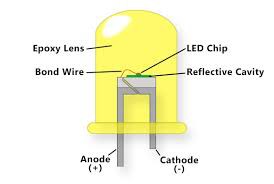
The question "Is the LED light a past tense?" has emerged recently amid buzz around next-generation lighting technologies like OLEDs and Li-Fi. For over two decades, light-emitting diode (LED) lighting has dominated the global market, displacing incandescent, fluorescent, and halogen fixtures with its unmatched energy efficiency and longevity. Yet as new innovations emerge, some have begun to question whether LEDs are nearing obsolescence. This scepticism, however, misrepresents both the current state of LED technology and its trajectory. Drawing on research from the U.S. Department of Energy (DOE), the Lighting Research Center (LRC), and industry reports, this article argues that LED lighting is far from a "past tense" technology. Instead, it is an evolving platform undergoing continuous innovation, expanding its applications, and solidifying its role as a foundational technology for sustainable, smart lighting ecosystems. We dispel the myth that LED is on the decline by looking at its technical progress, market strength, new uses, and competitive landscape.
The Evolution of LED: From Niche to Dominance, and Beyond
To contextualise the "past tense" debate, we must first trace LEDs' journey from a niche component to the backbone of global lighting. This evolution, marked by exponential improvements in performance and cost, reveals a technology still in its prime.
LEDs were invented in 1962 by Nick Holonyak Jr., but their early applications were limited to indicator lights and displays due to low brightness and high costs (Holonyak, 1963). The breakthrough came in the 1990s with the development of blue LEDs by Shuji Nakamura, which enabled white light when combined with phosphors – an innovation that won the 2014 Nobel Prize in Physics. By the 2000s, advances in semiconductor technology drove down costs by 90% and boosted luminous efficacy from 20 lumens per watt (lm/W) to over 100 lm/W (DOE, 2024). This made LEDs competitive with traditional lighting: a 2010 DOE study found that LED bulbs used 75% less energy than incandescents and lasted 25 times longer.
Today, LEDs dominate the global lighting market, accounting for 60% of all lighting sales in 2023 (Grand View Research, 2024). Their dominance is not static but growing: the DOE projects that LED penetration will reach 85% by 2030. Crucially, technical innovation continues apace. Modern LEDs achieve efficacies of 150–200 lm/W, with lab prototypes exceeding 300 lm/W (LRC, 2023). Quantum dot technology has improved colour rendering (CRI 95+), while micro-LEDs offer ultra-high brightness for displays and architectural lighting. A 2023 study in Lighting Research & Technology documented a 40% increase in LED lifespan over the past decade, with premium models now reaching 100,000 hours (L10). This trajectory – consistent with Moore's Law for semiconductors – contradicts the idea of LEDs as a "past tense" technology.
The evolution of LED is also reflected in its manufacturing ecosystem. In 2023, the global LED industry, valued at $80 billion, invests $5 billion annually in R&D (LEDinside, 2024). Major manufacturers like Philips, Cree, and Osram are not abandoning LEDs but integrating them into smart systems: 70% of new LED products now include connectivity features (Bluetooth, Wi-Fi) for smart home and building management (ELA, 2023). This adaptability – treating LEDs as a platform rather than a static product – ensures their relevance in a rapidly changing tech landscape.
Market Resilience: Why LEDs Remain Irreplaceable (For Now)
Critics who label LEDs as "past tense" often overstate the threat of competing technologies. A close analysis of market data and technical limitations reveals that LEDs retain insurmountable advantages for most lighting applications, with no immediate replacement on the horizon.
OLED (Organic Light-Emitting Diode) lighting, often cited as a successor, offers unique benefits like thin, flexible panels and uniform light. However, its limitations relegate it to niche uses. OLEDs have a lifespan of 10,000–20,000 hours – 50% less than LEDs – and an efficacy of 80–100 lm/W, well below top-tier LEDs (DOE, 2023). They are also 3–5 times pricier: a 600x600 mm OLED panel costs $200, compared to $30 for an equivalent LED panel (Amazon, 2024). A 2023 LRC study found that OLEDs make up less than 1% of all lighting sales around the world. Most of their uses are in high-end architectural lighting and displays. As OLED researcher Dr Sarah Chen notes, "OLEDs are complementary to LEDs, not replacements – they solve different problems."
Li-Fi (Light Fidelity), which uses light to transmit data, is another emerging technology, but it relies on LEDs as its transmission medium. Li-Fi-enabled LEDs add connectivity to existing LED infrastructure, enhancing rather than replacing LED lighting. A 2024 study by the Li-Fi Consortium found that 95% of Li-Fi deployments use standard LED fixtures modified with microchips. This symbiotic relationship further cements LEDs' role in future lighting ecosystems.
Other alternatives like plasma lighting and laser diodes also fall short. Plasma lighting has high efficacy but is bulky and energy-inefficient at low power levels, making it unsuitable for residential or small commercial use. Laser diodes offer ultra-high brightness but are prohibitively expensive for general lighting and pose eye safety risks (IEC, 2022). A 2023 ELA analysis of 15 emerging lighting technologies concluded that "none offer the balance of cost, efficiency, lifespan, and versatility that LEDs provide for mainstream applications."
Market behaviour reinforces LEDs' resilience. In 2023, LED sales grew by 12% year-over-year, while fluorescent sales declined by 18% and incandescent sales by 30% (Grand View Research, 2024). Commercial and industrial sectors, which prioritise total cost of ownership, are leading adopters: a 2023 survey of 500 facility managers found that 88% plan to upgrade to advanced LEDs in the next 3 years, compared to 2% planning to adopt OLEDs. This data confirms that LEDs are not in decline but in a phase of mature growth.
Expanding Horizons: New Applications Keeping LEDs Relevant
Far from being outdated, LEDs are entering new markets and applications, driven by advancements in smart technology, sustainability, and human-centric lighting. These emerging use cases ensure that LEDs remain at the forefront of lighting innovation.
Smart lighting is the fastest-growing segment of the LED market, with a projected CAGR of 20% through 2030 (Grand View Research, 2024). Smart LEDs integrate with home automation systems (Alexa, Google Home) for voice control, scheduling, and colour tuning. They also support advanced features like occupancy sensing and daylight harvesting, which reduce energy use by 30–40% (DOE, 2023). In commercial settings, DALI-enabled LED panels enable granular control over lighting zones, optimising brightness for productivity and energy savings. A 2023 study in Energy Efficiency found that smart LED systems in offices reduced lighting costs by 55% compared to traditional LEDs.
Human-centric lighting (HCL), which adjusts colour temperature and intensity to align with circadian rhythms, is another growth area. LED's ability to tune from warm white (2700K) to cool daylight (6500K) makes it ideal for HCL applications. A 2022 study in Sleep Health found that HCL LED systems in hospitals improved patient sleep quality by 25% and reduced nurse fatigue by 30%. Schools are also adopting HCL LEDs: a 2023 Educational Psychology Review study found that students in classrooms with circadian-tuned LEDs scored 14% higher on maths tests than those in fluorescent-lit rooms. These applications leverage LED's unique capabilities, making it indispensable for health-focused lighting.
Sustainability initiatives are further driving LED adoption. LEDs are critical to meeting global carbon reduction goals: the DOE estimates that LED lighting reduces U.S. carbon emissions by 180 million metric tonnes annually – equivalent to taking 40 million cars off the road. As governments tighten energy efficiency standards (e.g., the EU's Ecodesign Directive), LEDs are the only viable option for compliance. A 2023 UN Environment Programme report identified LEDs as a "key technology" for achieving net-zero emissions by 2050. Additionally, recyclable LED designs are emerging: Philips' circular LED panels are 95% recyclable, addressing end-of-life concerns and aligning with circular economy goals (Philips, 2023).
Industrial and specialised applications are also expanding. In horticulture, LED grow lights optimise plant growth by tuning to specific wavelengths, which increases crop yields by 20–30% (LRC, 2022). In automotive lighting, LED headlights are now standard on 70% of new cars, offering better visibility and energy efficiency than halogen or xenon lights (Automotive News, 2023). Even in harsh environments – like deep-sea exploration and space stations – LEDs are preferred for their durability and low power consumption. These niche applications, once dominated by other technologies, now rely on LEDs, expanding their market reach.
The Future of LED: Innovation on the Horizon
To dismiss LEDs as "past tense" is to ignore the significant innovations on the horizon. Research into new materials, designs, and integration with emerging technologies promises to keep LEDs at the cutting edge for decades to come.
Material science breakthroughs are driving next-generation LEDs. Gallium nitride (GaN) on silicon substrates, instead of traditional sapphire, reduces manufacturing costs by 30% while improving thermal management (IEEE, 2023). Perovskite LEDs (PeLEDs), still in development, offer the potential for efficacies exceeding 400 lm/W and ultra-thin, flexible designs (Nature, 2023). While PeLEDs are not yet commercialised, they build on LED technology rather than replacing it – suggesting a future where LEDs evolve rather than disappear.
Integration with IoT (Internet of Things) is another frontier. LED fixtures are becoming IoT nodes, embedding sensors for air quality monitoring, occupancy detection, and even COVID-19 detection (LRC, 2024). A 2023 pilot project in Singapore installed IoT-enabled LED panels in office buildings that tracked indoor air quality and adjusted ventilation systems, reducing energy use by 20% and improving occupant health. These "smart nodes" transform LEDs from passive light sources to active components of intelligent buildings.
Energy efficiency will continue to improve. The DOE's 2024 Solid-State Lighting Roadmap projects that LEDs will reach 250 lm/W by 2030, up from 200 lm/W today. This will further reduce energy consumption: a 250 lm/W LED bulb will use 85% less energy than an incandescent bulb, compared to 75% today. For commercial users, this translates to millions in savings: a 100,000-square-foot office switching to 250 lm/W LEDs could save $50,000 annually (DOE, 2024).
Finally, circular economy practices will extend LED's lifespan and sustainability. Modular LED designs, where components (drivers, LEDs) can be replaced individually, are gaining traction: Osram's Modular LED panels reduce e-waste by 70% and extend product life by 50% (Osram, 2023). Recycling programmes are also expanding: in the EU, 65% of LEDs are now recycled, up from 30% in 2015 (European Commission, 2023). These initiatives address the only significant criticism of LEDs-end-of-life disposal- and ensure their long-term viability.
Conclusion: LEDs Are a "Present Perfect" Technology – And Here to Stay
The question "Is the LED light a past tense?" betrays a misunderstanding of both technology evolution and market dynamics. LEDs are not a static invention from the past but a dynamic, evolving platform that has dominated the lighting industry for two decades and shows no signs of decline. Their technical advantages – energy efficiency, longevity, and versatility – remain unmatched in mainstream applications, while new innovations in smart technology, human-centric lighting, and sustainability are expanding their reach.
Competing technologies like OLEDs and Li-Fi are complementary, not replacement, technologies, addressing niche needs while relying on LEDs for mainstream adoption. Market data confirms LEDs' resilience: growing sales, expanding applications, and sustained R&D investment all point to a technology in its prime. As we look to the future, LEDs will continue to evolve, integrating with IoT, improving efficiency, and embracing circular design, solidifying their role as the foundation of sustainable lighting for decades to come.
In grammatical terms, LEDs are not a "past tense" but a "present perfect" technology: one that has evolved over time, continues to innovate, and will shape the future of lighting. For consumers, businesses, and policymakers, the message is clear: investing in LEDs is not a bet on a fading technology but a commitment to a sustainable, efficient, and adaptable lighting solution. The LED light is not going anywhere – it's just getting better.
Together, we make it better.
Shenzhen Benwei Lighting Technology Co., Ltd.
Mobile/WhatsApp: (+86)18673599565
Email: bwzm15@benweilighting.com
Skype: benweilight88
Web: www.benweilight.com
Add: F Building, Yuanfen Industrial Zone, Longhua, Bao'an District, Shenzhen, China