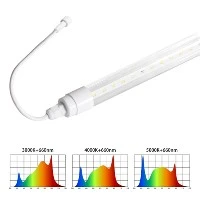
LED Bulb: Warm Light Or White Light?

You can learn more about what is meant when LED lights are described as "warm" or "cool" in this piece.
Temperature of Color
Choosing the "color of light" that a lantern emits was not a decision that was frequently made when using conventional lights. A colour selection is available with some LED goods, and doing so will determine the mood of your area.
Lighting's Correlated Colour Temperature (CCT), expressed in kelvins, depicts how a lamp's light appears to be coloured. (K).
Consider a gauge with values ranging from 1000K (very crimson) to 10,000K (very blue). (actual scale is wider). The illumination becomes more like blue sunshine as you ascend the scale.
Contrary to popular belief, a lamp will appear "cooler" the higher the colour temperature, which is a confusing term that describes the colour it creates rather than the lamp's real temperature.
| Kelvins | Type of Lamp | Colour |
| 1000k | Candlelight Red/Yellow | |
| 1800k | Vintage-look Filament Lamp - Orange | Ultra Warm |
| 2400k | Lamp style used in hospitality | Very Warm |
| 2700k | Conventional Halogen and LED Lamp - Yellow | Warm |
| 3000k | Warm White | |
| 4000k | CFL and LED - White | Cool White |
| 5000k | Daylight | |
| 6000-7000k | Cool Daylight |
Simply put, colour temperature refers to how hot metal's hue changes as its temperature rises, going from red to yellow to blue. The hue of a heated object can then be used to calculate its temperature. The various temperatures of this spectrum of hues have made it helpful for defining the colour tint of white light. This scale is used to estimate or "correlate" the hue of LED lamp illumination.
Cool or warm?
There are no guidelines; the decision is based on use and personal taste. Warm white between (2700-3000K) would be the best option if you prefer the classic, yellowish colour of a conventional light. This is the most common option for houses. A cool white light (4000K+) may feel livelier and cleaner, which is better if you want a contemporary, clear appearance. More blue light is present in cool white light, which appears livelier to the vision. (this is why cool white bulbs have a higher lumen output when compared to the equivalent warm white bulb). In contrast to people from colder countries, who prefer more warm light, it also appears that people from warmer countries tend to favour white light.
The atmosphere you want to convey and the goods you are marketing will determine the proper colour temperature to use in business apps. For instance, newly made bread and pastries may appear better when illuminated by warm white light. It's possible that a cold white light won't make the product appear as attractive, but it would be a good idea to test different lighting options.
Can I use them anywhere?
Here are some typical instances where the various hues can be used:
1. Living area, bedroom, and hallway: warm to warm white
2. White to Cool White: Cabinets, offices, kitchens, studies, bathrooms, and stores
3. Daylight – Businesses, shops, and craft workshops
Any shift should be given time to adjust, particularly when switching from warm to cool white.
Blend and match
There is no reason why a combination couldn't exist in the same place. As an illustration, use cold white for task lighting over work spaces and warm white for the primary room lighting.
The finest of both realms is yours with colour-changing downlights!
Integral LED's innovative LED technology enables you to toggle between 3000K (Warm), 4000K (Cool White), and 5000K. (Daylight). This is demonstrated by our Color Switching Fire Rated Downlight.
How do I decide which one to buy?
An obvious icon and colour temperature are displayed on the wrapping of every Integral sale box. Each light will also have its colour temperature written on the base, for example, "3000K."
You should think about purchasing the same type of LED light for all the fittings in a space or room due to differences in the production process and various measurement techniques. Additionally, purchasing replacements would be a good plan because LED technology is constantly changing and improving, just like other technologies like mobile phones.