What Makes LED Eye Protection Classroom Lights the Ideal Choice for Illuminating the Path to Healthier Learning?
The modern classroom is a dynamic environment where students spend a significant portion of their formative years. From reading textbooks and writing notes to interacting with digital whiteboards and personal devices, their eyes are constantly at work. The quality of lighting in these spaces is not merely a matter of visibility; it is a fundamental factor influencing visual comfort, concentration, long-term eye health, and overall academic performance. This is where advanced LED Eye Protection Classroom Lights emerge as a transformative solution, specifically engineered to create an optimal visual environment by effectively blocking harmful blue light and eliminating flicker.
For decades, traditional fluorescent lighting dominated school corridors and classrooms. However, these fixtures come with well-documented drawbacks that inadvertently contribute to visual strain. Two of the most significant issues are high-energy blue light emission and perceptible or imperceptible flicker.

-
The Blue Light Hazard: Natural blue light from the sun is essential for regulating our circadian rhythm. However, the concentrated, artificial blue light emitted by many conventional LEDs and digital screens is a concern. It has a short wavelength and high energy, which causes it to scatter more easily within the eye, reducing contrast and leading to digital eye strain (also known as computer vision syndrome). Symptoms include dry or irritated eyes, headaches, blurred vision, and difficulty focusing. While research into long-term effects is ongoing, excessive exposure to artificial blue light is widely acknowledged as a contributor to visual discomfort, especially during prolonged tasks like reading or studying.
-
-
The Flicker Menace: Flicker refers to the rapid, repeated fluctuations in the brightness of a light source. While older fluorescent tubes with magnetic ballasts produced a visible, distracting flicker, many modern lights still operate with a high-frequency flicker that, while not consciously noticeable, can be detected by the brain and retina. This subliminal flicker can cause headaches, migraines, eye strain, and fatigue. It has also been linked to increased anxiety and reduced cognitive performance in sensitive individuals. In a classroom setting, these effects directly undermine a student's ability to concentrate and learn effectively.
The Science of Protection: How Specialized LEDs Offer a Solution
LED Eye Protection Classroom Lights are designed with sophisticated optical and electronic technology to directly address these problems.
-
Effective Blue Light Management:
-
-
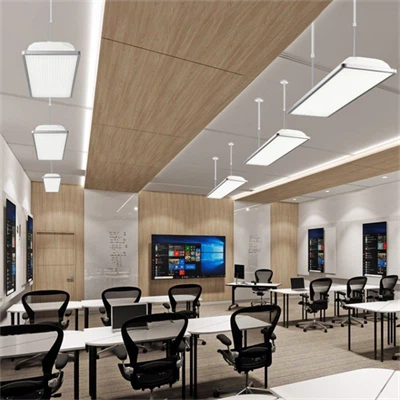
These lights do not simply use standard white LEDs. They incorporate specially engineered phosphor coatings or chip-level technologies that reshape the emission spectrum. The goal is to significantly reduce the peak intensity in the high-energy blue wavelength band (typically around 400-455nm) while maintaining excellent color rendering. This results in a light that is warmer, gentler on the eyes, and closer to natural sunlight in its spectral quality.
The light emitted is often described as having a high Color Rendering Index (CRI), often above 90, which means colors appear true and vivid without the harsh blue spike. This is crucial for art classes, reading maps, or any activity where accurate color perception is important. By filtering out the most harmful portion of blue light, these lamps alleviate the constant glare and scattering that lead to strain, allowing students to focus on their work comfortably for longer periods. -
-
Genuine Flicker-Free Performance:
-
-
True eye-protection LEDs utilize high-quality constant current drivers instead of cheaper pulse-width modulation (PWM) drivers. PWM can cause flicker by rapidly switching the light on and off to dim it. Constant current drivers provide a steady, unwavering stream of power to the LED chips, ensuring the light output is perfectly stable from any viewing angle, even when recorded on a smartphone camera in slow-motion mode.
This flicker-free illumination eliminates a major subconscious stressor on the visual system. It creates a calm and consistent visual field, reducing neural fatigue and creating conditions conducive to sustained attention and mental clarity.
The Multifaceted Benefits for the Educational Ecosystem

The advantages of installing such lighting extend far beyond basic eye comfort, creating a ripple effect that benefits everyone in the school.
-
For Students: Enhanced Well-being and Performance
-
Reduced Visual Fatigue: Less squinting, fewer complaints of headaches, and decreased dry eye symptoms.
-
Improved Concentration: A stable, comfortable light environment minimizes distractions, allowing students to stay engaged with lessons.
-
Better Learning Outcomes: Reduced physical discomfort from lighting translates to greater mental energy for processing information, potentially improving reading speed, comprehension, and overall academic results.
-
Long-Term Eye Health: By mitigating exposure to excessive artificial blue light from a young age, these lights contribute to a proactive approach to lifelong visual wellness.
-
-
-
For Teachers: A More Productive Environment
-
-
Teachers also suffer from the same lighting-induced strain. A healthier lighting environment reduces their fatigue, supports their well-being, and allows them to maintain energy throughout the school day. Furthermore, a classroom where students are less fidgety and more focused is inherently easier to manage and teach in.
-
-
For the Institution: A Smart, Sustainable Investment
-
-
Modern LED eye-protection lights are synonymous with energy efficiency, consuming significantly less power than fluorescent systems and leading to substantial cost savings on electricity bills. Their long lifespan (often 50,000 hours or more) drastically reduces maintenance and replacement costs. By investing in this technology, schools send a powerful message that they prioritize student health, safety, and modern learning standards.
Implementation and Considerations
When selecting LED Eye Protection Classroom Lights, schools should look for certifications and measurable metrics:
-
Flicker-Free Certification: Look for marks from reputable testing bodies.
-
Blue Light Hazard Ratings: Some standards (like IEC 62471) classify lights into Risk Groups (RG). An RG0 or RG1 rating is ideal for classrooms, indicating no or low risk.
-
Color Temperature: A range of 3000K to 4000K is often recommended. 4000K offers a neutral, alertness-supporting light for general classrooms, while 3000K-3500K provides a warmer, calming light for libraries or breakout spaces.
-
Dimming Capability: Lights with smooth, flicker-free dimming allow teachers to adjust ambiance for different activities, like presentations or quiet reading.

Conclusion
Lighting is the unseen foundation of an effective learning environment. By moving beyond illumination to intelligent visual care, LED Eye Protection Classroom Lights represent a critical upgrade to educational infrastructure. They tackle the silent challenges of blue light and flicker head-on, fostering a classroom atmosphere that is not only brighter but genuinely healthier. In making this investment, we do more than just light up a room; we safeguard our students' vision, enhance their capacity to learn, and illuminate the path to a more focused, comfortable, and successful educational journey. In the mission to educate and nurture future generations, providing the right light is a fundamental step toward brilliance.
Shenzhen Benwei Lighting Technology Co., Ltd.
Email: bwzm15@benweilighting.com
Web: www.benweilight.com