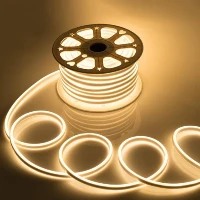
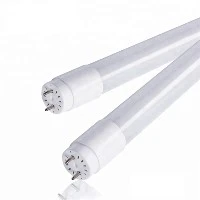
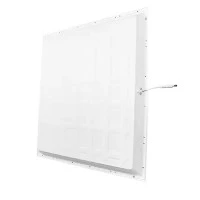
The Ultimate Guide to Staircase Lighting: Create Safe and Aesthetic Home Lighting with LED Strips
The staircase is a vital link connecting living spaces and a high-risk area for accidents. Statistics show that nearly one-third of household accidents occur on staircases, with inadequate lighting being a primary cause. With the widespread adoption of LED technology, staircase lighting design is no longer just about installing a single ceiling light-it has become a crucial element in home design that integrates safety, aesthetics, and smart technology. This article provides an in-depth analysis of how to use LED stair lighting strips to create a safe and visually dynamic lighting environment.
Why Are LED Strips the Modern First Choice?
Traditional staircase lighting often relies on a single overhead light source, which tends to create harsh shadows and visual blind spots. The advent of flexible LED strips has revolutionized this approach. Their core advantages are evident across three dimensions:
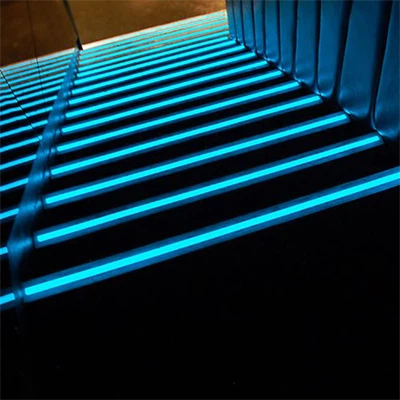
Safety Dimension: LED strips can be precisely installed along step edges, eliminating shadows underfoot and providing continuous, uniform lighting guidance. Neutral white light with a color temperature of 4000K-5000K best delineates step edges clearly, offering moderate contrast without causing significant visual fatigue.
Aesthetic Dimension: Hidden LED strips can create dramatic effects such as "floating steps" or "light handrails." Using a low-voltage smart dimming system, you can seamlessly transition between 4000K cool white light for reading and 2700K warm yellow light for nighttime use.
Technical Dimension: Modern COB LED strips can achieve an efficacy of up to 130 lm/W and typically operate on low-voltage DC power (often 24V), eliminating electrocution risks even if wiring is accidentally exposed. When paired with motion sensors, they can enable an energy-saving "lights on when occupied, dim when vacant" mode.


Comparative Analysis of Five Mainstream Staircase Lighting Solutions
The table below details the characteristics and suitable applications for different installation locations:
| Lighting Solution | Core Installation Location | Best Application Scenario | Installation Complexity | Safety Rating | Aesthetic Characteristic |
|---|---|---|---|---|---|
| Step Tread Lighting | Under the front edge or side of the step | All staircase types, especially suitable for floating stairs without side walls | Medium | ★★★★★ | Clearly defines step edges, creates a "floating" effect |
| Recessed Side Wall Lighting | Staircase side wall (30-50cm from floor) | Straight or curved staircases with solid side walls | High | ★★★★☆ | Wall washing effect, creates soft ambient light |
| Handrail-Integrated Lighting | Bottom or inside of handrail | Glass/solid wood handrails requiring guiding light | Medium-High | ★★★☆☆ | Linear guiding light, highly modern aesthetic |
| Step Side Linear Lighting | Junction between step and wall | Luxury staircases requiring dynamic lighting effects | High | ★★★★☆ | Programmable dynamic effects like flowing or chasing light |
| Wall Accent Lighting | Decorative wall in stairwell | Long staircases with artistic decorations | Low | ★★★☆☆ | Highlights wall textures or artwork, creates gallery ambiance |
Professional Recommendation: Most home staircases benefit from a combined approach of "step tread lighting + supplementary side wall lighting", ensuring safety while creating rich visual layers.


From Color Temperature Selection to Installation Details
1. The Science Behind Color Temperature Selection
Color temperature affects not only ambiance but also safety:
2700K-3000K Warm White: Promotes melatonin secretion, suitable for nighttime mode. However, lower color temperatures reduce contrast on materials (especially dark steps), so it's advisable to pair with higher illuminance (>150 lux).
4000K-4500K Natural White: Closest to daylight spectrum, offering optimal visual clarity. Research indicates that the human eye detects edges and contours approximately 17% faster under this color temperature compared to 3000K light.
6000K+ Cool White: While perceived as brightest, its blue light component may suppress melatonin and is unsuitable for staircases near bedrooms.
2. Calculating Key Installation Parameters
Luminous Flux Requirement: Recommended illuminance for staircase areas is 100-150 lux. Assuming a step depth of 30cm and width of 90cm, the luminous flux needed per step = 0.27㎡ × 150 lux ≈ 40 lumens. One high-quality LED chip (e.g., 2835) outputs about 20 lumens, so 2-3 chips are needed per step.
Voltage Drop Countermeasures: When LED strip length exceeds 5 meters, brightness at the far end may decrease by up to 30%. Solutions:
Power the strip from both ends using a low-voltage high-power LED driver (dual-end power supply)
Use thicker wires (recommended 1.5mm² or above)
Install independent power points every 5-8 meters
3. Smart Hidden Installations
Wiring Strategy: Pre-embed Φ20mm PVC conduits within the staircase structure, with all wires running through protective conduits. Control wires (e.g., DALI dimming signals) should be routed separately from power lines to avoid interference.
Thermal Management: High-density LED strips (e.g., 120 chips/meter) must be paired with aluminum channels for heat dissipation. Tests show that strips without heat sinks can reach 85°C, reducing lifespan to 30% of original; with aluminum channels, temperature can be controlled below 45°C.
Waterproof Considerations: Even for indoor staircases, IP65-rated strips are recommended to prevent water damage during cleaning. Basement or outdoor stairs require products with IP67 or higher ratings.


Smart Control System Integration Solutions
Modern staircase lighting has entered the era of intelligence, with three mainstream solutions each having their pros and cons:
1. Basic Motion Sensor Solution
Components: Microwave/Infrared sensor + standard module
Cost: Low (~$30-80)
Features: Lights turn on for 30-60 seconds upon detecting motion; suitable for budget-conscious projects
2. Intermediate Smart Solution
Components: Smart home wireless dimming module (e.g., Zigbee 3.0, Matter protocol)
Cost: Medium ($120-300)
Features: Scene setting via mobile app (e.g., "Night Light Mode" at 20% brightness), scheduling, energy consumption statistics
3. High-End Whole-Home Solution
Components: DALI-2 or KNX bus controller
Cost: High ($450+)
Features: Individual programmability per step, integration with whole-house lighting, supports complex dynamic effects
Real-World Data: Installing motion + daylight sensor systems reduces staircase lighting energy consumption by an average of 76% (Source: Residential Energy Monitoring Project 2023)

Lighting Strategies for Special Staircase Types
Spiral Staircases: Recommend installing downward wall washers on the central column, complemented by step tread lighting on each step. Avoid a single overhead light source, which creates strong shadows at turns.
Glass Railing Staircases: Use side-mounted LED linear lights shining upward at a 45° angle from below the glass, illuminating treads without causing direct glare. Transparent conductive film LEDs can be embedded within glass layers for completely hidden lighting effects.
Outdoor Staircases: Must select fixtures with IP68 rating and lightning protection. Color temperature should be 3000K-4000K; higher temperatures (e.g., 6000K) create severe glare in rainy/foggy conditions, actually reducing visibility.

FAQ
Q1: Can LED strips be directly adhered to wooden staircases? Is there a fire risk?
A: Modern high-quality LED strips typically operate below 50°C, which is lower than wood's ignition point (~200°C). However, for complete safety: ① Choose low-power products (<10W/meter) with UL/CE safety certifications; ② Prefer installation on metal or stone substrates; ③ Avoid covering strips with flammable decorative materials. Tests show that compliant LED strips don't exceed 45°C on contact surfaces even after 24 hours of continuous operation.
Q2: I want to achieve "lights on when approached, gradual dimming when leaving." What components do I need, and how can I avoid false triggers?
A: You'll need: ① Microwave sensor (penetrates wood/thin walls better than infrared); ② Dimmable LED driver; ③ Delay adjustment module. Key to avoiding false triggers: Install sensors 1.2-1.5 meters high without obstructions; set a 2-3 second trigger delay; adjust sensitivity to 3-5 meter range. For households with pets, recommend dual-technology sensors with pet immunity.
Q3: For renovating an old house without major rewiring, are there wireless solutions?
A: Modern wireless lighting technology is quite mature. Recommended solutions: ① Battery-powered LED motion-sensing step lights (typically 6-12 month battery life); ② PoE (Power over Ethernet) LED systems using existing network cables for data and power; ③ Wireless DMX control systems via 2.4GHz signal. Note that wireless solutions may have signal delays (typically <100ms) and require periodic battery replacement.
References & Citations
Lighting safety standards reference: Standard for Lighting Design of Buildings (GB 50034-2013), Section 5.2.6 regarding staircase illuminance and uniformity requirements
LED thermal management data source: U.S. DOE Solid-State Lighting Technology Report Thermal Management of LED Systems (2022)
Color temperature and visual performance research: Journal of Light & Visual Environment, Vol. 44 (2020) study on color temperature's effect on edge detection
Smart lighting energy consumption data: Fraunhofer Institute Germany Energy Efficiency Evaluation of Residential Smart Retrofits case study (2023)
Product safety standards: International Electrotechnical Commission IEC 60598 series specifications for luminaire safety