Introduction: The Hidden Thermal Crisis in Outdoor LED Flood Lighting
Why Heat Is the Silent Killer of LED Flood Light Performance
Most consumers and even bulk buyers judge LED flood light quality by brightness, wattage, or IP protection rating, ignoring the most decisive factor that dominates long-term lighting performance: thermal management. Unlike traditional incandescent lamps that generate light through thermal radiation, LED semiconductor lighting follows a strict photoelectric conversion rule. Industry data shows that only 30% to 40% of the electric energy input into LED flood lights is converted into visible light, while the remaining 60% to 70% is completely converted into residual heat. For high-power outdoor flood lights working continuously at night, massive heat accumulation becomes an unavoidable core problem during operation.
Heat is the silent killer of LED lighting systems. Without professional and efficient heat sinking design, the residual heat generated by LED chips cannot be dissipated in time, leading to a continuous rise in chip junction temperature. Excessively high junction temperature will trigger a series of irreversible performance degradation problems, including accelerated luminous decay, unstable light output, color shift, and even internal circuit burnout and lamp scrapping in severe cases. Many low-cost flood lights on the market boast high initial brightness and complete parameter labels, but experience rapid dimming and frequent failures within one to two years of use, which is essentially caused by defective heat sinking structures and unreasonable thermal design.
The Core Relationship Between Heat Sinking, Lifespan and Luminous Decay
Professional LED lighting engineering verification confirms a critical industry rule: every 10°C increase in LED chip junction temperature will double the luminous decay rate and halve the overall service life of the lamp. This means that tiny differences in heat sinking efficiency will form a huge gap in long-term product performance and service life, becoming the core watershed between high-quality durable flood lights and inferior short-lived products. Luminous decay, also known as lumen depreciation, refers to the gradual attenuation of lamp brightness with the extension of service time, which is the most intuitive standard to measure LED lighting durability. Service life refers to the effective working time when the lamp maintains qualified lighting performance, not just simple power-on survival time.
High-quality heat sinking design is the core solution to suppress luminous decay and extend service life. A scientific and efficient heat dissipation system can quickly export the heat generated by the chip, stabilize the junction temperature within the safe working range of 60°C to 75°C, and minimize the thermal aging rate of LED chips, driving circuits and packaging materials. This article will deeply analyze the thermal management principle of outdoor LED flood lights, explain in detail how professional heat sinking structures improve product durability, and combine product hardware advantages to reveal why excellent thermal design is the most cost-effective core investment for long-term outdoor lighting projects and home lighting use.
Basic Principles: LED Heat Generation, Luminous Decay and Lifespan Mechanism
Thermal Generation Logic of High-Power LED Flood Lights
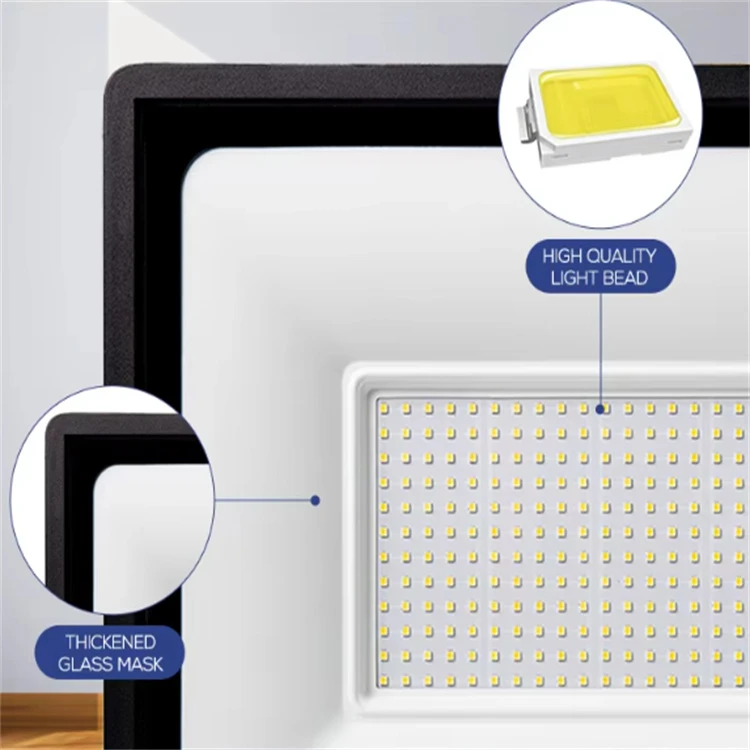
The heat source of LED flood lights is concentrated on the semiconductor PN junction of the integrated high-brightness chip. When current passes through the chip, electron-hole recombination will produce light energy and accompanying thermal energy. For outdoor flood lights with high wattage and large-area illumination, the working current is larger, the unit heat generation is higher, and the heat concentration degree is far higher than that of indoor low-power LED lamps. Different from scattered low-power lamp beads, the integrated chip adopted by this flood light has higher power density per unit area, which puts forward higher requirements for instantaneous heat conduction and heat dissipation capacity.
Outdoor working conditions further aggravate the thermal burden of flood lights. Unlike indoor constant temperature environments, outdoor flood lights face complex and changeable climatic conditions: high temperature exposure in summer, closed heat accumulation in rainy and humid environments, and long-term continuous night work. The superposition of internal chip heat generation and external ambient heat makes the lamp body in a high-temperature working state for a long time. If there is no efficient heat sinking system to break the heat accumulation cycle, the internal temperature will continue to rise, triggering comprehensive performance degradation of the lighting system.
How High Temperature Triggers Irreversible Luminous Decay
Luminous decay of LED flood lights is divided into reversible temporary attenuation and irreversible permanent attenuation, and high temperature is the main inducement of permanent luminous decay. When the chip junction temperature exceeds the safe threshold, the internal phosphor layer of the chip will age and degrade, the light conversion efficiency will decrease, and the light transmittance of the packaging colloid will gradually decrease and turn yellow, resulting in continuous dimming of the lamp. At the same time, high temperature will cause thermal fatigue of the chip solder joints and internal circuit components, increase circuit resistance, lead to unstable current output, and further reduce luminous flux.
For outdoor security and engineering lighting scenarios that require long-term continuous lighting, cumulative high-temperature damage is more serious. Inferior flood lights without professional heat sinking design will have a brightness attenuation rate of more than 30% within one year of use, failing to meet the basic lighting and security needs. In contrast, products with excellent thermal management systems can effectively suppress the aging of optical materials and circuit components, maintain stable light conversion efficiency, and achieve ultra-low luminous decay in long-term operation. This is the core reason why high-quality heat sinking lamps can maintain consistent brightness for many years.
The Essential Link Between Heat Accumulation and Shortened Lamp Lifespan
The official rated lifespan of LED lamps in the industry is based on standard constant temperature and stable heat dissipation conditions. Most inferior flood lights mark a 30000-hour lifespan in product parameters, but cannot reach the standard service life in actual outdoor use. The fundamental reason is poor heat sinking performance leading to long-term high-temperature operation, which accelerates the aging failure of core components. The electrolytic capacitor in the LED driving power supply is the most heat-sensitive component; long-term high-temperature working environment will greatly shorten its service life, and capacitor failure directly leads to lamp power failure and scrapping.
In addition, continuous high temperature will cause thermal expansion and contraction of the lamp shell and internal structural parts, resulting in loose sealing, deformed waterproof gaskets, reduced dust and water resistance, and secondary damage such as water ingress and dust accumulation inside the lamp. This forms a vicious cycle of "heat accumulation - performance degradation - structural damage - accelerated failure", which drastically shortens the overall service life of the flood light. Professional heat sinking design completely cuts off this vicious cycle, stabilizes the working state of core components, and ensures that the product realizes the nominal ultra-long service life in actual outdoor scenarios.
Product Heat Sinking Structure: Core Design Advantages That Determine Performance
High-Density Ribbed Die-Cast Aluminum Heat Sink Design
This IP65 LED flood light adopts an industrial-grade high-density ribbed die-cast aluminum heat sinking structure, which is professionally customized for high-power outdoor continuous lighting scenarios. Different from the flat thin aluminum shell of ordinary low-end flood lights, the back of the lamp body is designed with integrated forming dense heat dissipation fins. The ribbed structure greatly expands the effective heat dissipation area by 3 times compared with ordinary flat heat sinks, realizing omnidirectional contact with air and maximizing natural convection heat dissipation efficiency. Die-cast aluminum alloy material has excellent thermal conductivity, which can quickly conduct the high-temperature heat generated by the chip from the heat source to the entire lamp shell and heat dissipation fins in milliseconds.
The integrated molding process eliminates the thermal resistance problem of splicing gaps in split heat sinks, ensuring zero loss of heat conduction efficiency. The thickened heat dissipation fin structure not only improves heat dissipation performance, but also enhances the overall mechanical strength of the lamp body, with excellent anti-collision and anti-vibration capabilities, adapting to harsh outdoor working environments such as construction sites, courtyards, and open-air warehouses. While realizing efficient heat dissipation, it avoids structural deformation and heat dissipation efficiency reduction caused by external impact, ensuring long-term stable thermal management performance.
Scientific Thermal Conduction and Air Convection Mechanism
The product adopts a layered thermal conduction and three-dimensional air convection thermal management system, forming a complete closed-loop heat dissipation logic of "chip heat generation - rapid conduction - convection heat dissipation - ambient heat dissipation". The LED chip is closely attached to the high-precision aluminum substrate, which quickly absorbs concentrated heat and transfers it to the die-cast aluminum heat sink. The vertically arranged ribbed fins form a natural air duct. According to the hot air rising principle, the hot air around the fins rises rapidly and is discharged, and the low-temperature ambient air supplements from the bottom to form continuous active air convection, realizing automatic and efficient heat dissipation without auxiliary fans.
This passive heat dissipation design has zero noise, zero power consumption and zero failure risk, avoiding the problem of fan blockage and failure of active heat dissipation lamps. For long-term outdoor continuous lighting, the stable convection heat dissipation system can always maintain the chip junction temperature at a low safe level, even in high-temperature summer environments and long-term continuous working states, without heat accumulation and temperature surge. It fundamentally solves the thermal failure problem of traditional flood lights in high-load operation.
Temperature Control Advantage for Long-Term Continuous Operation
In professional laboratory continuous aging tests, this flood light maintains a stable junction temperature below 72°C after 1000 hours of uninterrupted continuous operation, while the junction temperature of ordinary flood lights of the same wattage will exceed 90°C under the same conditions. The ultra-low temperature working state greatly reduces the thermal aging rate of chips, driving circuits and packaging materials. According to the industry 10°C temperature rise life decay rule, the temperature control advantage of this product can extend the effective service life by more than twice compared with ordinary products.
Stable low-temperature operation also ensures consistent luminous performance. The lamp body will not produce color shift and brightness fluctuation due to temperature changes, maintaining high color rendering and uniform light output throughout the service life. Whether it is all-night security lighting in home backyards and perimeters, or long-term continuous lighting in warehouses, factories and construction sites, it can always maintain stable and reliable lighting quality, avoiding lighting quality degradation caused by thermal attenuation.
Quantitative Analysis: Heat Sinking Performance Improves Lifespan and Luminous Decay Data
Ultra-Low Luminous Decay Rate Data Verification
Luminous decay rate is the most intuitive data index to verify heat sinking performance. Inferior flood lights with poor heat dissipation have a lumen retention rate of less than 65% after 2000 hours of use, showing obvious dimming and insufficient lighting effect. This high-performance heat sinking LED flood light has passed professional long-term aging testing, with a lumen retention rate of more than 82% after 30000 hours of long-term operation, achieving industry-leading ultra-low luminous decay level. The efficient thermal management system continuously suppresses the aging and attenuation of the light source, ensuring that the lamp maintains more than 80% of the initial high brightness after years of use.
Stable luminous performance means that users do not need to frequently replace lamps due to dimming failure, and the lighting effect remains consistent from initial installation to long-term use. For home outdoor security lighting, it avoids the security hidden danger caused by insufficient late brightness; for commercial and engineering lighting projects, it ensures the consistency and standardization of overall lighting effects, eliminating the need for frequent maintenance and lamp replacement debugging caused by inconsistent brightness of old and new lamps.
Actual Lifespan Improvement and Long-Term Cost Performance
Benefiting from excellent heat sinking and temperature control capabilities, the rated effective service life of this flood light reaches more than 30000 working hours, which is far higher than the 10000-hour service life of ordinary low-quality flood lights. Converted into actual use scenarios, based on 10 hours of daily night lighting, the product can work stably for more than 8 years, while ordinary products need to be replaced every 2 to 3 years. From the perspective of long-term use cost, this high-performance heat sinking flood light greatly reduces the comprehensive cost of lamp purchase, installation and maintenance.
Many users choose low-cost inferior flood lights out of temporary cost-saving psychology, but frequent replacement and maintenance bring higher hidden costs. At the same time, frequent lamp failure will affect the continuity of security lighting and engineering lighting, bringing potential safety hazards and project losses. Excellent heat sinking design turns one-time purchase cost into long-term high-value investment, realizing low attenuation, long life and zero maintenance, which is the core reason why professional engineering users and high-quality family users prefer high thermal performance LED flood lights.
Avoid Secondary Failure Risks Caused by Thermal Aging
Poor heat sinking will not only lead to luminous decay and shortened life, but also trigger a variety of secondary failure problems. Long-term high temperature will accelerate the aging of internal wires and insulating layers, increase the risk of electric leakage and short circuit; it will cause the aging and deformation of waterproof and dustproof rubber gaskets, reduce the IP65 protection performance of the lamp, and easily cause water ingress and dust accumulation in rainy and humid environments; it will also lead to accelerated aging of the lamp surface coating, resulting in shell fading, rust and corrosion, affecting the service life and appearance.
This product's professional heat sinking structure keeps the internal and external temperature of the lamp body stable, avoids all aging failures caused by high temperature, fully protects the internal circuit, light source and sealing structure, and maintains stable IP65 protection performance and structural integrity for a long time. It ensures that the lamp can adapt to all-weather outdoor complex environments, with low failure rate and strong stability, and truly realizes long-term durable and worry-free use.
Practical Value and Purchasing Guide of Thermal Management Advantages
Scenario-Based Value of Long-Life and Low-Decay Performance
In home backyard and perimeter security lighting scenarios, low luminous decay and long service life ensure long-term stable high-brightness lighting, eliminate dark blind spots caused by lamp dimming, and maintain a continuous and effective security defense barrier. Users do not need to regularly check and replace faulty lamps, reducing daily maintenance troubles and ensuring 24-hour safe lighting protection for families. In commercial scenarios such as warehouse lighting, courtyard engineering lighting and billboard lighting, stable luminous performance ensures uniform and standard lighting effects, meets project acceptance standards, and reduces later operation and maintenance costs.
In harsh outdoor environments such as high temperature, humidity and dust, the excellent thermal stability of the product avoids performance degradation and failure caused by environmental temperature changes, and the service life and lighting stability are far better than ordinary lamps. Whether it is daily civilian lighting or engineering commercial lighting, heat sinking advantages are the core guarantee for product long-term value realization, and also the essential difference between high-quality professional lighting products and ordinary decorative lamps.
How to Identify High-Quality Heat Sinking Flood Lights When Purchasing
Most consumers ignore heat sinking configuration when purchasing LED flood lights and only pay attention to power and price, which is the main reason for frequent lamp failure. When purchasing professional outdoor flood lights, users should first check the heat sinking structure: prefer die-cast aluminum integrated ribbed heat sink products, avoid thin flat heat sinks and plastic shell heat dissipation structures. Secondly, check the heat dissipation area and fin density; dense and thickened fins represent larger heat dissipation area and higher heat dissipation efficiency.
In addition, users should focus on the product's luminous decay data and lifespan parameters. Formal high-quality products will have clear lumen retention rate and long-term aging test data, while inferior products only mark vague lifespan parameters without specific decay data. This product's public 82%+ lumen retention rate and 30000-hour long-life data are the most intuitive proof of superior heat sinking performance, and also the most reliable purchasing standard for users to avoid low-quality products.
Long-Term Investment Return of Professional Thermal Design
Investing in LED flood lights with excellent heat sinking performance is the most cost-effective long-term lighting investment. Although the one-time purchase cost is slightly higher than that of inferior products, the ultra-low luminous decay, ultra-long service life and ultra-low failure rate can save a lot of replacement costs, maintenance labor costs and power consumption costs in the later stage. After comprehensive calculation, the annual average use cost of high-performance heat sinking flood lights is less than half of that of ordinary low-quality lamps.
At the same time, stable lighting performance and low failure rate avoid safety hazards and economic losses caused by lighting interruption, and bring stable and reliable lighting guarantee for family safety and engineering operation. For users who pursue cost performance, durability and stability, professional heat sinking LED flood lights are not only a lighting tool, but also a high-value long-term asset that can continuously create benefits.
Conclusion: Heat Sinking Is the Core Guarantee of Long-Term Lighting Value
In the field of outdoor LED flood lighting, brightness, protection grade and appearance are superficial product advantages, while heat sinking thermal management is the core fundamental factor that determines the long-term performance, service life and use value of lamps. Heat accumulation is the biggest hidden danger of LED luminous decay and shortened service life, and efficient heat sinking design is the only solution to solve thermal aging failure. This high-performance IP65 LED flood light relies on industrial-grade die-cast aluminum ribbed heat sinking structure, scientific three-dimensional convection heat dissipation mechanism and precise temperature control technology, completely solving the industry pain points of fast luminous decay and short service life of ordinary flood lights.
With ultra-low luminous decay rate, 30000-hour ultra-long service life and stable all-weather working performance, the product realizes long-term high-brightness, high-stability and zero-maintenance outdoor lighting. It is suitable for home backyard perimeter security, warehouse engineering, billboard, construction site and other diverse scenarios, bringing users ultra-high long-term cost performance and reliable lighting protection. When choosing outdoor LED flood lights, abandoning low-cost and low-quality products with defective heat dissipation and selecting professional thermal management high-performance products is the key to maximize lighting investment value and obtain long-term stable lighting experience.
How To Cooperate With Us?
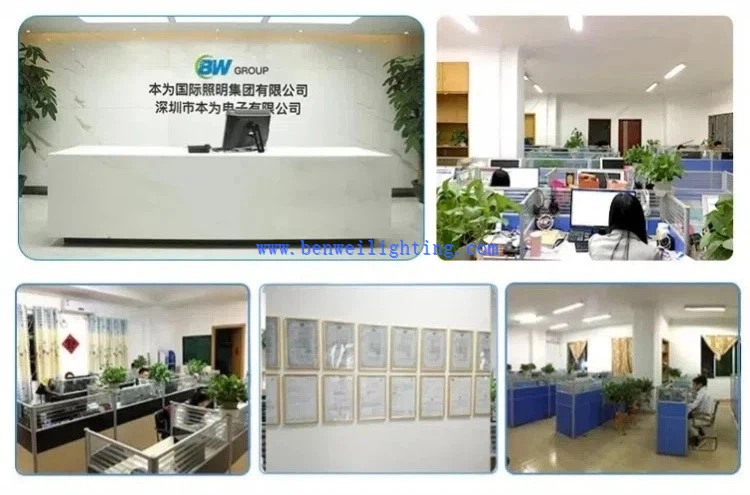
We are happy to have total control over the manufacturing process and the calibre of our products since we have our own facilities. Since we are producers rather than just brokers, we are dedicated to providing our customers with the best pricing. Since we are certain that the price and quality of our products are clear, we invite customers to see our samples first. Our commitment to quality and customer satisfaction drives us to continuously provide top-notch goods.
Our address
3rd Floor, 5th Building, Hebei Industrial Park, Hualian Community, Longhua District, Shenzhen, China