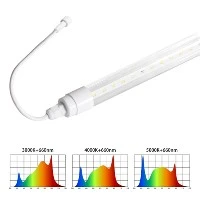
LED fluorescent tube market
Corporate channel forecast: Separation of production and sales is the development direction, and the application of EMC mode increases
LED as a lighting source, due to its high cost, it is currently difficult to enter the mass market by relying on the advantages of light efficiency and longevity. However, with the support of the government, some government demonstration projects can be implemented in the form of promotion projects to drive the sales of products, such as the current street lamp project. To open up the general lighting market, the first consideration should be the application of low luminous flux. When the technology is mature and the price is appropriate, the application market of high luminous flux lighting lamps will be promoted. In addition, more attention should be paid to the understanding and acceptance of LED lighting sources by existing lighting channels, because most of the alternative light sources have to enter thousands of households through existing market channels. The rapid development of LED light sources also presents challenges, which require time and results to witness.
1. Engineering orders account for the majority, and it is unlikely that companies will build their own franchise stores
According to in-depth market understanding and observation, almost all orders received by companies are basically engineering orders, and there are very few indoor LED products that are purchased and sold in individual stores. For a long time, domestic LED lamps have replaced the original The indoor lighting market is still dominated by engineering renovation, especially in shops and hotels where the lighting time is relatively long. These places are easier to recoup costs through energy saving, and profit can be realized if there are no problems with their lifespan. These places will try to use LED indoor lighting products driven by profit.
In the sales model, separation of production and sales will be the direction of development, which can effectively reduce costs and allow professional people to do professional things. In the future, there may be larger indoor LED lighting channels. Small and medium-sized enterprises tend to cooperate with channel dealers. Large enterprises may adopt the method of self-built sales channels, and it is unlikely that enterprises will build their own franchise stores. According to observations and multi-party communication with peers, the main customers in recent years are still engineering renovation and engineering new installations, rather than large-scale applications in the terminal market such as individual consumers.
2. LED sales cannot bypass existing sales channels
For the traditional indoor lighting application market, indoor LED lamps cannot escape existing sales channels. Because no matter what kind of new lamps you are, as long as the target customers are the same, the process the product goes through from the manufacturer to the user should be the same. Volkswagen currently considers most about how to replace existing light sources, including incandescent lamps, cup lamps, compact fluorescent lamps and linear fluorescent lamps, etc. The sales channels for these light sources have been formed and fixed. Therefore, indoor LED lamps that replace these lamps must also go through these existing sales channels. The sales driving force of these channels mainly depends on price, reputation and service, that is to say, traditional indoor lighting products have been quite perfect in channel construction. Therefore, the market channels of various lighting fixtures may be different. The sales channels of indoor lighting products are different from the sales channels of home lighting products and the sales channels of commercial lighting products, so there are different consumer organizations and groups.
3. Large projects will adopt EMC mode, but small projects are unlikely to use EMC mode
The number of engineering cases in which companies adopt the EMC model will gradually increase. The EMC model is also the contract energy management model, which uses the saved electricity bills as a cost. Indoor LED lighting promotes the development and application of the EMC model in China; the same EMC model will also promote the popularization of the indoor LED lighting market. The current small projects are difficult to get the support of the EMC model, but large projects are still quite conservative in the use of indoor LED lighting (the real purpose of enterprises adopting the EMC model is to make money rather than to promote, which is in line with the pursuit of project users. Conflicting interests).
With the gradual maturity of technology, consumers’ acceptance of indoor LED lighting continues to increase. In the future, there will be more decent or larger-scale projects that will adopt the EMC method. Users of this model do not need to support any additional costs, and it is very important for after-sales services. And service without any worries. Therefore, for some small-scale indoor LED lighting projects, the possibility of adopting the EMC mode is not great and has no obvious effect. These medium- and small-scale projects are almost always used by local distributors, home appliance stores, property management companies, decoration companies, etc. The main reasons for the company or private organization to get it done are:
(1) No more capital investment is required;
(2) The technical content is quite low;
(3) There are fewer "triangular" relationships involving multiple parties;
(4) Provide a complete after-sales and service guarantee system.
Conclusion: First push low luminous flux, and then push high luminous flux lighting fixtures