Lighting Your Open-Plan Space: A Guide to Flow, Function, and Mood
Open-plan living may be the modern standard, but getting the lighting right is what transforms a vast room into a harmonious home. Lighting does more than just illuminate-it defines zones, sets the mood, and ensures your kitchen, dining, and living areas feel both connected and distinct.
This guide will help you design a layered lighting scheme that balances bright functionality with warm, inviting atmosphere.
The Philosophy of Layered Lighting
The secret to successful open-plan lighting lies in combining different types of light. Instead of relying on a single, harsh overhead source, you build depth and flexibility with three essential layers.
1. Ambient Lighting: Your Foundational Glow
Think of ambient light as the natural daylight replacement-the even, general illumination that makes the entire space feel bright and welcoming. Recessed downlights, ceiling-mounted fixtures, or LED panels work perfectly for this.
The key is consistency. Spread fixtures evenly to prevent dark corners and maintain a uniform colour temperature-typically a warm 3000-3500K-throughout the space. This creates visual harmony and prevents the area from feeling like a collection of disjointed rooms.
2. Task Lighting: Focused Light for Specific Activities
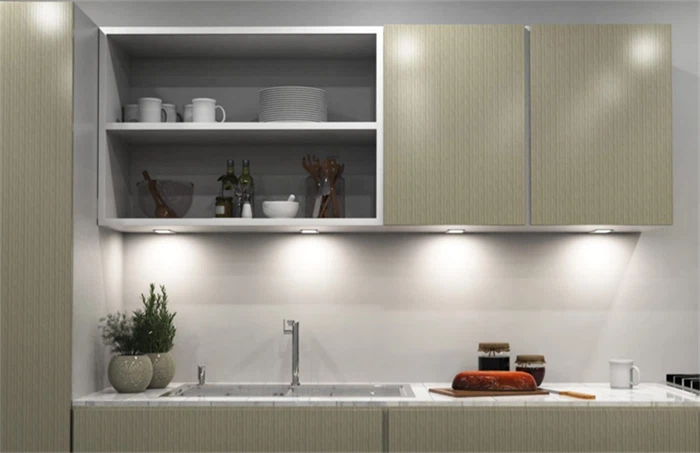
Task lighting is your practical partner, providing clear, directed light exactly where you need it. In the kitchen, this means under-cabinet LED strips to brighten countertops or pendant lights over the island. In the living area, it could be a reading lamp next to your favourite chair.
This layer ensures safety and precision, whether you're chopping vegetables, working at a laptop, or reading a book.
3. Accent Lighting: The Finishing Touch
Accent lighting adds drama and personality. It's the stylist's flourish that highlights architectural features, artwork, or textural details. Use discreet LED strips to illuminate shelving, create a soft glow under kitchen kickboards, or wash a wall with light to add depth.
Accent lighting isn't about brightness-it's about creating focal points and enhancing the room's character after the sun goes down.
Defining Zones with Light
In an open-plan layout, lighting replaces walls to subtly separate different functional areas.
The Kitchen: Bright and Functional
Your kitchen needs clear, energising light. Opt for cooler, natural white tones around 4000K from recessed downlights and strategic under-cabinet lighting. The goal is shadow-free workspaces that feel clean and efficient, yet still integrated with the rest of the room.
The Dining Area: Intimate and Adjustable
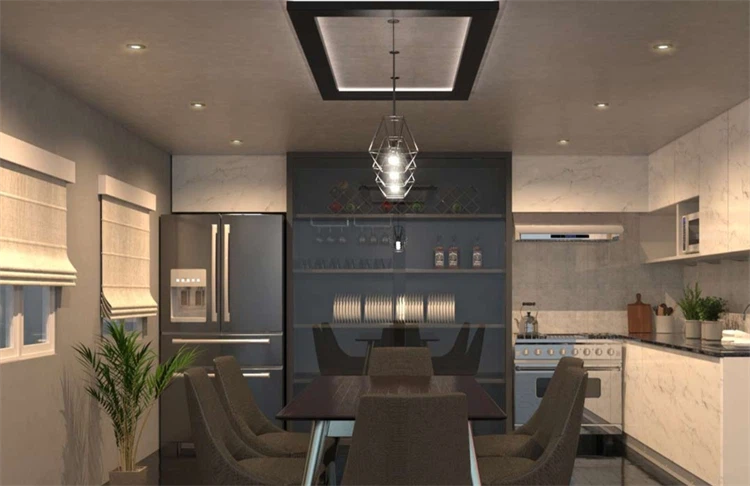
Define your dining zone with a statement pendant or a cluster of hanging lights above the table. Always choose dimmable fixtures with warm white bulbs (2700-3000K) to flatter food and faces. This allows you to shift effortlessly from a bright family breakfast to a soft, intimate dinner setting.
The Living Space: Soft and Relaxing
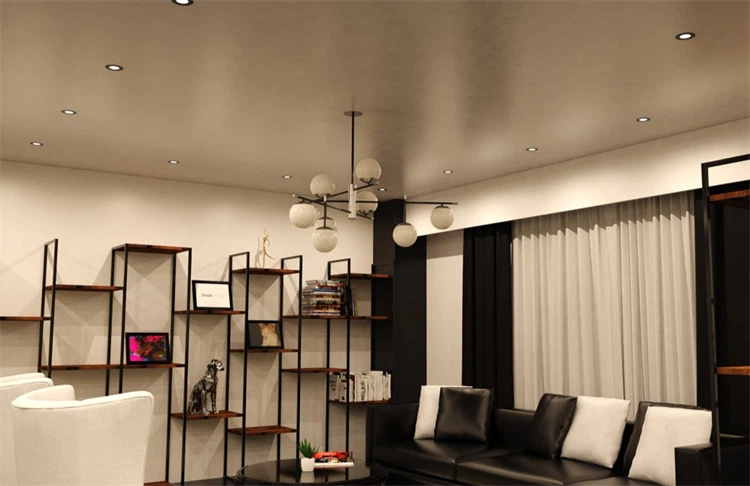
This area should invite relaxation. Use a combination of floor lamps, wall sconces, and table lamps to create a soft, low-level glow. Warm white tones (2700-3000K) are essential here, helping the space feel cosy and separated from the brighter, more functional kitchen zone.
Creating Cohesion and Control
While each zone has its own personality, the overall lighting scheme must feel unified.
Maintain Consistency: Stick to a consistent colour temperature for your primary ambient lights and repeat fixture finishes or styles throughout the space for visual continuity.
Install Zoned Circuits: Ensure your kitchen, dining, and living areas are on separate switches or circuits. This allows you to light each area independently for ultimate flexibility.
Embrace Dimming: Install dimmers for almost every light source. They are the simplest tool for mood control, letting you fine-tune the atmosphere for any occasion.
Consider Smart Systems: For the ultimate in convenience, smart lighting allows you to save and recall custom "scenes"-like "Cooking," "Entertaining," or "Movie Night"-with a single tap or voice command.
Common Mistakes to Avoid
Uniform Overhead Brightness: A single type of bright ceiling light flattens the space and destroys atmosphere. Always layer your lighting.
Ignoring Shadows: Poorly placed downlights can cast shadows right where you need clarity, especially in the kitchen. Counter this with well-placed task lighting.
Forgetting Dimmer Switches: Fixed lighting severely limits your ability to adapt the room's mood. Dimmers are a non-negotiable for modern living.
Choosing Fixtures Too Early: Select your fixtures only after you've planned the lighting layout. Form should follow function.
Final Illumination
In an open-plan home, lighting is the invisible architecture that guides how you live, feel, and connect within the space. By thoughtfully combining ambient, task, and accent layers-and controlling them with dimmers and zones-you create a home that is as functional as it is atmospheric. The result is a space that doesn't just look bright, but feels right.