Mint Species' Growth Reactions to Various LED Light Intensities in Indoor Greening
This study looks on the differences between three species of mint (Mentha canadensis). In indoor greening applications, piperascens, Mentha piperita, and Mentha spicata react to different LED light intensities. Although growing edible and fragrant plants indoors, such as mint, has aesthetic, psychological, and environmental advantages, little is known about the best lighting settings, particularly for aesthetically pleasing indoor spaces. Appropriate light intensity is crucial for both plant health and user comfort because indoor greening places more emphasis on aesthetic appeal and energy efficiency than commercial farms that prioritise productivity.
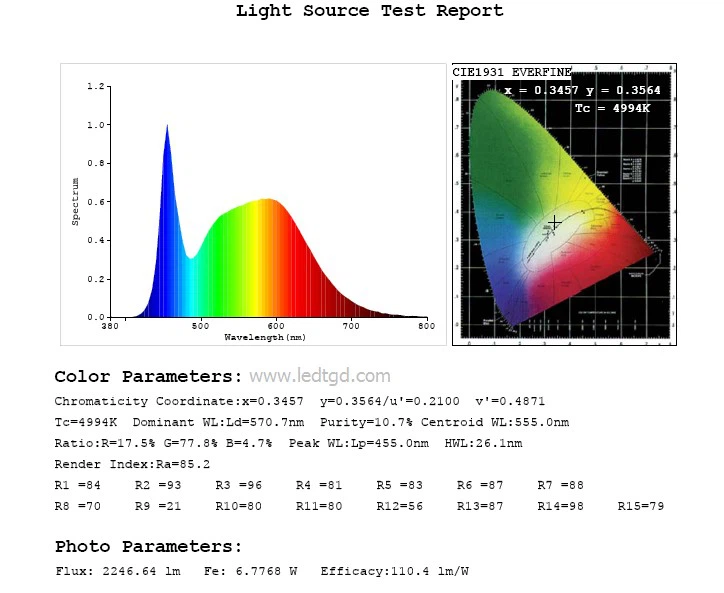
The experiment used 4000K LED lights with blue (460–470 nm) and yellow (570–580 nm) peaks and a colour rendering index (CRI) of 85 to investigate five levels of photosynthetic photon flux density (PPFD): 20, 100, 150, 200, and 250 μmol·m⁻²·s⁻¹. The temperature (20–27 °C), humidity (30%–60%), and 14-hour daily photoperiod were all kept constant. Shoot dry weight and SPAD chlorophyll levels were used to assess growth.
The results indicate that the ideal PPFD range for the three mint species is 150–200 μmol·m⁻²·s⁻¹. Up to 200 μmol·m⁻²·s⁻¹, dry shoot weight normally rose with light intensity; however, at 250 μmol·m⁻²·s⁻¹, it decreased because of photoinhibition, which decreased photosynthetic efficiency and resulted in leaf yellowing. Insufficient light caused increased stem elongation, a common shade-avoidance response, at 20 μmol·m⁻²·s⁻¹.
There were differences between the species: M. piperita grew best at 150 μmol·m⁻²·s⁻¹ and had leaf yellowing above 200 μmol·m⁻²·s⁻¹; M. spicata did best at 200 μmol·m⁻²·s⁻¹; and M. canadensis var. Overall biomass was reduced in piperascens, with no discernible variation between treatments. SPAD values also varied: all species showed lower SPAD values at 250 μmol·m⁻²·s⁻¹, suggesting light stress, whereas M. piperita showed increased chlorophyll levels under low light, showing shade tolerance.
The study comes to the conclusion that indoor mint cultivation requires specialised LED illumination because standard office light (below 20 μmol·m⁻²·s⁻¹) is insufficient. Healthy growth is supported by moderate PPFD (150–200 μmol·m⁻²·s⁻¹) without photoinhibition or etiolation. In order to balance plant performance with interior visual comfort, these findings offer useful recommendations for light management and herb selection in indoor greening.
https://www.benweilight.com/lighting-tube-bulb/grow-lights-for-houseplants.html
Our service:
1.Your inquiry related to our products or prices will be replied in 24 hours.
2.Well-trained and experienced staffs to answer all your enquires in fluent English.
3.OEM&ODM, we can help you to design and put into product.
4.Distributoership are offered for your unique design and some our current models.
5.Protection of your sales area, ideas of design and all your private information.