No Way? Turning on the Lights in a Tomato Greenhouse Can Double Yields?
We grew from the same seedlings but my neighbor's greenhouse tomatoes are taller, have more fruit and each fruit is larger. What's his secret weapon?
If you visit a modern tomato farm, you'll see rows of pinkish-purple or red LED lights hanging over the crops. This is not for looks, it is a tried and true method to increase production. In this video we're going to look at the latest research published by the Beijing Academy of Agriculture and Forestry Sciences (2024). We'll break it down and explain in simple terms how to use supplemental lighting for tomatoes and how much you can expect to increase your harvest.
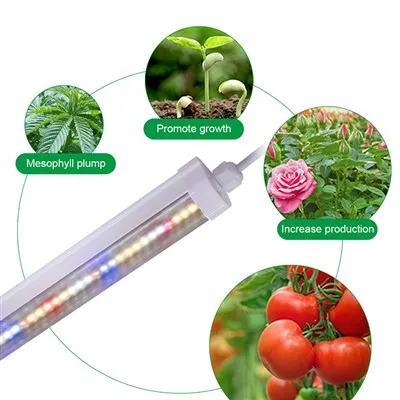
1. What Happens When Tomatoes Don't Get Enough Light?
Tomatoes love sun. Without enough light, seedlings grow tall and spindly, the leaves become thin and both flowering and fruit set are reduced. During winter, spring or long periods of cloud cover, the light intensity inside the greenhouse can be as low as 30-50% of that outside the greenhouse. This puts the tomatoes in a state of 'light starvation'.
This study was conducted in a fully controlled plant factory with 'Micro Tom' tomato variety. Researchers compared various lighting strategies. The results were clear: supplemental lighting works, but how you implement it matters a lot.
2. Vegetative Stage: Growing Tall or Growing Strong?
The goal during the seedling stage (vegetative growth) is to build a strong, healthy plant structure.
2.1Fastest Growth: Pure Red Light
Data collected 44 days after sowing showed that under pure red light:
- Plant height growth rate increased by 106.8% (more than doubled) compared to the white light control.
- Stem diameter growth rate increased by 50%.
- Total leaf area increased by 92.1% (nearly doubled).
In simple terms: under pure red light, seedlings grow faster, taller, and develop more leaves.
What this means for growers:
If you're starting seedlings in winter or early spring and want to reach transplant size quickly, pure red light is the best choice. Shortening the seedling stage means earlier transplanting and earlier market entry.
2.2Best for Strong Plants: Alternating Red and Blue Light
If you want tall plants with dark-green photosynthetically active leaves, try alternating red and blue light. The study demonstrated that the change of red and blue light every 1 h or 6 h increased the content of chlorophyll by 30.3% and 31.8%, respectively.
Why alternating is better than mixing?
Red light promotes the growth of stem and leaves, and blue light promotes the synthesis of chlorophyll and the development of the photosynthetic system. Going back and forth between them allows plants to switch between "growth" and "energy storage" modes-it's like building both size and strength.
Practical tip: If you have a smart control system in your greenhouse, you can program the red and blue lights to turn on and off alternately. Otherwise, a mixture of red and blue light with a ratio of at least 3:1 will work well.
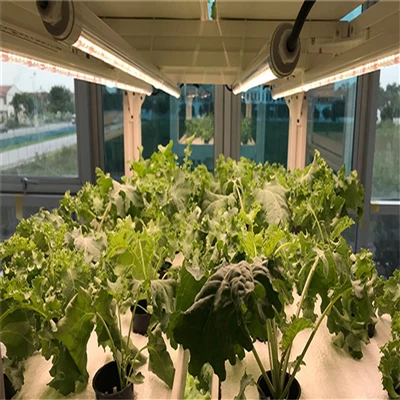
3. Reproductive Stage: More Flowers, More Fruit, Bigger Fruit
No matter how good the seedlings look, the final goal is yield. By day 83 after sowing (the reproductive stage), the results were even more striking.
3.1More Fruit: Pure Red Light Leads the Way
Under pure red light, the number of fruit per plant increased by **73.6%** compared to the control. That's nearly three-quarters more-meaning for the same number of plants, you get almost double the fruit.
3.2Bigger Fruit: Pure Red Light Still Ahead
Under the same pure red light treatment:
- Fruit diameter (width) increased by 34.4%.
- Fruit length increased by 35.3%.
- Fruit volume increased by 129.6% (more than doubled).
What this means:
Supplemental lighting doesn't just give you more fruit-it gives you significantly larger fruit. For the same number of fruits, total weight can double.
4. Comparison of Different Lighting Strategies
Comparison of Different Lighting Strategies
Pure Red vs. Alternating Red-Blue vs. White Light Control (Key Data)
| Indicator |
Measurement Time
|
White Light Control
|
Pure Red Light
|
|
Alternating Red-Blue (6h interval) | |
| Relative plant height growth rate | 44 days after sowing | 100% | +106.8% | Not significant | Not significant | |
| Relative stem diameter growth rate | 44 days after sowing | 100% | +50% | Not significant | Not significant | |
| Leaf area | 44 days after sowing | 100% | +92.1% | Not significant | Not significant | |
| Fruit set count | 83 days after sowing | 100% | +73.6% |
No significant increase |
No significant increase | |
| Fruit volume | 83 days after sowing | 100% | +129.6% |
No significant increase |
No significant increase | |
| Chlorophyll content | 44 days after sowing | 100% | No significant increase | +30.3% | +31.8% | |
| PSII performance index (PIABS) | 83 days after sowing | 100% | No significant increase | +100% | No significant increase | |
| Electron transport efficiency (ETo/CS) | 83 days after sowing | 100% | No significant increase | No significant increase | +16% to +23% |
5. Practical Recommendations for Growers
5.1What Light to Choose?
- First choice: Pure red LED lights. Research confirms that pure red light delivers the best results for plant height, stem diameter, leaf area, fruit count, and fruit size.
- If pure red is too expensive:Use mixed red-blue light with a red-to-blue ratio of at least 3:1. If possible, use alternating red and blue light (switch every 1–2 hours) for even better photosynthetic performance.
5.2When to Start Supplemental Lighting?
- Seedling stage: From emergence, provide 8–12 hours of light per day to promote strong seedlings.
- After transplanting to before flowering: Continue lighting to support vegetative growth.
- Flowering and fruit set: Maintain lighting to encourage fruit set and enlargement.
5.3How Long to Light Each Day?
In the study, lights were on for 12 hours per day in combination with natural light. In practice, adjust based on local sunlight conditions: more on cloudy days, less on sunny days. Aim for a total photoperiod of 12-16 hours.
5.4How High and How Dense to Mount the Lights?
Height: 30–50 cm above the plant canopy (adjust as plants grow).
Density: Aim for 200–300 lux at canopy level. Typically, one light fixture per 4–6 square meters.

So, What's the Takeaway?
Supplemental lighting is a science, not a magic trick. The study offers strong data that red light enhances tomato growth, increases fruit set and produces bigger fruit. Twice the plant height, 70% more fruit and double the fruit volume – these numbers translate directly into higher yields and better returns.
For growers considering upgrading their greenhouse equipment, the question isn't 'Should I go LED? but "When is the right time to install them and what type is best?
If you are going to buy grow lights, follow the science-backed conclusions above: use pure red LEDs or red-blue LEDs with a high ratio of red, install them properly, and run them on a smart schedule. Do not waste a single kilowatt hour.
Looking for a detailed lighting plan or product suggestions? Call us for one-to-one technical support for your growing business.