Why do dragon fruit plantations light up at night? Behind it lies a precise "calculation of light".
Drive by the dragon fruit bases at nite and you will be amazed at the sight - thousands of LED lights illuminate the fields creating a brilliant sea of lights. Some call it landscape, some call it romance. But for farmers this is a practical "yield-increasing plan".
Today we explain it to you scientifically:
Why Is Supplemental Lighting Needed for a Dragon Fruit?
How can one light effectively?
How much more profit can lighting make?
1. The "Biological Clock" of Dragon Fruit: No Light, No Flowering
Dragon fruit is a long-day, light-loving plant that is native to the deserts of Central America. It needs at least 12 hours of light a day to flower and fruit normally.Dragon fruit usually fruits naturally from June to November, with 4–5 harvests per year.
But here is the rub:
Days are short and nites are long in winter and spring, with less than 12 hours of daylight.
Dragon fruit will 'think' winter is over and go dormant – stopping flowering and fruiting.
That is the main reason why off-season dragon fruit is expensive but low in yield.
The principle of supplemental lighting is to "deceive" the dragon fruit with artificial light, so that it can think that the daytime is still long, thus inducing flower bud differentiation, breaking dormancy and achieving multiple rounds of flowering and fruiting.
2.HOW TO SUPPLEMENT WITH LIGHT? 3 Main Parameters
2.1 Light quality Not all lamps are created equal
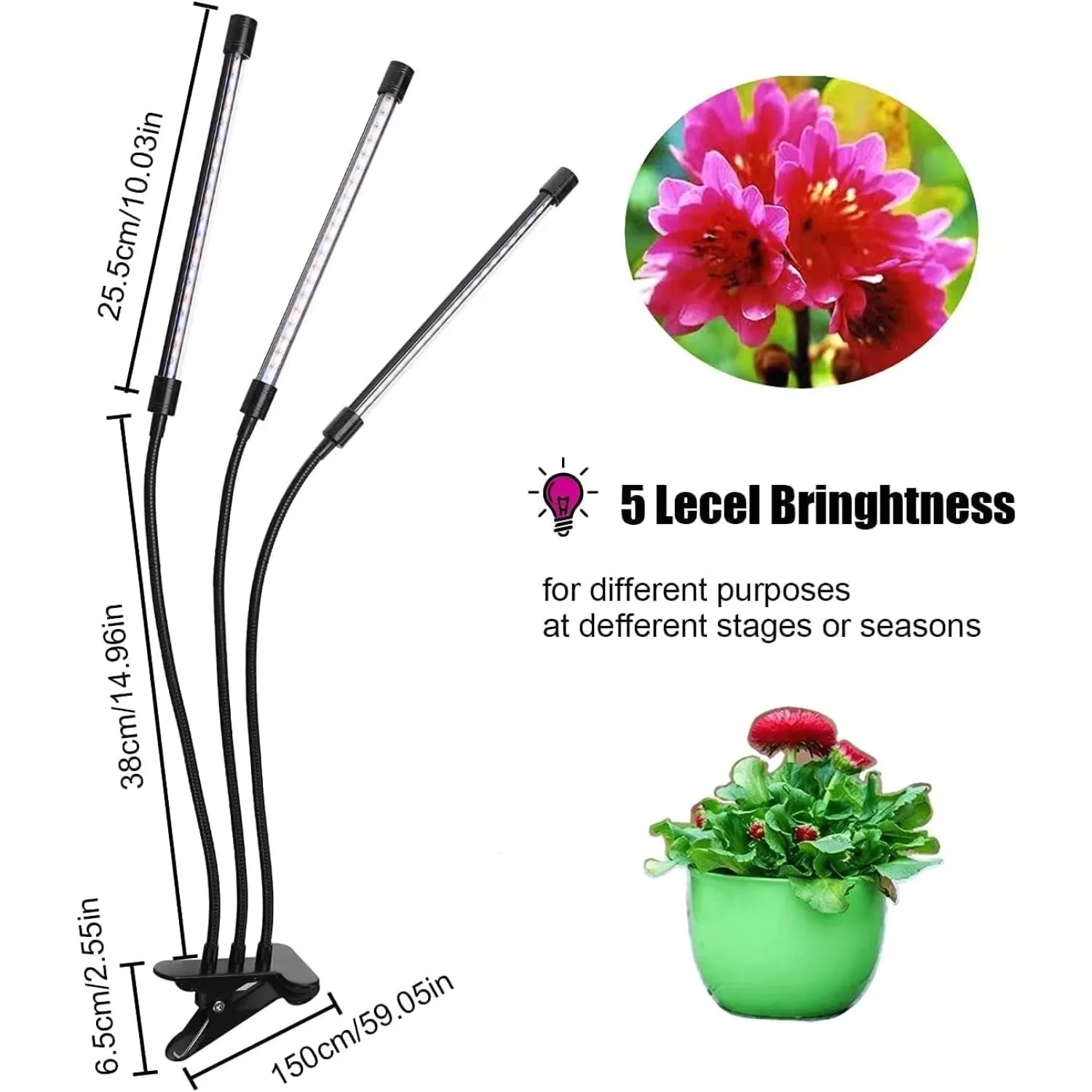
Studies have shown that the key spectra to induce dragon fruit flowering are red light (630-660 nm) and blue light (420-460 nm).
Red light stimulates flower bud differentiation and blue light promotes vegetative growth.
Studies from the Guangdong Academy of Agricultural Sciences have found that the best combined effect is achieved when the ratio of red to blue light intensity is at least 3:1.
Other studies suggest a 5:1 ratio of red to far-red light (730 nm) for better flowering induction.
Normal lighting?
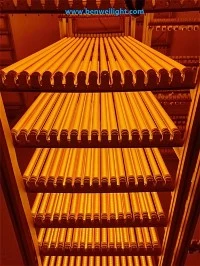
However the conventional energy saving lamps have light but not the particular wavelengths needed by plants, high power consumption and easy breakage.
LED plant growth lights use more than 50% energy saving, accurate spectrum and higher efficiency.
2.2 Sufficient but Not Too Bright Light Intensity
The specific guidelines from the International Journal of Agricultural and Biological Engineering are clear:
Illuminance of middle and lower parts of fruiting branches should be >200 lx, and minimum should not be <100 lx.
Intensity too low: cannot induce flower buds
Intensity too high: inhibits the formation of flower buds
The requirement is that when installed the lamp should be 1-1.3m from the middle of 80% of fruiting branches.
2.3 Critical Photoperiod: 4-6 Hours
There is no need to light through the nite and the too-long light also decreases fruit quality, e.g. the anthocyanin content.
Authoritative: Recommended plan
Lighting early spring: Start mid-March, 4-6 hours/day, stop when flower buds form late April
Late Autumn Lighting: start early September, 4-6 hours per day, stop from late October to mid November
Proposed time slots:18:00-24:00 (early nite) or 22:30-02:30 (late night). Both of them work.

3. Installation Layout: How to Hang Lamps Matters
Even with the same lamps, layout directly affects effect and cost:
| Planting Mode | Installation Density | Layout Method |
|---|---|---|
| Row type | One lamp every 1.5–1.8 m | Arranged along planting rows |
| Single-pillar type | One lamp per 4–4.5 ㎡ | Quincunx or triangular cross arrangement |
Key tip:
Triangular cross arrangement provides the best light uniformity, avoiding local over-brightness or darkness.40–50 lamps per mu are recommended.
4. Economic Benefits: How Much More Can Lighting Earn?
4.1 Yield Account
Annual harvests: Increase from natural 4–5 batches to 7–9 batches (+3–5 batches)
Yield increase: 2000 jin per mu from 4 extra off-season batches
Overall increase: 20%–30%
4.2Marketing Period Account
Natural season: June–November (6 months)
After lighting: March–November (8 months), one month earlier, one month longer
4.3Economic Account
Input cost: ~5,000 RMB per mu for lamps and installation
Electricity cost: ~2,000 RMB per greenhouse per year
Revenue increase: One extra early batch alone brings~10,000 RMB more income per mu
A planting case from Zhanjiang State Farms in Guangdong, China, shows that after introducing LED supplemental lighting, 4 extra off-season batches were harvested, with a yield increase of 2000 jin per mu and greatly improved income.
5.Supporting Management: Lighting Is Not Everything - Water and Fertilizer Are Essential
During lighting, dragon fruit consumes more nutrients, so water and fertilizer management must be strengthened simultaneously:
| Management Stage | Key Operations |
|---|---|
| Flower-promoting fertilizer | 0.3% potassium dihydrogen phosphate, drip irrigation every 7–10 days, 3 consecutive times |
| Foliar fertilizer | 0.5% seaweed extract + 0.2% potassium dihydrogen phosphate + boron-containing foliar fertilizer, spray 2–3 times |
| Fruit-strengthening fertilizer | 3–5 days after flowering, apply N:P:K = 15:10:25 compound fertilizer |
| Pruning | Thin branches, keep strong new shoots; control fruiting branches at 6000–6500 per mu |

6. Precautions
Temperature requirement:Day temperature >25℃, night temperature >20℃ for flower induction; lighting is ineffective below 15℃
Avoid strong direct light on buds:Excessively strong light inhibits flower bud formation
Lamp waterproofing:Outdoor use requires IP44 or higher waterproof rating
Smart control:Timers or light sensors are recommended for automatic on/off to avoid waste
Conclusion: A Beam of Light Illuminates the Dragon Fruit Industry
Dragon fruit lighting technology epitomizes the transformation of Chinese agriculture from traditional experience-based to modern precision-based.
From early energy-saving lamps to today's LED plant lights, from all-night lighting to precise 4–6-hour photoperiod control, science is helping farmers shift from "depending on the weather" to "determining yield with light".
For growers, choosing the right LED grow light means more than just extra harvests-it means price advantages from off-season marketing, stable annual yield, and tens of thousands of yuan in extra income per mu.