In the world of ultraviolet disinfection, bigger is not always better. While hospitals and industrial facilities deploy high‑powered UVC systems to sanitize entire rooms, the most common breeding grounds for bacteria, mold, and viruses in daily life are actually small, enclosed spaces: closets where damp clothes incubate mildew, shoe cabinets where odor‑causing fungi flourish, refrigerators where cross‑contamination persists, and bathrooms where airborne pathogens circulate. These spaces are too small for large‑scale disinfection units, yet too critical to ignore. The UVC ozone‑free disinfection lamp occupies a unique niche precisely here: compact enough to fit into tight corners, yet powerful enough to deliver professional‑grade germicidal efficacy.
1. The Science of 254nm UVC: DNA Destruction Without Chemicals
Ultraviolet light in the C band (UVC, 200–280 nm) has been recognized for decades as one of the most effective physical disinfection methods available. Among the UVC spectrum, the 254 nm wavelength holds special significance. Low‑pressure mercury lamps-the dominant technology for UVC generation-emit most of their photon energy at 253.7 nm, which lies extremely close to the peak absorption wavelength of microbial DNA and RNA (approximately 260–265 nm).
When UVC photons at 254 nm are absorbed by the purine and pyrimidine bases of DNA molecules-particularly thymine-they induce the formation of thymine dimers. These dimers structurally distort the DNA helix, preventing replication and transcription. The microorganism becomes unable to reproduce, and without replication, it cannot cause infection or spoilage.
Critically, this mechanism is purely physical. It leaves no chemical residues, produces no toxic byproducts, and-unlike chemical disinfectants-does not induce antimicrobial resistance. Research has confirmed that 254 nm irradiation inactivates SARS‑CoV‑2 through viral genome damage without destroying viral proteins, demonstrating a highly targeted mode of action. Academic studies have also verified that UVC disinfection follows a dose‑response relationship consistent with the Chick‑Watson first‑order kinetic model, with sufficient doses achieving >99.9% kill rates against bacteria such as E. coli and Staphylococcus aureus.
UVC 254 nm Disinfection Efficacy Against Common Pathogens
| Pathogen / Microorganism | Reported Dose for Inactivation | Efficacy Level | Reference Context |
|---|---|---|---|
| E. coli (Escherichia coli) | ~6,600 μJ/cm² | 99% kill | International medical literature |
| Yersinia pestis | ~1.4 mJ/cm² | Inactivated | Petri dish study (PMC) |
| Pseudomonas aeruginosa (biofilm) | 11.8 mJ/cm² | 89.6% kill | Catheter biofilm study (PMC) |
| P. aeruginosa (biofilm) | 47 mJ/cm² | 98% kill | Catheter biofilm study (PMC) |
| Trichophyton spp. (fungi) | 120 mJ/cm² | >99% kill | Surface disinfection study |
| SARS‑CoV‑2 (coronavirus) | Dose‑dependent via genome damage | Inactivated | PMC research article |
Note: Actual required dose varies with exposure time, distance from lamp, and environmental conditions.

2. Ozone‑Free vs. Ozone‑Generating: A Critical Decision for Occupied Spaces
Not all UVC lamps are the same. The distinction between ozone‑free and ozone‑generating lamps is one of the most important considerations for end‑users, yet it is frequently overlooked.
A standard low‑pressure mercury lamp emits two primary wavelengths: 253.7 nm, which is germicidal, and 185 nm, which generates ozone by splitting oxygen molecules (O₂) into atomic oxygen, which then recombines to form ozone (O₃). Ozone has its own disinfectant properties.
Because ozone is a gas, it can flow into areas that direct UVC radiation cannot reach, such as the undersides of objects, inside ducts, or behind furniture. This makes ozone‑generating lamps valuable for whole‑room disinfection and eliminating odors.
However, ozone is also a respiratory irritant. Prolonged or high‑concentration exposure can cause throat irritation, coughing, chest pain, and exacerbation of asthma or other respiratory conditions. For this reason, ozone‑generating lamps are strictly intended for unoccupied spaces and require a waiting period after use before re‑entry.
Ozone‑free UVC lamps, by contrast, are manufactured with quartz that blocks the 185 nm emission, allowing only the 253.7 nm germicidal wavelength to pass through. These lamps deliver the same bactericidal and virucidal power as their ozone‑generating counterparts, but without producing any ozone gas. They are therefore safe for use in occupied spaces and living areas, with no residual odor, no respiratory hazard, and no need for post‑disinfection ventilation.
Ozone‑Free vs. Ozone‑Generating UVC Lamps: Feature Comparison
| Feature | Ozone‑Free UVC Lamp | Ozone‑Generating UVC Lamp |
|---|---|---|
| Primary wavelength(s) | 253.7 nm only | 253.7 nm + 185 nm |
| Disinfection mechanism | Direct UVC radiation | UVC radiation + ozone oxidation |
| Ozone production | None | Yes |
| Suitability for occupied spaces | Yes - safe for living areas | No - unoccupied spaces only |
| Residual odor after use | None | Yes (ozone smell) |
| Ventilation required after use | No | Yes (30–60 minutes recommended) |
| Ability to reach shaded areas | Limited to line‑of‑sight | Yes - ozone circulates |
| Best use case | Daily disinfection in closets, shoe cabinets, bathrooms, refrigerators | Periodic deep disinfection of whole rooms |
The Benwei UVC lamp offers both configurations-ozone‑free models for everyday use in living spaces, and ozone‑generating options for enhanced deep disinfection when required. For the vast majority of residential and commercial small‑space applications, the ozone‑free version is the appropriate and safer choice.
3.Installation Simplicity: Plug‑and‑Play with Safety Built In
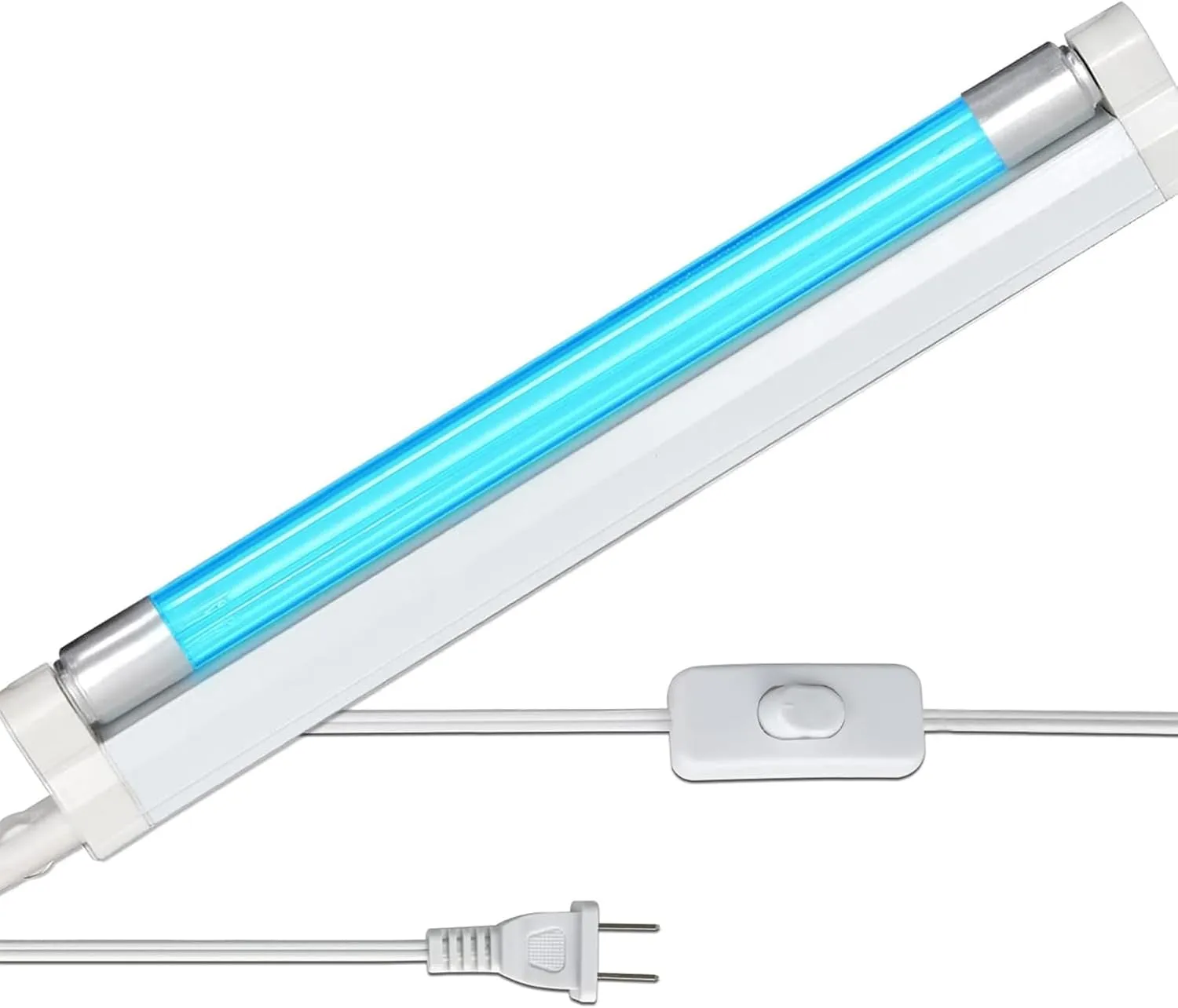
One of the primary barriers to UVC adoption in residential and light commercial settings has historically been installation complexity. Traditional UVC fixtures require hardwiring, ballast installation, and professional electrical work-costly and impractical for a closet or shoe cabinet. The Benwei 6W UVC lamp bypasses these obstacles entirely with a plug‑and‑play design featuring a pre‑assembled 110V US plug, power cord, and inline on/off switch.
No complex installation is required. The user simply plugs the lamp into any standard electrical outlet within the target space, positions the lamp for optimal coverage, and flips the switch. For applications requiring automated disinfection cycles, models with built‑in timers are also available. This simplicity makes the 6W UVC lamp accessible to a much wider audience-from homeowners seeking to reduce bathroom mold to property managers responsible for multiple units, to RV owners combating humidity‑related microbial growth in confined storage compartments.
4. Safety First: Understanding UVC Exposure Limits
UVC radiation is highly effective against microorganisms, but it is also hazardous to human skin and eyes under direct or prolonged exposure. The International Commission on Non‑Ionizing Radiation Protection (ICNIRP) and the World Health Organization have established clear exposure limits for UVC radiation.
Research indicates that direct eye or skin exposure exceeding 3 minutes may exceed human body safety limits. Exposure of 15 minutes can harm the cornea and lead to photokeratitis-a painful condition sometimes described as "welder's flash". Long‑term or repeated exposure carries more serious risks, including cataracts and skin damage.
For this reason, all UVC disinfection systems must incorporate appropriate safety measures. The Benwei 6W UVC lamp is intended for use in enclosed spaces where human exposure can be easily controlled-closets with closed doors, shoe cabinets with lids, bathrooms after occupants have left. The inline on/off switch provides manual control; models with timers or remote control options further automate the process, ensuring that disinfection cycles occur only when the space is unoccupied. For applications requiring higher levels of automation or integration, the lamp can also be configured with occupancy sensors or door interlock switches.
5. Technical Durability: Quartz, Aluminum, and Long‑Life Construction
The effectiveness of any UVC lamp depends not only on the lamp itself but on the quality of its components. Standard glass blocks a significant percentage of UVC radiation; only quartz glass allows efficient transmission of 254 nm photons. The Benwei UVC lamp is constructed with a high‑quality quartz UVC bulb, ensuring that germicidal output reaches its full rated potential.
The lamp is housed in a sturdy aluminum housing that provides mechanical protection, facilitates heat dissipation, and resists the corrosion that might otherwise occur in humid bathroom or kitchen environments. Aluminum also offers the advantage of being lightweight and non‑magnetic, simplifying mounting and positioning.
Lifespan is another critical consideration. While high‑powered UVC lamps in continuous industrial service may have shorter service lives, lower‑wattage lamps used intermittently-such as a 6W lamp operated for 15–30 minutes daily-can achieve extended operational lifespans, often exceeding 8,000–9,000 hours of cumulative operation. This translates to years of reliable service in typical residential and small commercial applications.
6. From Closets to Commercial Kitchens: The Expanding Application Landscape
The UVC ozone‑free lamp serves a diverse range of use cases that share a common characteristic: small, enclosed spaces where standard chemical cleaning is insufficient, impractical, or undesirable.
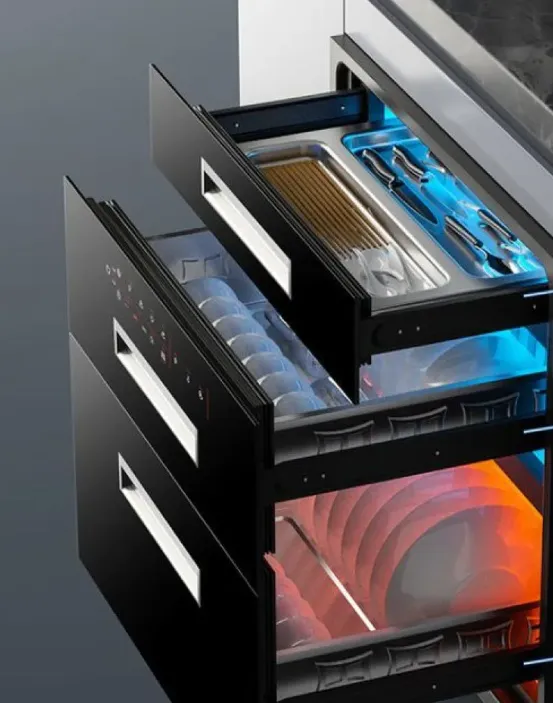
Residential applications include daily disinfection of bedroom closets to prevent mildew on seasonal clothing, shoe cabinets to eliminate odor‑causing bacteria between wears, bathrooms to reduce airborne and surface pathogens, and refrigerators to control cross‑contamination from raw meat and produce. The lamp's plug‑and‑play simplicity makes it equally suitable for apartments, condominiums, single‑family homes, and vacation properties.
Hospitality applications represent a significant and growing market. Hotels and short‑term rental properties (e.g., Airbnb, Vrbo) face constant turnover and elevated expectations for cleanliness. Placing UVC lamps in linen closets, under‑sink cabinets, bathroom storage areas, and guest room refrigerators provides an additional layer of disinfection between guest stays-without exposing cleaning staff to chemical residues or adding significant time to turnover procedures.
Healthcare and wellness applications extend to small clinics, dental offices, and therapy rooms, where instrument storage cabinets, supply closets, and staff break areas benefit from regular UVC disinfection. The absence of ozone ensures that these lamps can be used without respiratory concerns even in occupied facilities-provided that direct human exposure is avoided during operation.
Food service and retail applications include restaurant dry storage rooms, walk‑in cooler entrances, small bakery proofing cabinets, and convenience store refrigerated display cases. In environments where chemical sanitizers risk food contamination, UVC provides a non‑chemical, residue‑free alternative for reducing microbial loads on surfaces and in the air.
7. Buyer's Checklist: What to Look for in a UVC Ozone‑Free Lamp
For B2B buyers evaluating UVC ozone‑free lamps for procurement, distribution, or OEM integration, the following specifications and features distinguish professional‑grade products from low‑cost alternatives:
- Wavelength certification: Confirm that the lamp emits at 253.7 nm ± tolerance, with quartz construction that blocks 185 nm ozone‑generating output.
- Ozone‑free confirmation: Verify that the lamp is explicitly labeled as ozone‑free (or produced without 185 nm transmission) and is suitable for use in occupied spaces.
- Power configuration: For North American markets, pre‑assembled 110V US plug models simplify end‑user adoption. For international markets, lamps should be available in 220‑240V configurations with region‑appropriate plugs, or with universal voltage input.
- Safety features: Look for built‑in timers, remote control options, or compatibility with occupancy sensors and door interlock switches. The simplest safety mechanism remains proper installation in spaces where human access is naturally restricted (e.g., closets with doors, cabinets with lids).
- Durability: Aluminum housing, quartz bulb, and corrosion‑resistant construction are indicators of long‑term reliability in humid environments.
- Certifications: CE, RoHS, and other region‑appropriate certifications provide assurance of electrical safety and material compliance.
- Warranty and lifespan: Professional suppliers typically offer warranties aligned with expected service life. Reputable manufacturers provide clear specifications for lamp life under typical intermittent usage patterns.
10. Summary: Small Format, Serious Disinfection
The UVC ozone‑free disinfection lamp occupies a unique and valuable position in the ultraviolet lighting landscape. It does not attempt to sanitize entire hospital wards or whole‑room air handling systems. Instead, it focuses on the small, enclosed spaces where contamination consistently accumulates: closets, shoe cabinets, bathrooms, refrigerators, and other tight areas that are too confined for large‑scale disinfection equipment yet too important to ignore.
By delivering the germicidal power of 254 nm UVC radiation in a compact, plug‑and‑play format, the 6W lamp democratizes access to professional‑grade disinfection. It allows homeowners, property managers, small business operators, and hospitality professionals to incorporate physical, chemical‑free microbial reduction into their daily routines-without complex installation, specialized training, or recurring consumable costs.
The Benwei UVC ozone‑free disinfection lamp embodies these design priorities: a compact 6W form factor for confined spaces, a quartz bulb optimized for 253.7 nm germicidal output, an aluminum housing for durability, plug‑and‑play installation, and both ozone‑free and ozone‑generating options for application flexibility. For the closets, cabinets, bathrooms, and refrigerators where small spaces demand big protection, the 6W UVC lamp delivers.