Phototherapy and Lighting's Impact on Human Health
Understanding Artificial Light
Artificial light serves purposes far beyond simple illumination-it is used in treating depression, skin conditions, and various other medical disorders. When used in phototherapy, careful adherence to prescribed duration and intensity is essential due to potential risks from ultraviolet (UV) and other radiation types. To evaluate these effects, we must first understand what artificial light actually entails.
Artificial light contains visible light along with some ultraviolet (UV) and infrared (IR) radiation. Concerns arise when emission levels from certain light sources potentially harm the skin and eyes without proper precautions. All these forms-visible light, UV, and IR-reside on the electromagnetic (EM) spectrum.
The EM spectrum encompasses all forms of electromagnetic radiation, organized by wavelength from shortest to longest:

Gamma Rays: Used in medical imaging, these have the shortest wavelength and highest energy.
X-Rays: Employed in dentistry and security screening, also emitted by cosmic gases.
Ultraviolet (UV): Causes skin tanning and burning; invisible to humans but visible to some insects.
Visible Light: Detectable by the human eye from sources like light bulbs and fireworks.
Infrared (IR): Felt as heat; used in night vision technology and astronomical mapping.
Microwaves: Utilized in cooking and telecommunications.
Radio Waves: Longest wavelengths; used in broadcasting and astronomy.
UV and IR radiation can be further categorized by wavelength proximity to visible light:
UVA/UVB/UVC for ultraviolet
IRA/IRB/IRC for infrared.
IRA penetrates deepest into human tissue, potentially reaching the retina, while UVC, IRB, and IRC have minimal penetration. The body's natural defenses-blinking, pain response, and aversion-protect against excessively bright or hot light.
Long-term UV overexposure has been linked to increased risks of melanoma, squamous cell carcinoma, and basal cell carcinoma. Traditional lighting like incandescent, halogen, and fluorescent bulbs emit significant UV and IR radiation, converting most energy into heat rather than light. For instance, incandescent bulbs operate at only 20% efficiency (80% energy wasted as heat). In contrast, LED technology produces negligible UV/IR radiation, achieving 80% efficiency with minimal heat output, making it both safer and more energy-effective.

Medical Applications of Phototherapy
Seasonal Affective Disorder (SAD)
SAD, often called "winter blues," is a depression type linked to reduced natural light exposure, typically occurring from fall to early spring. Causes include disrupted serotonin/melatonin levels and biological clock changes. Treatment options include:
Dawn Simulators: Devices mimicking spring sunrises or sigmoidal dawn patterns over 30 minutes to 2 hours.
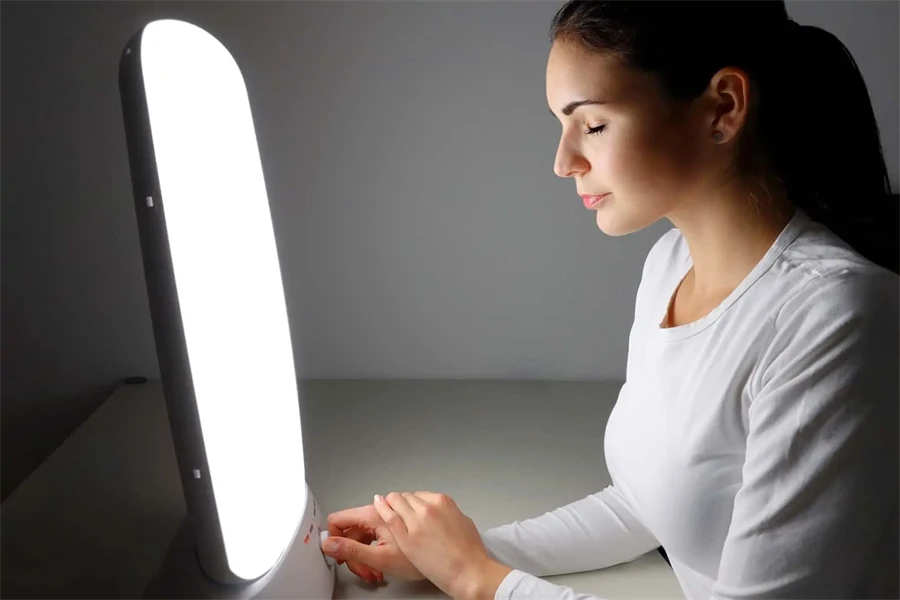
Light Boxes: Full-spectrum fluorescent screens emitting ~10,000 lux, used 30-60 minutes daily.
Blue Wave Therapy: Blue-light devices (goggles/boxes) that regulate circadian rhythms by suppressing melatonin.
Alternative Methods: Sun visors and timed lighting, though visors are used cautiously due to proximity to eyes.
Though designed for safety, these devices are not FDA-approved for SAD treatment.
Alzheimer's Disease
MIT research demonstrated that specific frequency light flickering can reduce beta amyloid clumps-protein accumulations linked to nerve cell damage in Alzheimer's patients. With Alzheimer's cases projected to triple by 2050, such phototherapy offers promising intervention potential.
Jaundice
Newborn jaundice (hyperbilirubinemia) is commonly treated with fluorescent phototherapy that breaks down bilirubin through skin absorption. Treatment duration is guided by daily bilirubin level monitoring.
Skin Conditions
Controlled UV exposure treats psoriasis, eczema, vitiligo, and other conditions via full-body units or handheld devices. Though the exact mechanism remains unclear, UV therapy is believed to slow skin cell overgrowth and modulate immune response. Strict adherence to prescribed intensity and duration is crucial to avoid collagen damage and other risks.
Lighting and Circadian Health
Our circadian rhythm-the 24-hour biological clock-is primarily regulated by light exposure. This rhythm influences core body temperature, melatonin, cortisol, and alpha amylase levels. Disruption can lead to poor sleep, elevated stress, mood disorders, and increased risks of cardiovascular/metabolic diseases.
Light spectrum critically affects circadian regulation:

Blue light suppresses melatonin, enhancing alertness (ideal for daytime).
Red/amber light promotes melatonin production, preparing the body for sleep.
The Lighting Research Center's Circadian Stimulus (CS) calculator helps design environments supporting natural rhythms by evaluating light sources' biological impact.
Implementing Health-Conscious Lighting
When selecting lighting for offices, healthcare facilities, or homes, consider:
Intensity and Timing: Maximize daylight exposure; limit blue light before bedtime.
Spectral Quality: Use cooler, blue-enriched light for daytime alertness and warmer tones for evenings.
Technology Choice: High CRI LED bulbs closely mimic natural sunlight, enhancing visual comfort, color accuracy, and cognitive performance while supporting circadian health.
By strategically using light spectrum and timing, we can harness artificial lighting not just for visibility, but as a tool for overall well-being, mood enhancement, and health maintenance.