Red Light Therapy for Horses: A Practical Guide to Protocols, Parameters, and Equipment Selection
Horses respond well to red light therapy provided the right conditions are met. Its application for managing chronic pain, wound healing, and muscle recovery is supported by the evidence. Three useful tools are provided in this article: a safety SOP, a device comparison framework, and a dosage matrix for particular circumstances.
What the Evidence Says
The body of evidence supporting equine photobiomodulation is expanding, albeit unevenly. Controlled studies provide solid evidence for some indications. Others rely on case reports and clinical expertise. The present situation is summed up in the table below.
| Indication | Evidence Strength | Key Finding |
|---|---|---|
| Wound healing | Strong | Accelerated closure and improved tissue quality in multiple equine studies |
| Muscle recovery | Moderate to Strong | Reduced markers of muscle damage post-exercise; faster return to function |
| Tendon injuries | Moderate | Improved fiber alignment and reduced reinjury rates when combined with controlled exercise |
| Chronic arthritis | Moderate | Pain reduction and improved mobility, though long-term structural changes remain unclear |
There are gaps in the evidence. Protocols differ greatly, and the majority of research are modest. The information that follows is not based on marketing claims but rather on the best available facts and clinical consensus.
How It Works: The Basics
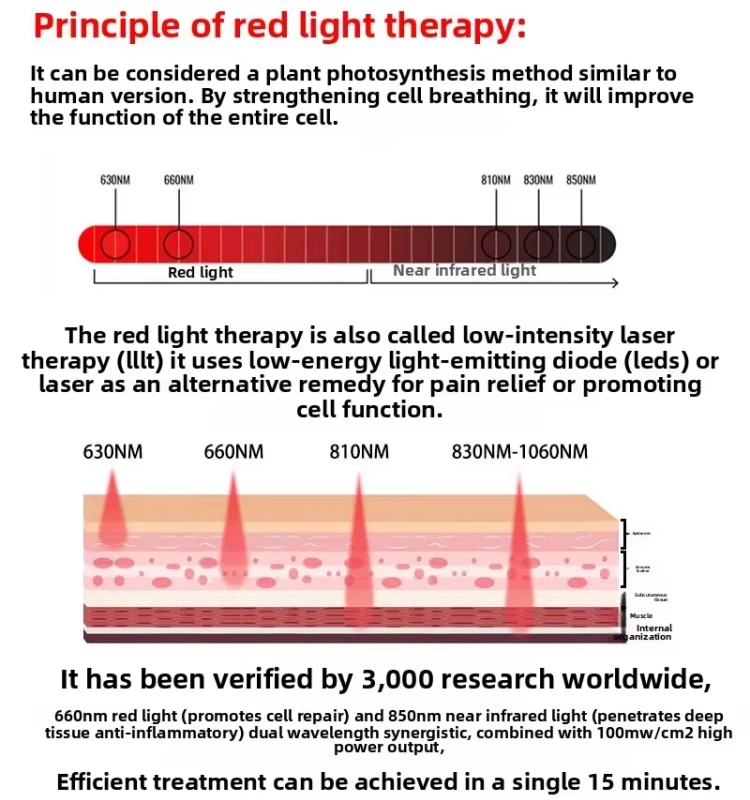
Red light therapy works by a process called photobiomodulation, or PBM. Mitochondria in cells absorb light at particular wavelengths. This results in enhanced blood flow, decreased oxidative stress, and greater ATP synthesis. The effects depend on the dosage. Too little energy is ineffective. The reaction may be blunted by too much.
For horses, two wavelength bands are most important. Superficially penetrating light in the 660 nm range is effective for wound healing and skin-level problems. Muscle, tendon, and joint tissues can be reached by near-infrared wavelengths in the 810–880 nm range. To cover several tissue depths, the majority of useful devices combine the two.
Irradiance and fluence are the two most important elements that you must comprehend. The power density that strikes the skin is called irradiance, and it is expressed in milliwatts per square centimetre. The total energy delivered is called fluence, and it is expressed in joules per square centimetre. The formula is simple. Fluence is calculated by multiplying irradiance by time in seconds and dividing the result by 1000. You can provide 6 joules per square centimetre if your equipment produces 50 milliwatts per square centimetre and you treat for 120 seconds. You cannot accurately compute either parameter if a manufacturer merely specifies total watts without mentioning the treatment area. That's a warning sign.
Condition-Based Protocols
Starting parameters based on published research and clinical practice are shown in the matrix below. These are goals for treatment sessions, not assurances. Make adjustments in accordance with your veterinarian's advice and the response of each individual horse.
| Condition | Wavelength | Irradiance (mW/cm²) | Session Fluence (J/cm²) | Time per Area | Frequency | Expected Course |
|---|---|---|---|---|---|---|
| Acute muscle strain | 660 + 850nm | 40-80 | 6-12 | 2-4 min | Daily for 5-7 days, then reduce | 1-2 weeks |
| Tendon injury | 850nm dominant | 50-100 | 8-16 | 3-5 min | Daily for 10-14 days | 4-8 weeks with rehab |
| Chronic arthritis | 660 + 850nm | 40-80 | 6-10 | 2-3 min | 3-4 times per week, ongoing | Long-term management |
| Wound healing | 660nm dominant | 30-60 | 2-6 | 1-2 min | Daily until closed | 1-4 weeks |
Place the gadget immediately on the afflicted muscle group in cases of acute muscle strain. Treat the horse right away after exercise and again the next morning if it is undergoing active training. As your primary progress markers, keep an eye on stride length and palpable discomfort.
The deeper tendon fibres must be reached by the NIR wavelength in order to treat tendon damage. The leg needs to be dry and clean. For the duration of the treatment, keep the device firmly in contact with the skin. Weeks 4 and 8 ultrasound scans offer unbiased comments on fibre alignment.
Consistency is more important for chronic arthritis than large dosages. Sporadic high-dose treatments are usually outperformed by three to four sessions per week at moderate fluence. Every week, record the lameness ratings and joint circumference. Within two to three weeks, you should notice functional improvement. If structural change happens at all, it takes longer.
Before every session, clean the area to promote wound healing. Your main tool in this situation is the wavelength of 660 nm. The gadget should be kept at the surface of the wound. The emergence of visible granulation tissue within a few days is encouraging. After a week, if the wound has not healed, recheck the regimen or consult a veterinarian.
Device Selection and Verification
Not every gadget fulfils the promises made in their specifications. Three things need to be confirmed before you buy. Start by searching for published irradiance figures rather than just total watts. Second, verify the size of the treatment region so you can determine whether the target tissue is sufficiently covered by the irradiance. Third, either test the output yourself or request independent test data.
Investing in a portable optical power meter is worthwhile. Set the meter to the proper wavelength, position the sensor at the precise treatment distance, and take many measurements across the device's surface to confirm the output. Before using the device for treatment, get in touch with the manufacturer if the measured output is more than 20% below the indicated value.
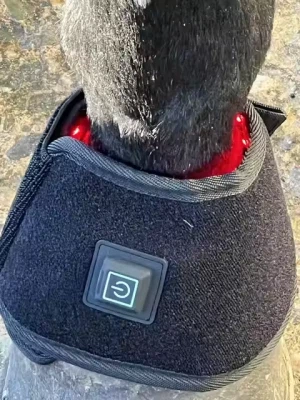
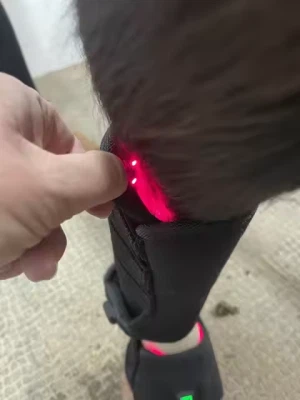
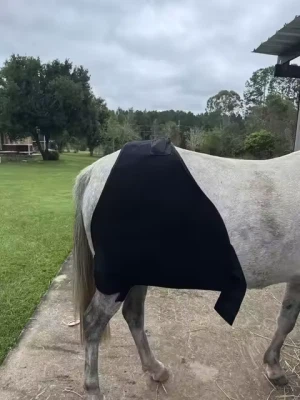
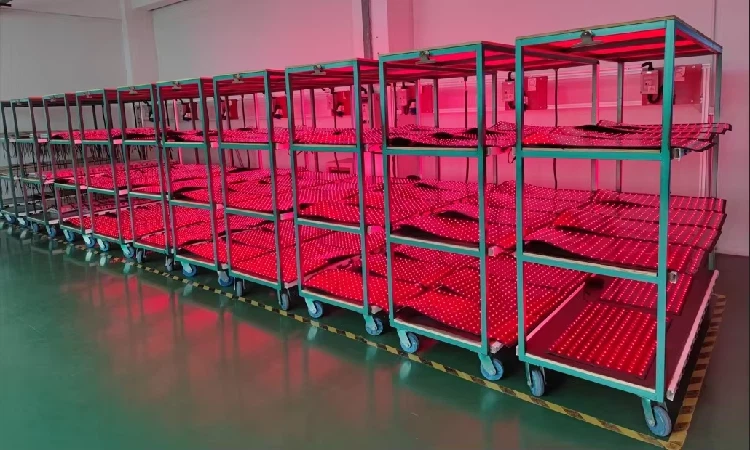
Think about your main use case when selecting a device type. One joint or wound can be specifically treated with handheld devices. Bigger pads are better for numerous horses used in succession because they cover more muscle areas. Panel systems are appropriate for high-throughput clinics. The crucial factor is the same for all varieties: can the apparatus provide your horses with the necessary fluence in a reasonable amount of time?

Safe Use and Risk Management
Red light therapy is not risk-free, although it has a good safety record provided basic procedures are followed. Thermal accumulation is the most frequent issue, especially when high-power devices are held too close to the skin. During the first few minutes of treatment, take a skin temperature reading at the treatment site. Increase the distance a little if the region seems warm to the touch.
It is required to wear eye protection. Retinal tissue may be harmed by the wavelengths utilised in PBM devices. Wavelength-specific protective eyewear should be worn by the operator and any handlers. When treating any area close to the horse's head, the eyes should be protected.
Keep a record of each session. Note the date, treatment time, device settings, treated area, and any observations. This record serves as your initial diagnostic tool in the event that an issue arises. Additionally, it enables you to monitor progress and modify protocols using data rather than speculation.
Absolute Contraindications
You may need to get specific veterinarian permission or refrain from treatment for certain conditions. Red light therapy should not be applied directly to lesions that are known or suspected to be malignant. It is yet unclear how PBM affects malignant cells' ability to proliferate. Due to the absence of safety information about equine reproduction, pregnancy is contraindicated. The laser should never be aimed directly into the eye. Avoid treating deep open fractures that require surgery or excessive bleeding. If the horse has a fever and a systemic infection, treat the underlying illness first.
FAQ
Q: Does red light therapy work for horses?
A: Yes, when used with appropriate parameters. The strongest evidence supports wound healing, muscle recovery, and chronic pain management. Results depend on delivering the correct dose to the target tissue.
Q: What is the difference between 660nm and 850nm?
A: 660nm red light penetrates superficial tissue and is ideal for skin-level treatment and wound healing. 850nm near-infrared light reaches deeper structures like muscle, tendon, and joints. Most practical protocols use a combination.
Q: Can red light therapy burn a horse?
A: Thermal buildup is possible with high-power devices held too close to the skin for too long. Monitor skin temperature during treatment. If the area feels warm, adjust the distance. True photonic burns from correct wavelengths are rare when basic precautions are followed.
Q: How do I calculate the dose for my device?
A: Fluence in joules per square centimeter equals irradiance in milliwatts per square centimeter multiplied by time in seconds, divided by 1000. If your device outputs 60 milliwatts per square centimeter and you treat for 100 seconds, you deliver 6 joules per square centimeter.
Q: Is it safe for pregnant mares?
A: No safety data exists for use during equine pregnancy. Avoid treatment over the abdomen and pelvic region in pregnant mares. Consult your veterinarian before treating a pregnant mare for any non-reproductive condition.
Summary
As with any professional intervention, red light treatment is a useful tool for equine care and recuperation. Dosage, consistency, and documentation are the three factors that define success.Get the parameters right. Stick to the protocol. Track the outcomes.
Our technical staff can guide you through the important factors if you are comparing devices and need assistance matching specifications to your needs.
Reference
【Effect of infrared and red monochromatic light on equine wound healing】
Equine Vet J. 2021 Jan;53(1):143-148. doi: 10.1111/evj.13266. Epub 2020 Apr 24.
Photodermatol Photoimmunol Photomed. 2017 Jan;33(1):4-13.doi: 10.1111/phpp.12282.