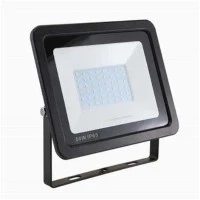
What Conditions Must LED High Bay Lights Meet for Ambient Temperatures of 80–90°C?
High temperatures are the number one killer of LED lighting
In extreme industrial environments-steel smelting plants, glass manufacturing workshops, paper mill drying zones, large boiler rooms, and foundries-ambient temperatures frequently soar to 80°C or even 90°C. For ordinary LED luminaires, an environment above 50°C is already a "deadly furnace": luminous flux decays rapidly, service life plummets, and catastrophic failure can occur in a matter of weeks.
Why is heat so lethal? Although LEDs are "cold" light sources, the chip (junction) generates significant heat during operation. When the ambient temperature (Ta) is already 90°C, the available temperature differential for heat dissipation is extremely narrow. If the junction temperature (Tj) exceeds 120°C, you will face:
- Sharp drop in luminous efficacy
- Accelerated phosphor degradation causing severe color shift
- Broken gold wires leading to total failure
So, what are the essential "hard-core" requirements for an LED high bay that can truly operate reliably in 80–90°C ambient conditions?
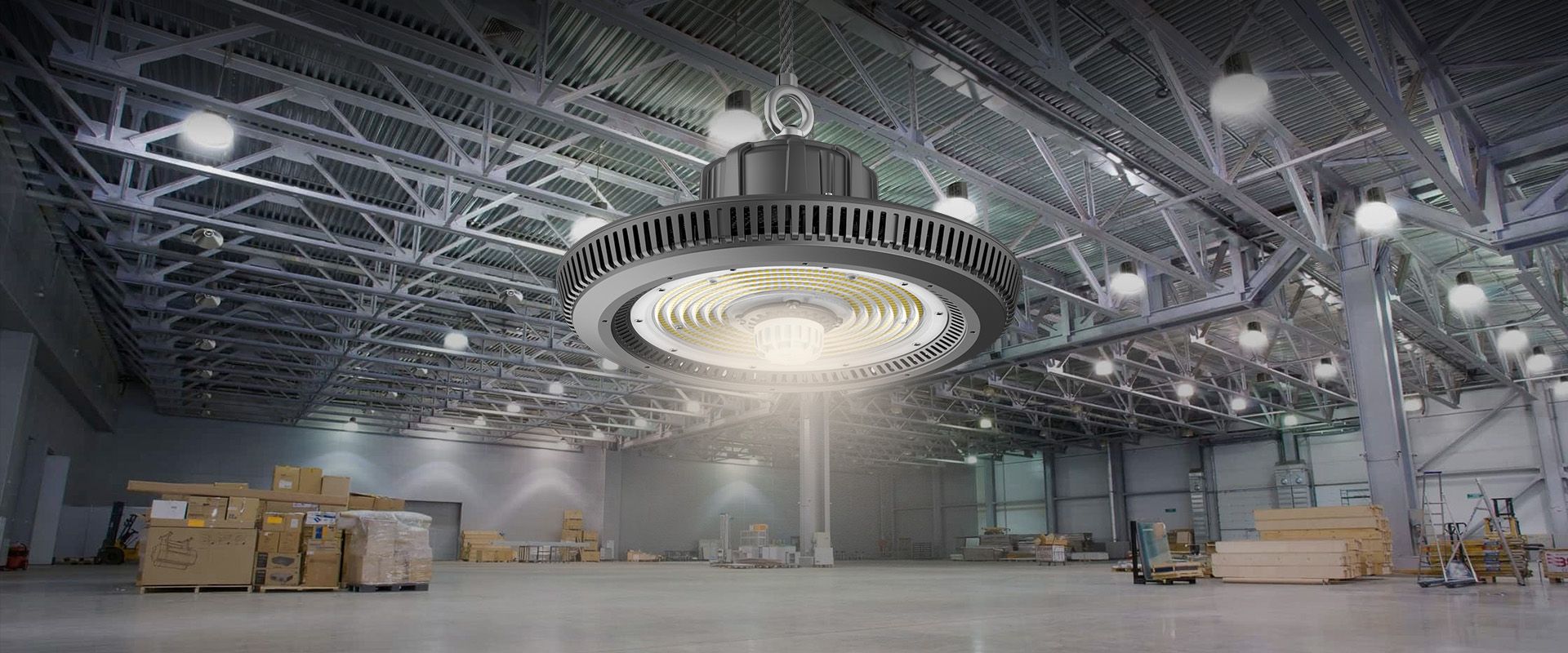
Condition 1: Segregated / Remote Driver Design – Physical Isolation of Driver and Light Source
This is the single most critical structural innovation for high-temperature LED fixtures.
Electrolytic capacitors inside LED drivers are extremely sensitive to heat. Standard electrolytic capacitors rated at 105°C may last only a few thousand hours when enclosed inside a 90°C luminaire housing. The only effective solution is a segregated design – mounting the driver remotely (separate from the LED cavity) or placing it in a cooler area such as a distribution cabinet or an adjacent corridor.
What to look for: an external or independently cooled driver compartment, ensuring that all electronic components stay away from the core heat zone.
Condition 2: Aerospace‑Grade Thermal Management – "Pushing" Heat Out
At 90°C ambient, conventional die‑cast aluminum heat sinks simply cannot cope.
A truly heat‑resistant high bay must excel in thermal architecture:
- High‑efficiency heat sink material: Use 6063‑T5 extruded aluminum or high‑purity aviation‑grade aluminum (e.g., 1070) – these offer up to twice the convective performance of standard ADC12 die‑cast aluminum. Thick anodized aluminum housings double as efficient heat sinks, with large surface areas rapidly dissipating heat from both LEDs and drivers.
- Innovative convective design: Chimney‑effect cooling structures generate natural thermal convection, accelerating air circulation around the fixture. Vertical fin arrays and open‑frame housings promote unrestricted airflow, efficiently carrying heat away through every gap.
- Modular architecture: Modular LED strips deliver the highest level of thermal performance, allowing each lighting module to cool independently.
What to look for: an integrated die‑cast or extruded housing‑heatsink with ample surface area and unobstructed convection channels, capable of maintaining junction temperatures well within safe limits even at 90°C Ta.

Condition 3: Ultra‑Heat‑Resistant Components & Materials – Every Part Must Withstand the "Fire"
A genuine high‑temperature high bay must use components that are individually qualified for extreme thermal stress:
LED chips: Ceramic‑substrate, high‑Tj devices (e.g., Cree, Nichia industrial‑grade chips) with maximum junction temperature ratings of 150°C or higher.
- Housing materials: High‑strength anodized aluminum profiles with corrosion‑resistant coatings that maintain structural integrity at 80°C. Fluorocarbon (FKM) gaskets retain flexibility and sealing performance where standard rubbers would harden and crack.
- Driver: Industrial‑grade, high‑temperature‑rated constant‑current drivers with built‑in protections: Over‑Temperature Protection (OTP), Over‑Voltage Protection (OVP), and Short‑Circuit Protection (SCP).
- Optical components: Optional tempered glass lenses to resist molten metal splashes and abrasive debris.
What to look for: full‑system validation – all materials must pass high‑temperature aging tests, with a certified design life of 50,000+ hours at 80–90°C.
Condition 4: High Ingress Protection – Not Just Heat, but "Total Defense"
High‑temperature environments are rarely "dry heat" – they typically come with dust, oil mist, chemical vapors, humidity, and even high‑pressure washdowns.
- IP rating: IP65 or higher (fully dust‑tight and protected against water jets/chemical mist). Premium products reach IP66 or even IP67.
- Corrosion resistance: Anti‑corrosion coatings prevent accelerated material degradation under combined thermal and chemical attack.
- Certifications: Third‑party listings such as ETL, cULus, or CE confirm that the fixture meets the highest safety and performance standards for high‑ambient‑temperature, high‑power applications.
Why Choose Our High‑Temperature LED High Bays?
In 80–90°C environments, ordinary LED high bays can fail within months. A single lighting failure in a continuous‑process industry – steel, glass, or chemical plants – can cause $10,000 to $50,000 per hour in unplanned downtime.
Our high‑temperature LED high bays are engineered from the ground up for 80–90°C extremes:
✅ Segregated / remote driver design – electronics stay away from the heat core
✅ Aviation‑grade aluminum heatsinks + chimney‑effect convection – >100% better thermal performance
✅ Industrial‑grade thermal chips + FKM seals + tempered glass optics – every component proven in heat
✅ IP65+ with corrosion‑resistant coating – ready for dust, oil, chemical mist, and washdowns
✅ ETL and other international certifications – 50,000‑hour rated life
✅ 5‑year warranty – total peace of mind
Stop frequent replacements, stop gradual dimming, stop costly downtime – let one luminaire light up your entire production line.
Looking for proven high-temperature lighting solutions that significantly reduce downtime and maintenance costs? Contact us today. Request free samples and on-site thermal analysis – we'll respond within 24 hours. Email bwzm88@benweilighting.com for a customized quote and a 5-year warranty. Let our luminaires withstand high temperatures and ensure your production never stops.