Surviving the Heat: Why Standard LED High Bays Fail in High-Temperature Industrial Environments – and How 55°C/60°C–Rated Fixtures Deliver Long-Term Reliability
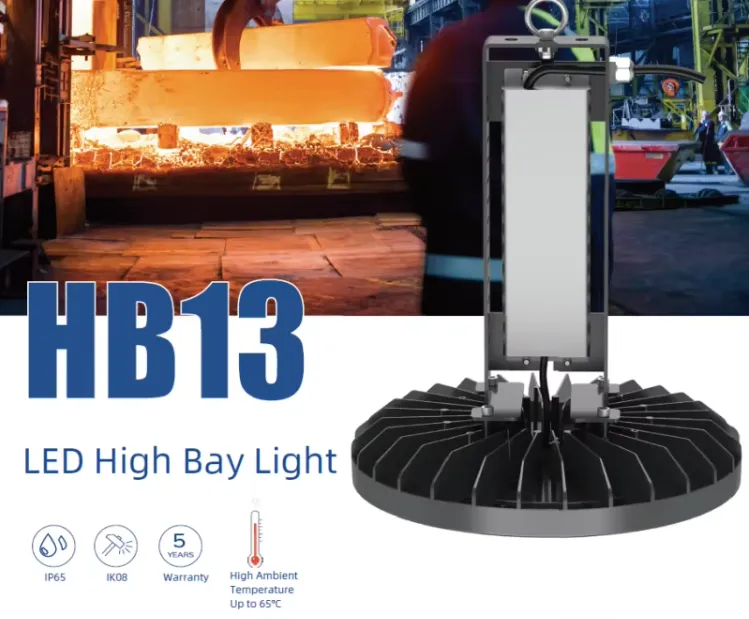
In heavy industrial facilities, harsh environmental conditions are the ultimate test of any lighting product. Among these challenges, high ambient temperature is arguably the most underestimated yet destructive factor. From steel mills and foundries to automotive plants, cement factories, and forging workshops, standard LED high bay fixtures-those designed for ordinary warehouses-rapidly degrade and fail when the surrounding air temperature consistently exceeds 45–50°C. A purpose-built high-temperature LED UFO high bay, engineered for ambient temperatures of 55°C, 60°C, and beyond, addresses these conditions through advanced thermal architecture, high‑grade materials, and intelligent driver protection.
The Physics of Failure: Why Heat Destroys Standard LED Fixtures
Unlike traditional metal halide or high-pressure sodium lamps, which actually require high operating temperatures to function properly, LED technology is fundamentally sensitive to heat. The physics is straightforward but unforgiving: every 10°C increase in a component's operating temperature approximately halves its expected lifetime.
Accelerated Lumen Depreciation
When LED chips operate at elevated junction temperatures (Tj), both luminous efficacy and lifetime degrade dramatically. Standard LEDs can lose 0.2–0.5% of their lumen output for every 1°C rise in junction temperature. A fixture designed for 25°C ambient operation, installed in a 55°C foundry environment, experiences a much higher junction temperature-directly accelerating phosphor degradation and causing irreversible color shift years before its rated L70 lifespan would otherwise be reached.
Driver and Electrolytic Capacitor Failure
In high-temperature environments, the LED driver-specifically its electrolytic capacitors-is the most vulnerable component. These capacitors are highly heat-sensitive; their operational lifespan is roughly halved for every 10°C rise above rated temperature. A standard driver rated for 40°C ambient that operates at 60°C may see its useful life drop from 50,000 hours to just 12,500 hours or less. Beyond capacitor degradation, the MOSFETs and power diodes within the driver also experience increased junction temperatures, leading to significantly shorter mean time to failure (MTTF) and accelerating overall luminous flux depreciation.
Seals, Insulation, and Structural Deterioration
High heat also attacks the physical integrity of the luminaire. Silicone gaskets can harden and shrink, compromising IP-rated seals. Wire insulation may become brittle, increasing the risk of short circuits. Polycarbonate (PC) lenses-while offering a heat deflection temperature around 130°C-can still experience gradual yellowing and reduced light transmission under sustained high temperatures and UV exposure. Ordinary plastic housing components not rated for elevated temperatures may warp or melt outright.
The 55°C/60°C–Rated UFO High Bay: Built for the Hot Zone
Where standard fixtures inevitably fail, purpose-engineered high-temperature LED high bays such as those offered by Benwei (operating efficiently between -30°C and 65°C with a 50,000-hour rated lifespan) are designed to survive and thrive. These fixtures incorporate several critical design features that differentiate them from ordinary high bays.
Thermal Architecture: A Heat Sink That Actually Works
The centerpiece of any high-temperature LED fixture is its heat sink. The Benwei UFO high bay features a bionic fin heat sink design: the aluminum shell is made of high thermal conductivity die-cast aluminum, with bionic fin convection integrated into the lamp body. This approach maximizes surface area for convective cooling, which is essential when natural airflow is the only mechanism for moving heat away from the fixture.
Key aspects of a high‑performance heat sink for elevated ambient temperatures include:
- Material: Die-cast aluminum with thermal conductivity coefficients around 180–210 W/m·K transfers heat away from the LED junction and driver much more effectively than cheaper alloys or plastic housings.
- Fin density and orientation: Thin, vertically oriented fins create natural chimney airflow, allowing hot air to rise and escape rather than being trapped against the ceiling.
- Separated compartments: High-quality designs physically isolate the driver compartment from the LED light engine, preventing heat generated by the LEDs from raising the driver's ambient temperature.
Impact of Ambient Temperature on LED Driver Lifespan
| Ambient Temperature | Driver Operating Temp Rise | Expected Driver Life (vs. 40°C baseline) |
|---|---|---|
| 40°C (standard) | Baseline | 50,000 hours |
| 50°C | +10°C over baseline | 25,000 hours (≈50% reduction) |
| 55°C | +15°C over baseline | ≈17,500 hours (≈65% reduction) |
| 60°C | +20°C over baseline | ≈12,500 hours (≈75% reduction) |
| 65°C | +25°C over baseline | ≈8,750 hours (≈83% reduction) |
*Note: Driver lifespan approximately halves for every 10°C rise above rated operating temperature. A high-temperature‑rated driver with upgraded components can maintain 50,000+ hours even at 55–65°C ambient.*
High-Grade Components Throughout
A high-temperature UFO high bay cannot rely on a single robust component; every element must be specified for elevated thermal conditions.
LED chips: High-temperature fixtures use LED chips selected for superior heat resistance and minimal thermal attenuation. Standard chips may show significant output loss above 85°C junction temperature; purpose‑selected chips maintain stable performance well into high-temperature regimes.
Driver: The driver is the most critical upgrade. High-temperature fixtures use drivers built with high-temperature polymer capacitors-or eliminate electrolytic capacitors altogether in favor of ceramic capacitor designs-and are rated for maximum case temperatures (Tc) appropriate for 55–65°C ambient operation.
Lens and optics: Professional‑grade fixtures utilize high‑quality glass lenses that remain stable under UV and elevated temperatures without yellowing or cracking, or premium optical-grade polycarbonate offering high light transmission (89–91%) with heat deflection temperatures up to 135°C.
Gaskets and seals: Silicone rubber gaskets that maintain elasticity across a wide temperature range ensure IP65 or IP66 ratings remain intact despite thermal cycling.
Wiring: Internal wiring and external cables use high-temperature insulation (such as UL3239 silicone wire) rated for continuous operation at elevated temperatures.
Intelligent Driver Protection: Thermal Foldback
One of the most important yet least understood features of high‑quality high‑temperature LED fixtures is thermal foldback protection.
Thermal foldback is a hardware protection mechanism integrated into the LED driver that automatically reduces output power when internal temperatures reach a critical threshold-often between 90°C and 105°C. As the temperature continues to rise beyond the threshold, the light output dims proportionally along a linear curve rather than abruptly shutting off.
Practical implications for industrial facilities:
- Limp-home functionality: A fixture that dims by 20% on a record‑hot summer afternoon still provides essential illumination for worker safety, unlike a fixture without foldback that may fail completely.
- Auto-recovery: Once ambient temperatures drop-during cooler night hours or after ventilation improves-the driver automatically restores full power without requiring manual reset or service calls.
- Longer overall lifespan: By preventing catastrophic thermal runaway, thermal foldback extends both driver and LED module lifetimes.
For facility managers in high-heat environments, specifying fixtures with thermal foldback is not optional-it is an essential risk‑mitigation strategy.
Material Selection: The Unsung Hero of High‑Temperature Lighting
A high-temperature LED fixture is the sum of its material choices. Thermally conductive die-cast aluminum housings dissipate heat efficiently. Tempered glass or high-grade polycarbonate (PC) diffusers resist yellowing and impact-standard PC offers heat deflection around 130°C, while advanced grades withstand 135–150°C.
External cables and internal wiring must meet minimum 90°C temperature ratings per UL 8750 requirements. UL3239 silicone wire, rated to 150–200°C, is commonly used in professional high‑temperature fixtures.
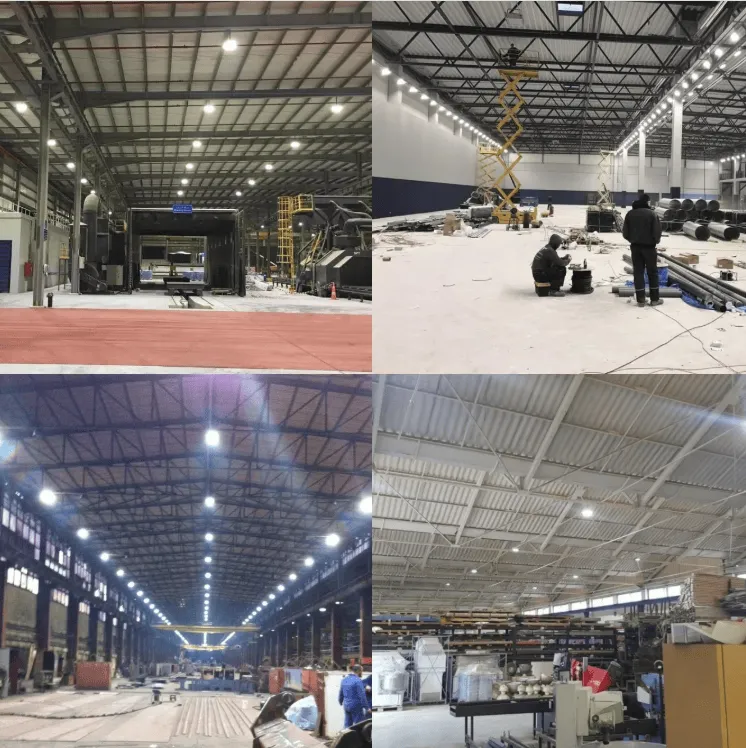
Where High‑Temperature UFO High Bays Are Deployed
High-temperature LED high bays are designed for industrial sectors where ambient heat is a persistent operational reality-not a seasonal anomaly.
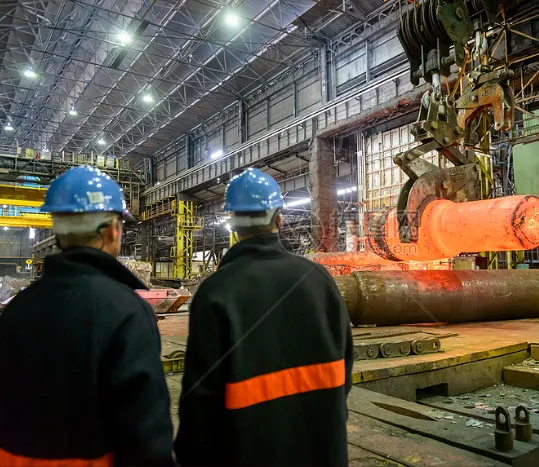
Steel mills and foundries: Among the most demanding applications. Molten metal, radiant heat, airborne dust, and heavy industrial activity create conditions where standard fixtures fail quickly. Ambient temperatures often exceed 150°F (≈65°C), with much higher localized heat near furnaces, pouring stations, and melt areas. High-temperature fixtures rated to 65°C, 80°C, or higher provide reliable illumination over casting floors and rolling mills.
Automotive manufacturing plants: Paint bake ovens, engine test cells, foundry sections, and forging areas expose lighting to sustained heat ranging from 50–70°C. 55–60°C‑rated UFO high bays ensure consistent visibility without premature driver or LED failure.
Glass and ceramic manufacturing: Kilns, lehrs, and forming areas operate at extreme temperatures-even ambient heat several meters from equipment can exceed 60°C.
Cement and mining facilities: Clinker coolers, preheater towers, and material processing zones generate substantial ambient heat. High‑temperature fixtures also offer improved sealing against the dust typical of these industries.
Foundries and forging shops: Radiant heat from furnaces and hot metal makes general area lighting challenging. Fixtures must withstand both ambient and radiated heat.
Casting and extrusion plants: From aluminum die‑casting to copper extrusion, hot metal processing demands lighting that remains operational year‑round in high‑temperature environments.
High-temperature UFO high bays are ideal for high ceiling installations (mounting heights of 6–15 meters or more), providing 400–500 lux of uniform illumination across large floor areas.
Critical Buyer's Checklist for High‑Temperature UFO High Bays
When evaluating high-temperature LED fixtures, professional buyers should verify:
- Clear ambient temperature rating: The fixture should state its maximum operating ambient temperature (e.g., 55°C, 60°C, 65°C). Verify this rating matches the actual installation conditions-including any localized heat sources.
- Driver specifications: Request driver datasheets showing maximum case temperature (Tc) ratings and capacitor types. High-temperature polymer or ceramic capacitors are strong indicators of quality.
- Heat sink design: Look for die-cast aluminum construction with substantial fin area. Plastic housings or minimal fin designs are red flags for high-temperature applications.
- Thermal foldback confirmation: Ask whether the driver includes thermal foldback protection-a crucial feature often overlooked in low‑cost alternatives.
- Certifications: UL/cUL listing (including UL 8750 for LED components) and IP65/IP66 ratings provide third‑party validation of safety and environmental sealing.
- Warranty and lifespan claims: A 5‑year warranty and 50,000‑hour rated life from a reputable manufacturer indicate confidence in thermal management design.
Installation Matters in High‑Temperature Environments
Even the finest high-temperature fixture will struggle if installed incorrectly. Critical installation practices for high-heat environments include:
- Maintain clearance: Mount fixtures at least 1–2 inches below the ceiling or use pendant mounts to allow air to circulate freely around the entire heat sink.
- Avoid thermal plumes: Do not install fixtures directly above furnaces, kilns, or other heat sources where the fixture may be exposed to rising hot air exceeding its rating.
- Consider ambient vs. radiant heat: In some locations, radiant heat from nearby equipment may be more damaging than ambient air temperature. Select fixtures with appropriate margins.
- Regular inspection: In dusty environments, inspect heat sink fins periodically for dust accumulation that could reduce cooling efficiency.
- Allow for seasonal variation: In climates with extreme summer heat, select fixtures with additional thermal margin to accommodate the highest expected seasonal temperatures.
Summary
The difference between a standard LED high bay and a purpose‑engineered high‑temperature UFO high bay is not incremental-it is the difference between a lighting system that fails within months and one that delivers reliable illumination for years in some of the harshest industrial environments on earth.
For facility managers, procurement professionals, and lighting specifiers, understanding the physics of thermal failure, the critical role of advanced thermal architecture, the necessity of high‑grade materials throughout the fixture, and the importance of intelligent driver protection is essential to specifying the right lighting solution for high‑heat industrial applications.
The Benwei high‑temperature resistant UFO high bay series combines die‑cast aluminum bionic fin heat sinks, high‑grade LED chips, thermally optimized drivers with protective features, and robust IP65 sealing-all engineered for reliable performance in ambient temperatures up to 65°C, backed by a 50,000‑hour rated lifespan.
In high-temperature industrial zones, standard lighting fails because it is not designed for the conditions it must endure. High‑temperature LED UFO high bays are not just an upgrade-they are engineered survival.