Underwater LED Lighting: Why Material, Sealing, and Optics Matter More Than Lumens
Underwater environments pose some of the harshest conditions any lighting fixture can face-constant moisture exposure, pressure variations, chemical corrosion, biofouling, and strict electrical safety requirements. For landscape architects, pool contractors, aquaculture facility managers, and aquarium owners, choosing the right underwater lighting solution is not merely about aesthetics. It is about engineering reliability, long-term safety, and total cost of ownership. Among the many underwater LED products on the market, the Benwei waterproof stainless steel RGB underwater LED light exemplifies the key technical considerations that transform a simple luminaire into a durable, high-performance aquatic lighting system.

Why Standard Outdoor Lighting Fails Underwater
The first mistake many buyers make is assuming that a "waterproof" IP65 or IP67 rating is sufficient for submerged applications. IP67 only guarantees protection against temporary immersion (typically 30 minutes at a depth of 1 meter). For fixtures permanently installed in swimming pools, fountains, ponds, or aquaculture tanks, this is entirely inadequate. Water ingress leads to driver failure, LED corrosion, electrical short circuits, and ultimately, complete fixture failure within weeks or months.
IP Rating Comparison for Underwater Applications
| IP Rating | Protection Level | Submersion Depth | Test Duration | Suitability for Underwater |
|---|---|---|---|---|
| IP65 | Water jet resistant | N/A (jets only) | 3 minutes + | Not suitable - temporary splash only |
| IP66 | Powerful water jets | N/A (jets only) | 3 minutes + | Not suitable - high-pressure washdowns only |
| IP67 | Temporary immersion | ≥1 m (top of enclosure at 15cm) | 30 minutes + | Limited - short-term only |
| IP68 | Continuous immersion | Manufacturer-specified (typically ≥1–3 m) | Continuous | Required - for permanent submersion |
Continuous submersion demands IP68-the highest practical ingress protection rating for underwater lighting. Under IP68, fixtures must withstand prolonged immersion under specified depth and pressure conditions, typically 1 meter or deeper for extended periods, with no water penetration permitted. For pool and fountain applications, rigorous sealing is critical, as highlighted by the IEC 60598-2-18 standard, which mandates IP68 protection for swimming pool luminaires. Testing protocols involve 2‑meter submersion for 30 minutes using fluorescent leak detection agents to verify micro‑leak integrity.
Even with IP68 certification, the quality of sealing components-silicone gaskets, cable glands, and housing interfaces-varies dramatically. Premium underwater lights utilize post-cured silicone gaskets capable of withstanding temperatures from -40°C to +200°C, combined with marine-grade cable glands that secure power cables without compromising the watertight seal. This attention to detail separates fixtures that operate reliably for years from those that fail within months.
The Material Science of Corrosion Resistance
For lighting fixtures submerged in saltwater, chlorinated pool water, or chemically treated aquaculture systems, material selection is arguably the most critical factor in product lifespan. Water, especially when containing chlorine, salt, or other chemicals, aggressively corrodes standard metals.
316 stainless steel has emerged as the industry standard for marine-grade underwater lighting. Unlike common 304 stainless steel, 316 contains 2-3% molybdenum-a key alloying element that dramatically enhances resistance to pitting and crevice corrosion in high‑chloride environments. For seawater applications, 316L (low‑carbon variant) is often specified to improve weldability and further reduce the risk of corrosion at joints.
304 vs. 316 Stainless Steel for Underwater Applications
| Property | 304 Stainless Steel | 316 Stainless Steel |
|---|---|---|
| Chromium (Cr) | 18–20% | 16–18% |
| Nickel (Ni) | 8–10.5% | 10–14% |
| Molybdenum (Mo) | None | 2–3% |
| Chloride pitting resistance | Poor | Excellent |
| Suitability for saltwater | Not recommended | Industry standard |
| Typical lifespan in marine environment | 1–3 years | 5–10+ years |
The Benwei underwater light utilizes precisely such corrosion-resistant construction. In freshwater applications like decorative ponds and fountains, 316 stainless steel provides protection against standard water chemistry, including mild chemical treatments. For saltwater pools or coastal installations, the material's enhanced resistance to chloride-induced corrosion is indispensable. Even in freshwater pools treated with chlorine or bromine, lower-grade metals such as plated brass or coated aluminum inevitably develop pitting, discoloration, and structural degradation over time. 316 stainless steel eliminates these failure modes entirely.
Beyond the housing itself, ancillary components must also withstand corrosive environments. Screws should be marine-grade 316 stainless steel. Optical lenses require tempered glass (typically 8‑12mm thickness for underwater applications) rather than plastics that yellow or crack under UV exposure. Sealing gaskets must be silicone or other chemically inert elastomers capable of withstanding continuous water contact without hardening or swelling.
Low-Voltage Safety: The Non‑Negotiable Standard
Underwater lighting presents unique electrical hazards. Water conducts electricity, and even minor current leakage can create dangerous conditions for swimmers, maintenance personnel, or aquatic life. For this reason, international safety standards mandate specific electrical configurations for submerged luminaires.
IEC 60598-2-18 and the US National Electrical Code (NEC) Article 680 require underwater lighting fixtures to operate on low voltage-typically 12V AC or 24V DC-and to comply with Class III insulation requirements. The NEC mandates that underwater luminaires be located at least 4 inches (approximately 10 cm) below the normal water level, and that GFCI protection be installed on all pool lighting circuits, triggering at leakage currents as low as 4‑6mA.
Safety Comparison: Low‑Voltage vs. Line‑Voltage Underwater Lighting
| Safety Parameter | Line‑Voltage (120V/220V) | Low‑Voltage (12V/24V) |
|---|---|---|
| Electrocution risk with seal failure | High - potentially lethal | Very low - SELV compliant |
| NEC/IEC 60598-2-18 compliance | Restricted (requires GFCI + bonding) | Fully compliant |
| GFCI requirement | Mandatory on primary side | Not required on secondary side |
| Bonding requirement | Required for metallic components | Not required for SELV systems |
| Transformer requirement | None (direct mains) | Isolation transformer required |
| Best use case | Above-water landscape lighting | All underwater installations |
A 12V or 24V underwater light, even if a seal fails and water intrudes into the housing, carries minimal risk of electrocution. By contrast, a 120V or 220V fixture with compromised waterproofing presents a potentially lethal shock hazard. The NEC also allows listed low-voltage lighting systems with nonmetallic forming shells to be installed without bonding requirements, further simplifying installation while enhancing safety.
RGB Color Mixing: Beyond Simple Aesthetics

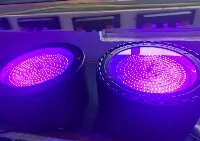
While the technical demands of waterproofing and corrosion resistance dominate the specification sheet, the aesthetic dimension of underwater lighting cannot be overlooked. RGB and RGBW color-mixing technology transforms static water features into dynamic visual experiences. However, not all RGB underwater lights deliver the same visual quality.
Standard RGB fixtures produce white light by combining red, green, and blue at full intensity-a method that often yields a pinkish or purplish tint rather than true white. RGBW fixtures address this limitation by adding a dedicated white LED chip, enabling the fixture to produce genuine, clean white tones for daytime use or neutral illumination, while still delivering saturated colors for evening displays.
RGB vs. RGBW Performance Comparison
| Performance Parameter | RGB (Red+Green+Blue) | RGBW (+White Chip) |
|---|---|---|
| White light generation | Mixed from R+G+B (may appear pinkish) | Dedicated white chip - pure white |
| Power consumption for white light | High (3 chips active) | Low (1 chip active) |
| Energy saving vs. RGB for same brightness | N/A (baseline) | 30–40% lower power consumption |
| Color rendering index (CRI) | Typically <50 | >90 - near‑daylight accuracy |
| Color temperature range | Limited (mixed) | Wide (3000K–6500K adjustable) |
| Best use case | Basic decorative effects | High‑end architectural + functional white |
Experimental data shows that RGBW achieves 30-40% lower power consumption compared to RGB for the same brightness, with higher light transmittance and superior overall energy efficiency. The dedicated white chip in RGBW fixtures produces a clean, neutral white that meets high CRI requirements (typically above 90) for functional illumination tasks such as pool cleaning, maintenance, or evening swimming.
For underwater fountain and pool installations, a true RGBW fixture can transition seamlessly from crisp white light for functional swimming or cleaning, to vibrant color effects for evening entertainment or holiday themes. Programmable controllers allow dynamic effects: gradual fades between colors, synchronized color changes with fountain water patterns, or even DMX-controlled sequences for professional light shows. RGBW color mixing also generates smooth transitions that are critical for music fountain choreography.
Aquaculture Applications: Light as a Growth Regulator
Beyond decorative landscape lighting, submersible LED fixtures serve critical functional roles in aquaculture operations. In fish farming, photoperiod and light spectrum directly influence feeding behavior, growth rates, stress responses, and reproductive cycles.
Research on red seabream (Pagrus major) demonstrates that different LED spectra produce markedly different physiological outcomes. Fish reared under blue LED light (450nm) exhibited the greatest weight gain, while red light (660nm) suppressed appetite-related hormones and induced oxidative stress. Blue light increased appetite-promoting peptides, leading to higher feed intake and faster growth, without causing retinal damage.
Photoperiod manipulation-extending daylight hours through artificial illumination-has been shown to improve growth and survival in multiple aquaculture species. For milkfish, LED‑extended photoperiods resulted in faster growth and significantly higher survival rates compared to natural day‑night cycles. Shrimp reared under specific photoperiods also demonstrated improved growth performance and antioxidant capacity.
Submersible RGB underwater lights enable aquaculture facilities to experiment with tailored light regimes: blue spectrum for growth promotion during feeding periods, white light for worker visibility during maintenance, and dim red or low-intensity illumination for nighttime observation without disturbing fish rest cycles. The ability to adjust both spectrum and photoperiod through programmable LED fixtures represents a valuable tool for optimizing production efficiency in modern aquaculture.
Aquarium and Reef Tank Lighting
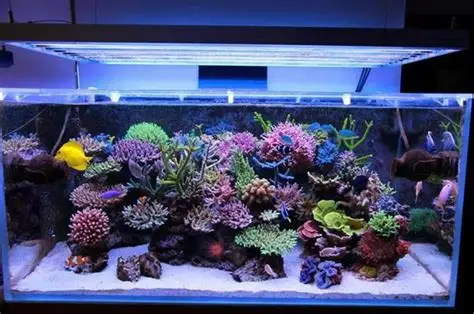
For aquarium enthusiasts, underwater lighting serves a dual purpose: enhancing the visual beauty of aquatic displays while supporting the biological needs of livestock. Freshwater planted aquariums benefit from full-spectrum illumination that promotes photosynthesis in aquatic plants, while reef tanks require carefully engineered spectra to sustain coral health, growth, and coloration.
Coral reef lighting in particular has evolved significantly beyond simple illumination to become a discipline of biological engineering. Reef‑safe lighting must provide sufficient photosynthetically active radiation (PAR) in specific wavelengths to support zooxanthellae-the symbiotic algae living within coral tissues-without causing photoinhibition or stress. Professional-grade reef lights utilize independently controllable color channels, allowing precise spectral tuning to match the requirements of different coral species.
While the Benwei underwater light is not specifically marketed as a reef light, its RGBW color mixing and high‑quality construction make it suitable for certain freshwater aquarium and koi pond applications. In koi ponds, submersible lights placed near the water's edge or at moderate depths enhance the visibility of fish coloration during evening viewing hours, transforming the pond into a nighttime focal point without disrupting the fish's natural behavior.
Installation Best Practices for Long‑Term Reliability
Even the finest underwater lighting fixture will underperform or fail prematurely if installed incorrectly. Professional installers follow several proven guidelines to ensure long‑term reliability and optimal visual results.
Placement depth and spacing: For swimming pools, fixtures should be positioned at least 18 inches below the waterline to prevent surface glare, and spaced every 6‑8 feet along pool walls for even coverage. For ponds and water features, lights positioned 30‑60cm below the waterline, aimed across the feature rather than directly toward viewing areas, reduces glare while maximizing the illuminated surface area.
Fountain integration: For fountain jets and water curtains, narrow‑beam optics (15‑30 degrees) help the light "carry" through the spray, creating visible columns of colored water. Fixtures should be aligned with jet angles, and anti‑glare baffles may be necessary for fountains near seating or viewing areas.
Cable management and electrical protection: All underwater lighting systems must be installed with properly sized and rated cables, suitable for continuous submersion. Cable glands must be correctly tightened to maintain the IP68 seal at the fixture entry point. For long cable runs, voltage drop calculations are essential to ensure the fixture receives adequate power. All connections should be made in weatherproof junction boxes located above the waterline or outside the wet area.
Regular inspection and maintenance: Even with IP68 fixtures, periodic inspection of gaskets, seals, and cable integrity is recommended. Pool water chemistry-particularly chlorine levels and pH-can accelerate seal degradation. Any signs of fogging inside the lens or intermittent operation should prompt immediate investigation, as these indicate compromised waterproofing.
The Long‑Term Value of Quality Underwater Lighting
When evaluating underwater LED lights, the purchase price tells only part of the story. A low‑cost fixture with inadequate IP rating, inferior materials, and poor optical design will fail within months-sometimes weeks-of installation. Replacement costs, including labor, water drainage (for pool installations), and lost operational time, quickly exceed the initial savings.
Total Cost of Ownership: LED vs. Halogen Underwater Lighting (5‑Year Horizon)
| Cost Factor | Halogen Underwater Light | LED Underwater Light (Benwei) |
|---|---|---|
| Energy consumption (vs. halogen baseline) | Baseline (100%) | 60–75% reduction |
| Lamp / fixture replacement frequency | Every 1,000–2,000 hours | 50,000+ hours (1 replacement per 5‑7 years) |
| Maintenance labor | High (re‑lamping + gasket inspection) | Minimal (sealed LED module) |
| Fixture lifespan in harsh water conditions | Often <2 years | 5–10+ years |
| Mercury content | None (halogen) or Yes (mercury vapor) | None |
| 5‑year total cost of ownership | High (energy + labor + replacement parts) | 50–70% lower |
Compared with traditional halogen lamps, LED fixtures reduce energy usage by 60–75% and offer much longer service life, significantly lowering replacement and labor costs. In fountain and pool applications, municipalities and commercial facility managers have increasingly adopted LED technology to shrink yearly maintenance budgets.
A properly engineered IP68 fixture with 316 stainless steel construction, tempered glass lens, silicone sealing, and high‑quality RGBW LEDs delivers 50,000+ hours of reliable service. For commercial applications-hotel pools, public fountains, aquaculture facilities-this extended lifespan translates directly into lower total cost of ownership and predictable maintenance budgeting.
Conclusion
Underwater lighting is a specialized category where ordinary product assumptions no longer apply. Lumens alone do not determine quality. Waterproof ratings must be verified and understood-IP68 for permanent immersion, not IP65 or IP67. Materials must withstand chemical corrosion and biofouling-316 stainless steel, not plated brass or coated aluminum. Electrical systems must prioritize human and aquatic life safety-12V or 24V low voltage, with proper GFCI protection and bonding. Optical design must account for water's unique refractive properties-appropriate beam angles and color temperatures for each application.
For landscape architects specifying lighting for a public fountain, pool contractors installing new pool illumination, aquaculture managers optimizing fish production, or aquarium enthusiasts designing a vibrant display, the Benwei waterproof stainless steel RGB underwater LED light represents a solution engineered for the rigors of the aquatic environment-not as a general‑purpose light adapted for water, but as a fixture designed from the ground up for underwater use.

✨Contact✨
🙋♀️Harriet
📫Email: bwzm88@benweilighting.com
📞Whatsapp: +8613007285242