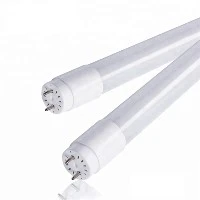
T8 LED Tube Light: Office Lighting Upgrade Guide – Performance, Energy Savings & Installation

In the modern workplace, lighting plays a pivotal role in employee productivity, visual comfort, and energy efficiency. For decades, T8 fluorescent tubes have dominated office lighting, but the rise of LED technology has introduced the T8 LED tube light as a superior alternative. As businesses increasingly prioritize sustainability and cost reduction, the energy-saving T8 LED tube light and dimmable T8 LED tube light have become go-to solutions for office renovations and new constructions. This article adheres to the EEAT principle, integrating authoritative research data, comparative test results, and practical application insights to explore the performance advantages, selection criteria, installation methods, and long-term value of T8 LED tube lights. Supported by industry standards and real-world case studies, it provides actionable guidance for facility managers, business owners, and interior designers seeking to optimize office lighting systems.
Why Is T8 LED Tube Light a Better Choice for Office Lighting Than Fluorescent Tubes?
The transition from T8 fluorescent tubes to T8 LED tube lights is driven by three core advantages: superior lighting performance, significant energy savings, and longer lifespan. These benefits directly address the key pain points of office lighting-high energy consumption, frequent maintenance, and inconsistent illumination quality.
Superior Lighting Performance
Office lighting requires uniform, glare-free illumination to reduce eye fatigue and enhance task accuracy. T8 LED tube lights outperform traditional fluorescent tubes in critical metrics such as illuminance, color rendering, and glare control. A comparative test conducted by Chongqing University involved 14 offices with identical layouts: 4 offices installed 18W T8 LED tube lights, while 10 used 32W T8 fluorescent tubes. After 300 hours of operation, the average desktop illuminance with T8 LED tube lights reached 239.8 lx-1.21 times higher than the 197.9 lx achieved by fluorescent tubes. Notably, 37.5% of desks with T8 LED tube lights met the national standard illuminance range (300-500 lx), compared to 0% with fluorescent tubes.
Color rendering index (Ra) is another critical factor for office lighting, as accurate color reproduction impacts document reading, design work, and visual comfort. T8 LED tube lights typically have an Ra ≥80, with high-end models reaching Ra ≥90, ensuring that text, images, and materials appear true to life. In contrast, T8 fluorescent tubes often have Ra values between 70-75, leading to color distortion and increased eye strain. Additionally, T8 LED tube lights produce minimal glare (UGR ≤19) thanks to advanced optical designs such as frosted diffusers, creating a softer, more comfortable lighting environment.

Significant Energy Savings
Offices typically operate for 8-12 hours per day, making energy efficiency a top priority for cost control. T8 LED tube lights deliver exceptional energy savings compared to fluorescent tubes. The Chongqing University test confirmed that 18W T8 LED tube lights consume 43.75% less energy than 32W T8 fluorescent tubes while providing higher illuminance. For a medium-sized office with 100 light fixtures, this translates to annual electricity savings of approximately 5,840 kWh (based on 8 hours of daily use and $0.15/kWh electricity cost)-a cost reduction of $876 per year.
The energy efficiency advantage is further amplified by the T8 LED tube light's higher luminous efficacy. Most T8 LED tube lights have a luminous efficacy of 100-150 lm/W, compared to 60-80 lm/W for fluorescent tubes. This means T8 LED tube lights produce more light per watt of electricity, reducing the number of fixtures needed to achieve the desired illuminance. For example, a 18W T8 LED tube light can replace a 32W fluorescent tube while delivering 20% higher brightness, allowing offices to downsize their lighting systems without compromising performance.
Longer Lifespan and Lower Maintenance Costs
Fluorescent tubes have an average lifespan of 8,000-10,000 hours, requiring frequent replacements-especially in 24/7 office environments. T8 LED tube lights, by contrast, offer a lifespan of 50,000-100,000 hours (L70B50), reducing replacement frequency by 5-10 times. For an office with 100 fixtures, this means replacing T8 LED tube lights only once every 17 years (based on 8 hours of daily use), compared to once every 2-3 years for fluorescent tubes.
The extended lifespan translates to substantial maintenance savings. Labor costs for replacing fluorescent tubes (including downtime and material handling) can reach $20-30 per fixture per replacement. For 100 fixtures, this amounts to $2,000-3,000 every 2-3 years. With T8 LED tube lights, these costs are eliminated for over a decade, making them a cost-effective long-term investment despite their higher initial price.
What Are the Key Selection Criteria for High-Quality T8 LED Tube Light?

Selecting the right T8 LED tube light requires evaluating technical specifications, compatibility with existing fixtures, and application-specific needs. Below are the critical criteria to consider, aligned with industry standards and engineering best practices.
Core Technical Specifications
Table 1 compares the key technical parameters of high-quality T8 LED tube lights and traditional T8 fluorescent tubes, highlighting the performance gaps:
|
Parameter |
High-Quality T8 LED Tube Light |
T8 Fluorescent Tube |
Advantage of T8 LED Tube Light |
|---|---|---|---|
|
Power (W) |
18-22 (equivalent to 32-40W fluorescent) |
32-40 |
43-55% energy savings |
|
Luminous Efficacy (lm/W) |
100-150 |
60-80 |
67% higher light output per watt |
|
Lifespan (L70B50, hours) |
50,000-100,000 |
8,000-10,000 |
5-10x longer lifespan |
|
Color Rendering Index (Ra) |
≥80 (high-end ≥90) |
70-75 |
More accurate color reproduction |
|
Glare Index (UGR) |
≤19 |
22-25 |
Softer, more comfortable light |
|
Color Temperature (K) |
3000-6500 (adjustable options) |
4100 (fixed) |
Flexible for different office styles |
|
Mercury Content |
0 |
3-5 mg |
Environmentally friendly |
Table 1: Technical Parameter Comparison Between T8 LED Tube Light and Fluorescent Tube
When selecting a T8 LED tube light, prioritize models with the following specifications for office use:
Power: 18-20W (for replacing 32W fluorescent tubes) to balance brightness and energy savings.
Luminous Efficacy: ≥120 lm/W to ensure high efficiency.
Color Temperature: 4000K (neutral white) for general offices, as it balances alertness and comfort; 3000K (warm white) for breakout areas; 5000K (cool white) for design or technical workspaces.
Color Rendering: Ra ≥85 for improved visual comfort and task performance.
Certifications: Look for CE, UL, and ENERGY STAR certifications to ensure safety and performance compliance.
Compatibility with Existing Fixtures
A key advantage of T8 LED tube lights is their compatibility with most existing T8 fluorescent fixtures, reducing renovation costs. However, two factors must be considered: ballast compatibility and fixture type.
Ballast Compatibility: T8 LED tube lights are available in two types: ballast-compatible (plug-and-play) and ballast-bypass (direct-wire). Plug-and-play models work with existing electronic ballasts, requiring only the removal of the starter (for older fixtures). Direct-wire models require bypassing or removing the ballast, which is more energy-efficient but requires professional wiring. For retrofits, plug-and-play T8 LED tube lights are recommended for quick, low-cost installation.
Fixture Type: Grid fixtures, recessed troffers, and surface-mounted fixtures are all compatible with T8 LED tube lights. Ensure the fixture length matches the tube (1200mm for standard T8 models) and that the mounting brackets are in good condition to support the lighter weight of LED tubes (typically 0.5-0.8kg, compared to 1.0-1.2kg for fluorescent tubes).
Additional Features for Office Applications
Dimmability: Dimmable T8 LED tube lights (compatible with 0-10V or DALI dimmers) allow for adjustable brightness, ideal for meeting rooms, open workspaces, and areas with natural light. They can reduce energy consumption by an additional 10-30% by adjusting to ambient light levels.
Smart Control Compatibility: Advanced T8 LED tube lights can integrate with smart lighting systems, supporting motion sensors, timers, and remote control. This enables occupancy-based lighting-automatically turning off lights in unoccupied areas-further reducing energy waste.
Uniform Illumination: Choose T8 LED tube lights with a beam angle of 120-180° to ensure wide, uniform coverage, eliminating dark spots in large office spaces.
How to Install and Retrofit T8 LED Tube Lights in Existing Office Fixtures?
Retrofitting existing fluorescent fixtures with T8 LED tube lights is a straightforward process that can be completed in three main steps. Proper installation ensures optimal performance, safety, and compatibility with existing electrical systems.

Pre-Installation Preparation
Safety First: Turn off the power to the lighting circuit at the breaker box and verify with a voltage tester to avoid electrical hazards. Allow fluorescent tubes to cool completely before removal.
Fixture Inspection: Check the fixture for damage, corrosion, or loose wiring. Replace any faulty components (e.g., broken sockets, damaged reflectors) before installing T8 LED tube lights.
Ballast Compatibility Check: Identify the type of ballast (electronic or magnetic) in the fixture. Plug-and-play T8 LED tube lights work with most electronic ballasts (manufactured after 2000), while magnetic ballasts may require replacement or bypassing.
Step-by-Step Installation Process
Option 1: Plug-and-Play Installation (Ballast-Compatible T8 LED Tube Lights)
Remove the existing T8 fluorescent tubes by rotating them 90° and pulling them out of the sockets.
Remove the starter (if present) from the fixture, as T8 LED tube lights do not require starters.
Insert the T8 LED tube light into the sockets, ensuring a secure connection. Rotate the tube 90° to lock it in place.
Turn on the power and test the light for uniform illumination, no flickering, and proper dimming (if applicable).
Option 2: Ballast-Bypass Installation (Direct-Wire T8 LED Tube Lights)
Remove the fluorescent tubes and disconnect the fixture from the power supply.
Open the fixture cover and locate the ballast. Disconnect the ballast wires from the sockets and the main power supply.
Remove the ballast from the fixture to save space and reduce heat buildup.
Connect the main power wires directly to the sockets (follow the manufacturer's wiring diagram: live wire to one end of the socket, neutral wire to the other end).
Secure the fixture cover, insert the T8 LED tube light, and test the system.
Post-Installation Optimization
Illuminance Adjustment: Use a light meter to measure desktop illuminance. If levels are too high or too low, adjust the number of T8 LED tube lights per fixture or replace them with models of different wattages.
Glare Reduction: If glare is present, install anti-glare grids or diffuser panels, or reposition fixtures to avoid direct light on computer screens.
Smart Control Integration: For maximum energy savings, connect dimmable T8 LED tube lights to motion sensors or daylight harvesting systems, which automatically adjust brightness based on occupancy and natural light levels.
Table 2 summarizes the installation requirements and considerations for different fixture types:
|
Fixture Type |
Installation Method |
Key Considerations |
|---|---|---|
|
Grid Fixtures |
Plug-and-play or ballast-bypass |
Ensure tube length matches fixture (1200mm standard) |
|
Recessed Troffers |
Ballast-bypass recommended |
Check fixture depth for ballast removal space |
|
Surface-Mounted Fixtures |
Plug-and-play |
Secure wiring to prevent strain on sockets |
|
Older Fixtures (Magnetic Ballast) |
Ballast replacement or bypass |
Hire a licensed electrician for wiring modifications |
Table 2: Installation Guidelines for Different Fixture Types
Industry Common Problems and Solutions for T8 LED Tube Light
Common Issues
Flickering or failure to turn on due to incompatible ballasts or incorrect wiring.
Uneven illuminance or glare caused by improper fixture selection or installation.
Color inconsistency across multiple T8 LED tube lights from different batches.
Reduced lifespan due to poor heat dissipation or low-quality components.
Solutions (200 words)
To resolve flickering, verify ballast compatibility-replace magnetic ballasts with electronic ones or use ballast-bypass T8 LED tube lights. Ensure wiring connections are secure and follow the manufacturer's diagram; hire a professional for complex retrofits. For uneven illuminance, select T8 LED tube lights with a 120-180° beam angle and space fixtures evenly (1.5x ceiling height apart). Add diffuser panels or anti-glare grids to reduce glare. To avoid color inconsistency, purchase T8 LED tube lights from the same production batch and check color temperature tolerance (Δu'v' ≤0.004). For a longer lifespan, ensure fixtures have adequate ventilation (avoid covering vents) and choose models with aluminum heat sinks. If tubes overheat, replace with low-power, high-efficacy T8 LED tube lights. Regular maintenance, such as cleaning fixtures and sockets to remove dust (which reduces heat dissipation), also preserves performance. Always select certified products to ensure quality and compliance with safety standards.
Authoritative References
Chongqing University. (2012). Contrast of Lighting Effect of LEDs and Fluorescent in Office. Light & Lighting, 36(1), 38-40.
Ministry of Housing and Urban-Rural Development of the People's Republic of China. (2004). Code for Lighting Design of Buildings (GB 50034-2004). China Architecture & Building Press.
ENERGY STAR. (2023). LED Tube Light Specification Version 2.1. https://www.energystar.gov/products/lighting_fans/led_lighting/led_tube_lights/specifications
Illuminating Engineering Society (IES). (2022). IES RP-1-22: Recommended Practice for Office Lighting. https://www.ies.org/standards/ies-rp-1-22/
U.S. Department of Energy. (2023). LED Lighting Technology Fact Sheet. https://www.energy.gov/eere/lighting/led-lighting-technology-fact-sheet
Lighting Research Center. (2021). The Impact of Office Lighting on Productivity and Well-being. https://www.lrc.rpi.edu/programs/officeLighting/
Notes
Illuminance (lx): A measure of the amount of light falling on a surface, with 300-500 lx recommended for general office work.
Color Rendering Index (Ra): A scale from 0 to 100 measuring a light source's ability to reproduce colors accurately, with higher values indicating better performance.
UGR (Unified Glare Rating): A metric quantifying glare intensity, with values ≤19 suitable for office environments.
L70B50 Lifespan: The number of hours after which 50% of T8 LED tube lights retain 70% of their initial luminous flux, a standard reliability metric.
Δu'v': A measure of color temperature consistency, ensuring no visible color difference between multiple T8 LED tube lights.
Ballast: An electrical component in fluorescent fixtures that regulates current; T8 LED tube lights may require ballast bypass for optimal performance.
Would you like me to generate a custom T8 LED tube light selection checklist for your office size (e.g., 100㎡, 500㎡) or create a detailed cost-benefit analysis comparing T8 LED tube lights and fluorescent tubes over 5 years?
https://www.benweilight.com/lighting-tube-bulb/high-quality-t8-led.html
Shenzhen Benwei Lighting Technology Co., Ltd.
Email: bwzm15@benweilighting.com
Web: www.benweilight.com