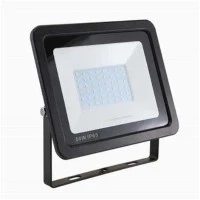
Outdoor lighting usually refers to the lighting and rendering of outdoor spaces such as landscapes and buildings. Outdoor lighting lamps are now more and more using LED light sources, which are energy-saving and high-efficiency, better performance, long life and low maintenance costs, which are more efficient than traditional light sources. There are advantages. The lamps commonly used in outdoor lighting include: flood lights, wall washers, line lights, underwater lights, buried lights, corrugated lights, tree lights, guardrail tubes and other outdoor lighting fixtures. When considering the following points:
1 The direction of viewing
Buildings may be seen from different directions and angles, but generally, before starting the design, we must first decide on a specific direction as the main viewing direction.
2 distance
The possible viewing distance of the average person. The distance will affect the clarity of people's observation of the facade appearance, and also affect the decision of the level of illumination.
3 Surrounding environment and background
The light and shade of the surrounding environment and background will affect the illumination required by the subject. If the perimeter is dark, a little light is needed to illuminate the subject; if the perimeter is bright, the light must be intensified to bring out the subject.
4 Determine the desired lighting effect
Buildings may have different lighting effects due to their different appearances, or they may be more uniform or have strong changes in light and shade; they may also be more plain or more lively, depending on the properties of the building itself. to decide.
5 Choose the right light source
When choosing a light source, factors such as light color, color rendering, efficiency, and life should be considered. The light color has an equivalent relationship with the color of the exterior wall material of the building. Generally speaking, golden bricks and yellow-brown stone are more suitable for use of warm light.
6 Determine the required illuminance
The required illuminance mainly depends on the light and shade of the surrounding environment and the color of the exterior wall material of the building. The recommended illuminance value is for the main facade. Generally speaking, the illumination of the secondary facade is half of that of the main facade, and the three-dimensional effect of the building can be expressed by the difference in light and shade between the two sides.
7 Choose the right light fixture
Generally speaking, square-shaped floodlights have a larger distribution angle; round-shaped lamps have a smaller angle; wide-angle lamps have a more uniform effect, but are not suitable for long-distance projection; narrow-angle lamps are suitable for long-distance projection , but the uniformity is poor when used at close range.
8 Calculation of Illuminance and Number of Lamps
After the above steps are completed, the number of lamps is determined according to the illuminance calculation of the selected light sources, lamps, installation positions, etc., so that the effect after installation can be as close as possible to the expected. The appearance of the building is expressed by the projection of light at night, and the effect obtained will be quite different from the feeling during the day. The resulting effect does not necessarily have to be the same as during the day, but it is important to bring out the character of the building.
Benwei Lighting is an LED flood light manufacturer with 12 years of experience. If you want to purchase a high-quality LED flood light or have a more in-depth understanding of the application of LED flood lights, please contact us directly at wendy@benweilighting.com