The Evolution, Standards & Must-Have Value of Modern Rechargeable LED Emergency Bulbs
1. The Industry Evolution of Emergency Lighting: From Traditional Backup to Smart Integrated Lighting
Emergency lighting has always been a critical segment of the global lighting industry, designed to solve lighting gaps caused by power outages, grid fluctuations, outdoor off-grid scenarios and emergency situations. Over the past two decades, the industry has completed three major technological iterations, completely subverting the limitations of traditional emergency lighting tools:
- First Generation: Primitive Open-Flame Tools - Candles, kerosene lamps and oil lamps, with weak brightness, short duration, open fire hazards and serious environmental pollution, basically eliminated in formal household and commercial scenarios.
- Second Generation: Portable Battery-Operated Lamps - Ordinary flashlights and wired emergency lights, requiring independent charging and storage, single function, short battery life and easy damage, unable to achieve seamless switching between daily and emergency use.
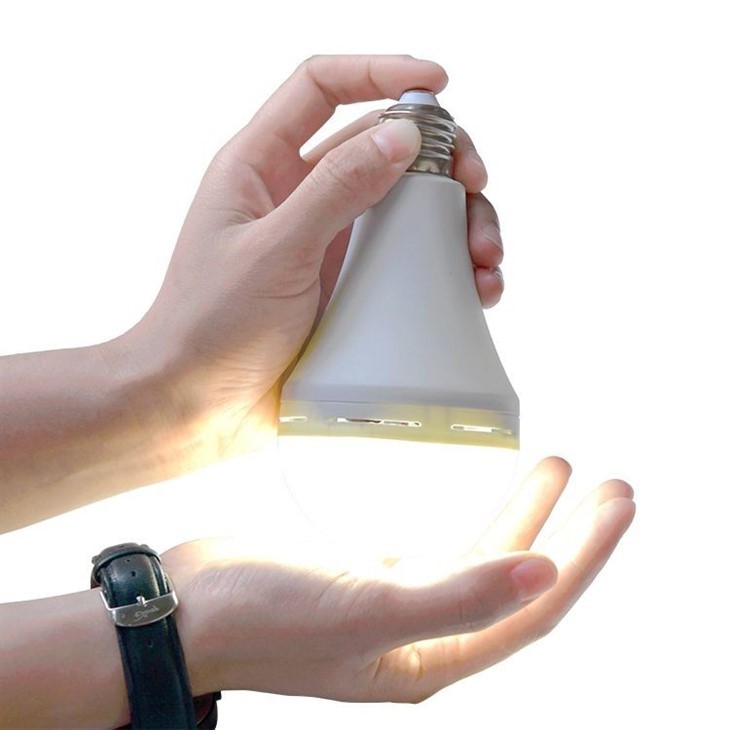
- Third Generation: Smart Rechargeable LED Emergency Bulbs - The mainstream of the current industry, integrating daily lighting, automatic emergency power-off response and portable mobile lighting, with zero manual operation, high energy efficiency and long service life, becoming a necessity for households, small businesses and outdoor activities worldwide.
Driven by global safety awareness and LED technology popularization, the market demand for smart emergency LED bulbs grows at a rate of 15% annually, especially in areas with unstable power supply, rural areas and regions with frequent extreme weather.

2. Core International Standards & Technical Indicators for LED Emergency Bulbs
Qualified LED emergency bulbs must comply with international general safety and performance standards, and these core indicators are the key to distinguishing high-quality products from inferior ones in the industry. The table below covers authoritative standard data and practical reference values:
|
Technical & Standard Item |
International Minimum Standard |
High-Quality Product Industry Standard |
Practical Application Meaning |
|---|---|---|---|
|
Power-off Response Speed |
≤1s |
≤0.3s |
No dark delay during power failure, avoid panic and accidental injuries |
|
Luminous Efficiency (lm/W) |
≥65lm/W |
≥90lm/W |
Higher brightness with lower power consumption, longer emergency endurance |
|
Emergency Continuous Runtime |
≥2h |
≥4h (high brightness) / 8-10h (low brightness) |
Meet long-time power outage and outdoor long-term use needs |
|
Battery Cycle Life |
≥500 cycles |
≥800 cycles |
Slow battery decay, long service life, higher cost performance |
|
Safety Protection |
Overcharge protection |
Overcharge/Over-discharge/Short-circuit Protection |
Prevent battery damage and safety risks, ensure stable use |
|
Light Source Lifespan |
20,000h |
≥50,000h |
Reduce replacement frequency, lower long-term use cost |
3. Safety & Practical Advantages Over Traditional Emergency Tools
To help customers clearly understand the core advantages of modern LED emergency bulbs, the industry conducts a horizontal comparison of three common lighting solutions from multiple dimensions, with objective data as support:
|
Comparison Dimension |
Traditional Open-Flame Tools |
Ordinary Flashlights |
Smart Rechargeable LED Emergency Bulbs |
|---|---|---|---|
|
Safety Performance |
High fire & scald risk |
Battery leakage risk |
Low-voltage safe, no open flame, no electric shock risk |
|
Usage Convenience |
Need storage, troublesome to use |
Separate charging & storage required |
Installed in standard lamp holders, automatic charging, ready to use |
|
Energy Saving & Environmental Protection |
High pollution, non-recyclable |
Waste battery pollution |
No mercury & lead, rechargeable cycle use, low carbon |
|
Application Scenarios |
Only limited emergency use |
Portable mobile use only |
Daily home lighting, power failure emergency, camping, stall, outdoor |
4. Industry Development Trends & Consumer Demand Orientation
The global emergency lighting industry is moving towards intelligence, integration, versatility and global adaptability. Current mainstream consumer demands focus on three points: first,dual-use for daily and emergency, no need to prepare additional lighting tools; second, wide voltage adaptation, suitable for global 100-240V power grids, not damaged by voltage fluctuations; third,portable scalability, with hanging and touch activation functions for off-grid outdoor use.
In addition, international certification (CE, RoHS, etc.) has become a basic threshold for products to enter the global market, and high-quality products are fully certified to ensure safe use and market access.
Whether for personal household use, wholesale procurement or commercial engineering matching, this product has outstanding cost performance and reliability. If you want to learn more detailed parameters, certification documents, wholesale quotes and customized services, please feel free to contact us for professional one-to-one consultation and solutions.