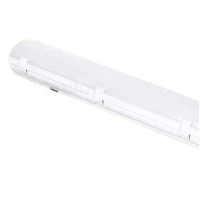
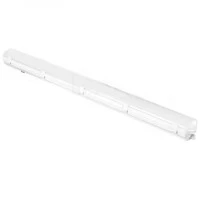
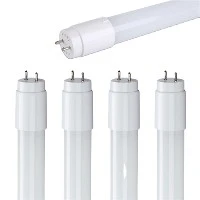
GE scientist Nick Holonyak Jr. invented the first functional light-emitting diode 56 years ago. His goal at the moment was to develop a laser, not a device that would someday take the place of the incandescent lightbulb. Thus, the LED is just one of several "accidental" inventions that have impacted millions of people's daily lives, including the microwave, Post-It Notes, X-rays, and even Superglue!
In the 1930s, the fluorescent lamp was created for commercial usage and successfully distributed all over the world. But since the 1930s, lighting design has advanced significantly, and in the late 1960s, a fresh competitor for the top lighting technology energized the market.
The globe and its enterprises are radically different in 2022, and we have higher standards for quality and more ambitious goals for interior design than ever before. Never before has an office's culture, ambiance, and surroundings had such a significant impact on hiring practices and the increasing emphasis on workers' well-being. We are therefore here to illuminate the way, whether you are seeking innovative methods to illuminate your impending office renovations or wish to abandon fluorescent lighting in your business area.
Why Is Fluorescent Lighting a Problem?
The extensive phase-out of fluorescent lighting has been going on for a while, and part of the reason for its rising unpopularity is that businesses, people, and government organizations are growing more concerned with saving energy and protecting the environment. In addition to being less energy-efficient, standard fluorescent bulbs include toxins and other materials that are extremely detrimental to the environment.
In addition to wasting money and energy over the lamp's lifetime, business properties also need to take extra precautions and pay more to dispose of them properly to prevent environmental pollution.
Performance issues also plague fluorescent lights, particularly in older installations. Because they are omnidirectional lights, they need more accessory pieces to focus or reflect the light from the bulb, which adds to the expense and wastes light. Additionally, they need time to warm up and won't reach optimal light levels right once.
What Are the Advantages of LED Lighting?
LED lights consume less energy or watts than incandescent or fluorescent bulbs while producing an equivalent amount of light. They generate more lumens per watt, to put it another way.
Additionally, LED lights last longer than other lighting techniques. Compared to incandescent and fluorescent bulbs, high-quality LED lamps can last up to 50 times longer than certain other lighting options. LEDs are ideal for high-bay ceilings in warehouses and all other commercial and industrial applications since they require very little maintenance.
The aforementioned figures correspond to a real-world life expectancy of at least ten years, and an office or commercial space will typically require illumination twelve hours a day, 365 days a year. On average, even LED lights that are left on all day will only need to be replaced once every five years.
Unlike incandescent or fluorescent bulbs, LEDs do not "blow" or burn out. When they reach a stage known as L70, where the bulb is burning toward the end of its rated life and only providing 70% of its initial light output, they are deemed to be nearing the end of their life.
Over the course of one LED lamp's life, at least five fluorescent light bulbs would typically be thrown out. Thus, 80% less garbage ends up in landfills thanks to LED bulbs.
Lighting is thought to use 20% of the energy used worldwide. This quantity could be cut by more than 75% if all lights were converted to LED technology, which would significantly lower the amount of CO2 and other pollutants currently discharged into the atmosphere. LED lighting is more economical, energy-efficient, and environmentally friendly. LED lights are up to 80% more efficient than fluorescent bulbs.
While consuming significantly less electricity to provide a powerful and steady output at a lower wattage, LED lights, in contrast to fluorescent lights, convert 95% of their energy into light and only 5% is wasted as heat. Greener results are achieved when less energy is used.
There is nothing more miserable than turning on a fluorescent light switch that takes a few minutes to warm up, flickering and dimming when you arrive at the office on a chilly winter morning. On the other hand, LEDs don't flicker or require a warm-up or cool-down time, which has been shown to directly improve worker health and happiness! In terms of look, designs and models can be more daring and imaginative (and smaller) while maintaining the same or even higher output and power efficiency thanks to the increasingly sophisticated and compact LED technology.
Makeover Your Area With LED Lighting
LED office lighting is the first step toward outstanding interior design. The impact of furniture and layout is at risk of being drab without enough lighting, and bad lighting decisions might cause problems for occupants' productivity and health.
The mission of Benwei Lighting is to design and provide LED office lighting that energizes every workspace, space, and structure. CAT A & B renovations, medical facilities, educational institutions, hospitality, serviced offices, multi-story parking lots, etc. An LED lighting system from Benwei Lighting will revolutionize your project.
We are confident that our selection of LED lighting, which includes recessed lighting and suspended linear lights, will meet the requirements of any project. Additionally, we provide lighting conversion services. When fluorescent lights need to be replaced with LED boards or emergency or dimming features added to the current on-site luminaries, this service is great.
LED panel lights that are recessed
These fashionable LED panel lights are made to be a direct replacement for fluorescent light units in a standard suspended ceiling installation. They provide a flicker-free light that is ideal for classroom and office settings.
They are ideal for cleanroom and laboratory settings because of their low maintenance design, which also has a major benefit over conventional louvred fluorescent light units in that they lack nooks and crannies where dust and flies can collect. Additionally, they turn on instantaneously, unlike fluorescent lights, so you won't have to wait for a room to light up or get irritated by the worn-out light unit in the corner that always appears to turn on five minutes after the others!