The Invisible Frame: Engineering the Illusion of Light in Modern Panel Lighting
The Visual Frameless Paradox
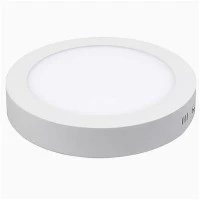
The pursuit of a "visually frameless" appearance in LED panel lights hinges on a precise interplay of optical deception, mechanical innovation, and thermal engineering. When the human eye perceives a panel light as "frameless," it's actually witnessing a triumph of millimeter-scale design:
Ultra-Slim Bezels (0.5–3mm)
True visual framelessness starts with extruded aluminum or composite bezels thinner than a pencil lead. These micro-frames use knife-edge profiling – angled at 45°–60° – to refract light along the edge. When installed flush against ceilings, the bezel casts no visible shadow line, creating a seamless transition between light and surface.
Edge-Lit Optical Diffusion
Unlike traditional backlit panels, frameless designs employ advanced micro-prismatic light guides (typically PMMA or polycarbonate) positioned within 0.2mm of the bezel. These guides distribute photons uniformly to the edge, eliminating dark borders. Combined with multi-layer diffusers (haze >85%), they create the illusion of light emanating directly from the ceiling plane.
Clip-Based Mounting Systems
Spring-loaded or magnetic clips recessed into the panel housing allow tension-based installation. With no visible screws or brackets, the fixture appears to "float" within the ceiling cutout. This system maintains sub-1mm gaps – below the human visual acuity threshold of 3mm at 3m distance.
Thermal Management: The Aluminum Substrate Revolution
Heat dissipation is the silent killer of frameless ambitions. Traditional FR4 PCB substrates struggle beyond 60°C – but frameless designs demand thinner profiles with higher lumen density. This is where integrated aluminum core PCBs (MCPCBs) become non-negotiable:
Unibody Thermal Pathways
MCPCBs embed LED chips directly onto aluminum substrates (typically 1.5–3mm thick) using thermally conductive dielectric layers (5–8 W/mK). Heat travels vertically from the diode junction through the aluminum core to the housing in <0.5 seconds – 5× faster than copper-clad laminates.
Die-Cast Housing as Heat Sink
The aluminum frame isn't just structural – it's a thermal engine. Advanced profiles integrate micro-fin arrays (0.8–1.2mm fin height) on the rear surface. This boosts effective heat dissipation area by 40% without increasing thickness. When combined with thermal interface materials (TIMs) like graphene pads, junction temperatures stay below 85°C even at 120 lm/W efficacy.
Thermal Simulation-Driven Design
Leading manufacturers use computational fluid dynamics (CFD) to optimize substrate geometry. Anisotropic thermal pads direct heat away from sensitive components, while copper inlays under high-power LEDs create localized "thermal highways." This allows 24/7 operation with <3% lumen depreciation at 50,000 hours.
The Synergy of Form and Function
True frameless performance emerges when optical and thermal systems interoperate:
Zero-Gap Manufacturing: Panels are assembled in ISO Class 7 cleanrooms to prevent particulate-induced light scattering at edges.
Phase Change Materials (PCMs): Some high-end panels integrate PCM-filled cavities within aluminum substrates to absorb thermal spikes during prolonged operation.
Hybrid Ceramic Coatings: Applied to aluminum substrates, these coatings enhance corrosion resistance while maintaining 95% thermal conductivity.
Verification Through Standards
Frameless claims are validated via:
ISTMT (In-Situ Temperature Mapping): Confirms ≤5°C variance across panel surface
LM-80-08 Testing: Measures lumen maintenance at multiple temperature points
EN 12464-1 Glare Ratings: Ensures UGR <19 despite ultra-thin optics
Conclusion: The Invisible Engineering
A "visually frameless" panel light is a masterclass in controlled deception. Its magic lies not in the absence of engineering, but in the extreme precision of it – where aluminum substrates become thermal accelerators, and bezels thinner than a smartphone screen manipulate photons to erase their own existence. As the battle for market differentiation intensifies, victory will belong to those who understand that true innovation in lighting hides in plain sight.