The Science of Sight: Deconstructing Anti-Glare Technologies and Their Longevity in Low-UGR Luminaires
The pursuit of visual comfort in illuminated spaces hinges on the effective control of glare, quantified by the Unified Glare Rating (UGR). A UGR value of 19 or lower is now a mandated requirement in many international standards for offices, schools, and healthcare facilities. However, achieving this is not a matter of chance but of precise optical engineering. The technologies employed-from prismatic panels to batwing distributions-represent distinct philosophical and mechanical approaches to managing light. Furthermore, the critical question of whether these solutions degrade over time, compromising their performance, separates high-quality luminaires from mere compliant products.
The Arsenal of Glare Control: A Technical Breakdown
Each anti-glare technology operates on the same fundamental principle: to limit the luminance (brightness) of the light source at high angles, precisely where it enters the eye and causes discomfort, while simultaneously directing useful light where it is needed.
Deep-Cavity Prismatic Panel Design: This is a classic and highly effective solution. The luminaire features a deep recess that physically shields the bright LED board from direct view. The prismatic panel acts as a secondary optic. Its meticulously calculated patterns-tiny grooves and facets-bend and control the light rays. This refraction ensures that light is emitted within a tight, controlled cone (e.g., 30-45 degrees), drastically reducing high-angle brightness. The "deep cavity" increases the shielding angle, making it virtually impossible to see the light source from standard viewing positions.
Micro-Louver or Honeycomb Grille: This is the most direct and absolute method of glare control. A grid of tiny, blackened baffles (louvers) or hexagonal cells (honeycomb) is placed over the light source. These cells act as a collimator, only allowing light that is traveling in a near-vertical path to escape. Light attempting to exit at a high angle is absorbed by the blackened sides of the cells. This technology achieves exceptionally low UGR values (often below 16) but comes with an efficiency trade-off, as a portion of the generated light is absorbed and lost within the grille itself.
Batwing Light Distribution (Asymmetric Optics): This is the most sophisticated and efficient approach, moving from blocking light to intelligently shaping it. Instead of a standard diffuser that scatters light evenly, a batwing system uses secondary optics-often Total Internal Reflection (TIR) lenses or reflectors integrated into the optical cavity. These optics are designed to project minimal light immediately below the fixture (where it would cause direct glare) and peak intensity at angles of 30-60 degrees from nadir. This creates a wide, even wash of light across the work plane with exceptionally low luminance at offending angles. It leverages the optical structure itself to solve the problem, often resulting in higher overall system efficacy compared to louver-based solutions.
The Test of Time: Material Degradation and Long-Term Performance
A low initial UGR rating is meaningless if it degrades over the luminaire's lifespan. The question of aging is therefore not ancillary; it is central to the product's validity.
Prismatic Panels and Optical Materials: Most high-quality panels are made from PMMA (acrylic) or polycarbonate. Premium PMMA is exceptionally stable and resistant to yellowing, especially when treated with UV stabilizers. However, inferior grades of plastic, exposure to excessive heat (from a poorly thermally managed LED engine), and UV radiation from sunlight can catalyze photodegradation. Yellowing is the primary concern. As the material yellows, it scatters light differently, reducing transmittance and altering the carefully engineered photometric distribution. The pristine optical control diminishes, and the UGR value can creep upward as the system becomes less efficient and more diffuse.
Honeycomb Grilles: Typically made from aluminum or stable, blackened plastics, grilles themselves are largely immune to optical degradation. Their performance is tied to the stability of their black coating. If this coating were to fade or peel, its absorptive quality would decrease, potentially reflecting more light and increasing glare. However, this is a rare failure mode for products from reputable manufacturers.
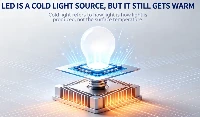
The True Culprit: LED Driver and Thermal Management: The greatest threat to long-term glare control is often not the optic itself, but the system around it. A failing LED driver can cause flicker, which induces visual discomfort unrelated to but exacerbating the perception of glare. More critically, inadequate heat sinking leads to elevated LED junction temperatures. This accelerates the depreciation of the LEDs (lumen loss) and the degradation of surrounding materials-including optical components. A well-designed luminaire maintains stable thermal conditions, preserving both the light output and the integrity of the anti-glare components for its entire rated life.
Conclusion: Specifying for the Long Haul
When evaluating a low-UGR luminaire, the specification must go beyond a datasheet claim. It requires a deeper inquiry:
Demand Photometric Files: Request the IES or LDT file to see the precise light distribution and verify the UGR calculation in standard conditions.
Interrogate the Materials: Ask specifically for the type of optical material (e.g., UV-stabilized PMMA) and its expected lumen maintenance factor alongside the LED's.
Understand the Thermal Design: A product with a robust thermal management system (e.g., ample heat sinking, low Tj) is not just promising long life for the LEDs; it is also protecting the integrity of its glare control system.
In essence, achieving a low UGR is a triumph of optical engineering, but maintaining it is a promise of quality materials and systemic thermal stability. The most sustainable solution is not necessarily the one with the most absolute initial performance, but the one whose carefully calculated photometric performance is guaranteed to endure for decades, ensuring visual comfort and well-being throughout its entire service life.