The Secret to a Good LED Light: Look at These Three Core Components First
In the LED lighting industry, there's a saying: "A good light or not? Check the three parts first." These three parts are the LED chips, the LED driver, and the heat sink. Together, they determine the performance, lifespan, and reliability of a luminaire. For any application-home, commercial, or industrial-material selection is the starting point of manufacturing and the first gateway to quality control.
1. LED Chips: The Source of Light, The Start of Quality
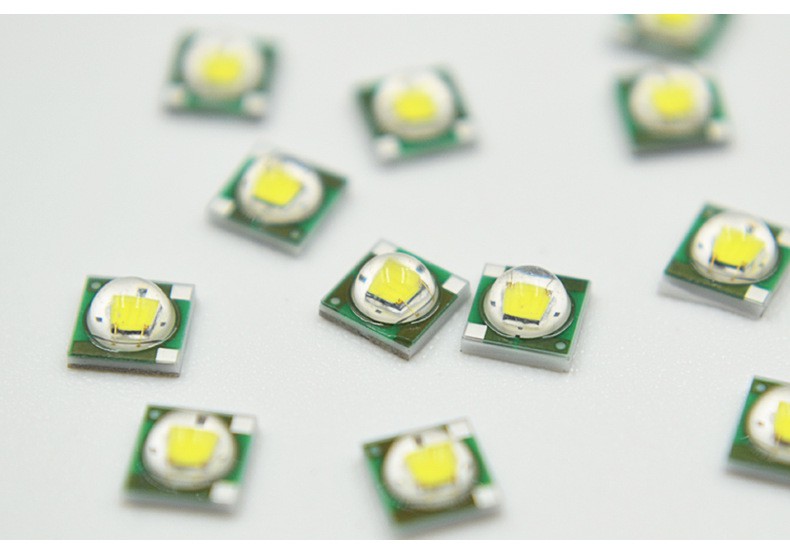
LED chips are the light-emitting core of a fixture. Their performance directly determines the luminous efficacy, color temperature, and color rendering ability of the entire light. When selecting chips, don't just look at brightness; pay attention to the brand, packaging technology, and optoelectronic specifications.
Big‑brand chips mean better chip consistency and lower lumen depreciation. Well‑known international brands such as Seoul Semiconductor, Osram, and Nichia have deep experience in chip epitaxy, phosphor coating, and thermal management. For mid‑to‑high‑end lights, high color rendering index (CRI / Ra ≥ 90) has become a standard requirement. Compared to ordinary chips with CRI 70 or 80, Ra≥90 chips reproduce colors much more faithfully. This is critical in applications such as retail, museums, high‑end hotels, and galleries.
In addition, luminous efficacy (lm/W), color temperature tolerance (SDCM), and thermal resistance are important metrics. A wrongly chosen chip will ruin a lamp's light quality, no matter how good the driver or heat sink is.
2. LED Driver: The Heart and Brain of the Luminaire
If the LED chip is the "heart", the driver is both the power supply and the control system. It converts mains AC to the DC required by the chips and stabilizes the output current.
Among the many driving methods, constant‑current drivers are the preferred choice for quality lights. Using closed‑loop control, they deliver precise, constant current to the chips regardless of input voltage fluctuations. In contrast, constant‑voltage drivers or simple resistor‑limiting circuits can cause current surges when the grid fluctuates, leading to overheating, accelerated lumen depreciation, or even chip failure.
Using a constant‑current driver greatly improves electrical safety and is essential for extending LED lifespan. A good driver also features high efficiency (less self‑heating), high power factor (reducing grid pollution), and protection functions against over‑voltage, over‑temperature, and short circuits. In smart lighting systems, the driver often handles dimming, color tuning, and communication-so its quality directly affects smart performance.

3. Heat Sink: The Decisive Factor for Lifespan
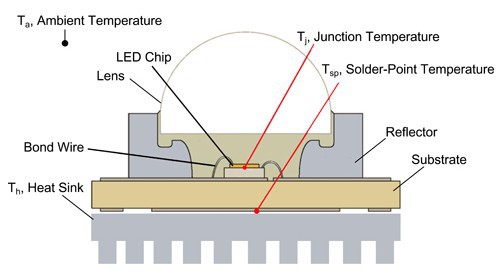
Although LEDs are efficient, a significant portion of electrical energy is still converted into heat. If that heat is not conducted away and dissipated into the environment, the chip's junction temperature rises. This accelerates lumen depreciation, shifts color temperature, and shortens lifespan. Statistics show that for every 10 °C increase in junction temperature, LED life can be halved.
The core principles of thermal design are clear: the heat‑dissipation area must be large enough, and the installation space must be well ventilated. Depending on the power level, cooling methods differ:
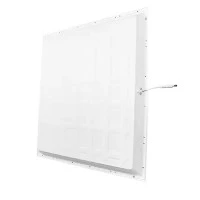
- Passive cooling: natural convection via fins or an aluminum housing. Simple, silent, and reliable. Used in medium‑ and low‑power lights like bulbs, downlights, and panel lights.
- Active cooling: adds a fan or forced‑convection device to a passive heatsink. Suitable for high‑power fixtures (e.g., stadium lights, high‑bay lights, streetlights). A silent fan can greatly improve cooling without increasing size, but fan lifespan and reliability become critical.
Besides the heatsink structure, efficient heat conduction is a prerequisite. Heat from the chips must be quickly transferred to the heatsink. Here, the metal‑core PCB (MCPCB, often aluminum‑based) is the indispensable bridge-it carries the chips and circuits, and its metal core provides a good thermal path from the chips to the heatsink. Without a high‑quality MCPCB, even the largest heatsink is useless.
4. Synergy: The Weakest Link Rule
LED chips, driver, and heatsink do not work in isolation; they constrain and interact with each other. A weakness in any one part pulls down the whole fixture:
- No matter how good the chips are, if the driver current is unstable or lacks protection, early lumen depreciation is inevitable.
- No matter how good the driver is, if the heatsink is undersized or airflow is blocked, heat accumulates and lifespan suffers.
- No matter how large the heatsink, if the MCPCB has poor thermal conductivity, thermal resistance at the interface ruins cooling.
Therefore, responsible manufacturers build a complete matching model at the selection stage: based on target power, application environment, and lifespan requirements, they determine chip efficacy, driver current, and thermal budget, then choose the cooling solution. Before mass production, they verify synergy through high‑temperature aging, switching surge tests, and thermal imaging.
Conclusion: Selection Reflects Attitude, Quality Is the Result
Today, competition in the LED lighting industry is fierce, and price wars never cease. But brands that last are often those that insist on the right materials-especially where users cannot see. Material selection is not just a technical task; it is an attitude of responsibility toward customers.
From high‑CRI chips to constant‑current drivers, from adequately finned aluminum structures to thermally efficient MCPCBs-every choice in these three parts quietly defines the true value of an LED luminaire. For purchasers, contractors, and end users, understanding this selection logic provides a reliable yardstick for judging lighting quality.