What are the key factors to consider when choosing industrial lighting?
In warehouses, workshops, and large industrial facilities, lighting is about far more than just "turning the lights on." Poor illumination can lead to safety incidents, operational errors, and inefficiencies, while traditional high-pressure sodium or fluorescent lighting often comes with high electricity bills and maintenance headaches. Modern industrial downlights, with their high efficiency, durability, and precise light control, are becoming the core solution to these industrial lighting challenges. This guide delves into every aspect of industrial downlights, from their technical principles to selection and installation, helping you develop a solid plan for upgrading lighting in your high-ceilinged facility.

Beyond Illumination: The Core Definition and Value of Industrial Downlights
Industrial downlights are recessed lighting fixtures designed to be installed into a ceiling, providing concentrated downward light. Unlike surface-mounted fixtures or traditional high-bay lights, their recessed design offers a clean, minimalist appearance that prevents dust accumulation while efficiently focusing light onto work areas.
Their core value is built on three pillars:
High-Efficiency LED Core: Modern industrial downlights commonly use high-luminosity COB or SMD LED chips, which can reduce energy consumption by over 80% compared to traditional light sources while providing equal or superior illumination.
Industrial-Grade Durability: Designed for harsh environments, they feature high Ingress Protection (IP) ratings (e.g., IP65 for dust and water resistance), anti-vibration construction, and corrosion-resistant housings to ensure stable performance in dusty, damp, or thermally variable conditions.
Precision Optical Control: Through precise lens or reflector design, they offer a range of beam angles from narrow to wide, ensuring light energy is directed exactly where it's needed, minimizing spill light and energy waste.
Comprehensive Comparison of Industrial Downlight Types
Choosing the right downlight starts with understanding the types available. The table below compares mainstream industrial downlight technologies and their applications:
| Feature / Type | LED Industrial Downlights | Traditional Halogen Downlights | Traditional Fluorescent Downlights |
|---|---|---|---|
| Efficacy & Energy Use | Extremely High. Efficacy can exceed 120 lm/W, lowest energy consumption. | Very Low. Most energy converts to heat, low efficacy, high consumption. | Moderate. Better than halogen but far inferior to LED, with ballast losses. |
| Lifespan | Extremely Long, 50,000 - 100,000 hours. | Very Short, ~1,000 - 2,000 hours. | Moderate, ~10,000 - 15,000 hours. |
| Light Quality | Excellent, flicker-free, high CRI (>80), selectable CCT. | Good, high color rendering, but contains IR spectrum, runs very hot. | Fair, potential for flicker, usually lower CRI, delayed start-up. |
| Maintenance Cost | Very Low. Ultra-long lifespan drastically reduces replacement frequency and labor. | Very High. Frequent bulb replacements lead to high cumulative labor costs. | Medium-High. Requires periodic tube and potential ballast replacement. |
| Environmental Tolerance | Excellent. Wide operating temperature range, high shock, dust, and water resistance ratings. | Poor. Sensitive to heat, filaments vulnerable to vibration. | Poor-Performs poorly in cold temperatures, sensitive to humidity. |
| Initial Investment | Higher, but with a short ROI period (typically 1-3 years). | Low, but highest total cost of ownership long-term. | Moderate, not cost-advantageous long-term. |
| Ideal Application | Virtually all industrial settings: warehouses, manufacturing floors, cold storage, repair bays. | Largely obsolete, found only in legacy systems or niche decorative uses. | Being rapidly phased out, may exist in some unrenovated office-adjacent areas. |
The conclusion is clear: For any new or retrofit industrial project, LED industrial downlights are the only option that meets modern requirements for energy efficiency, reliability, and low total cost of ownership. Within the LED category, you can further choose between fixed, adjustable, or smart downlights with integrated sensors.
Technical Deep Dive: Understanding Specifications for Precise Selection
Choosing a suitable dustproof and waterproof industrial-grade downlight requires understanding these key parameters:
Luminous Flux & Illuminance (Lumens & Lux):
Luminous Flux is the total amount of light emitted by the fixture. A rough estimate for high-bay industrial spaces (6-10m ceiling height) is 100-200 lumens per square meter for general lighting.
Illuminance is the amount of light falling on a work surface (measured in Lux). Different tasks have national standards (e.g., fine assembly may require 500-1000 Lux). Professional design software simulations or supplier calculations are essential to ensure workplane illuminance meets targets.
Correlated Color Temperature (CCT, measured in Kelvins, K):
3000K-3500K Warm White: Relaxing, suitable for break rooms or low-accuracy storage areas.
4000K-5000K Natural White: The preferred choice for industrial environments. Provides bright, neutral light that enhances alertness, reduces visual fatigue, and renders colors accurately.
6000K+ Cool White: Very bright and stimulating, used for special inspection areas requiring extreme illuminance, but not recommended for widespread use.
Beam Angle:
Narrow Beam (<30°): Concentrated spotlight, ideal for vertical illumination or accent lighting in very high spaces (>8m).
Medium Beam (30°-60°): The versatile choice for 4-8m ceiling heights, providing good floor uniformity.
Wide Beam (>60°): Best for low to medium ceilings requiring broad, even general illumination.
Ingress Protection (IP Rating) & Ruggedness:
IP65: Completely dust-tight and protected against low-pressure water jets. Suitable for most indoor industrial environments, including areas with mild moisture or wash-down.
IK Rating (Impact Protection): e.g., IK08/IK10, indicates the fixture housing can withstand a specific joule impact-crucial for environments with potential for accidental collisions.
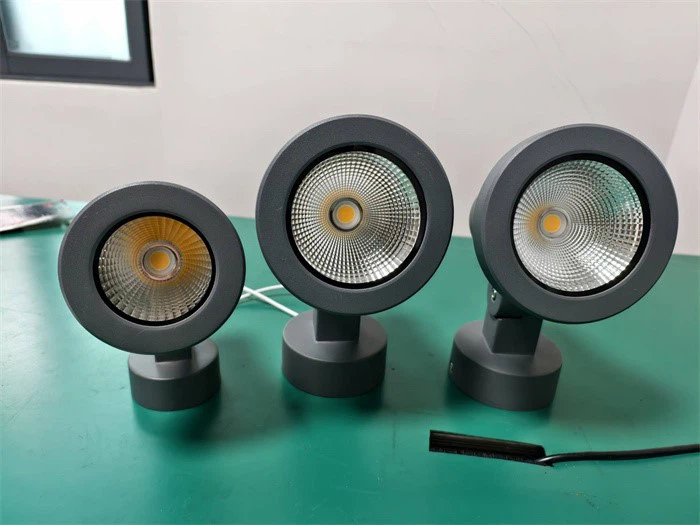
From Installation to Maintenance
Planning & Installation:
Layout Design: A "checkerboard" or "staggered" layout is often recommended over simple rows for more uniform illuminance. Using software like Dialux for simulation is best practice.
Installation Keys: Ensure the ceiling structure can support the weight; all wiring must comply with electrical codes; for dimmable recessed industrial downlights, confirm compatibility with the dimming system (e.g., 0-10V, DALI) in advance. Perform an illuminance test post-installation.
Smart Integration: Consider integrating motion and daylight sensors. Automatically dimming lights in unoccupied areas and adjusting near windows based on natural light can yield over 30% in additional energy savings.
Common Troubleshooting:
Flickering: Check for compatibility between the LED driver and dimming system; ensure all electrical connections are secure.
Partial Failure: With power off, check that modular connectors are fully seated.
Rapid Lumen Depreciation: Could be due to poor thermal management or operation in consistently high temperatures. Choosing brands like Benwei, which prioritize heat dissipation design, is critical.
The Long-Term Value of Industrial Downlights
Investing in high-quality industrial downlights is a strategic decision that lowers the Total Cost of Ownership (TCO). The value manifests in:
Direct Energy Savings: Significant reduction in electricity costs.
Indirect Productivity Gains: Quality lighting improves employee comfort and task accuracy, reducing errors and accidents.
Reduced Maintenance Burden: Long lifespan frees facility managers from frequent relamping and repairs.
Compliance & Sustainability: Helps meet increasingly stringent energy and environmental regulations, enhancing corporate sustainability credentials.
FAQ
1. Q: Our old workshop currently uses 400W Metal Halide lights. If we switch to LED industrial downlights, how much energy could we save? How do we convert the wattage?
A: Savings typically range from 60% to 75%. A simple rule of thumb: The total luminous output of a traditional 400W MH lamp (actually ~450W with ballast loss) can generally be matched or exceeded by a 120W-150W high-efficacy LED industrial downlight. For example, replacing 100x 400W MH fixtures with 150W LED downlights would save approximately 30 kWh per hour of operation. Before any retrofit, a professional lighting design is recommended to ensure illuminance targets are met and the layout is optimized.
2. Q: Can standard LED downlights be used in a cold storage warehouse (-25°C)?
A: No, standard products cannot be used. Low temperatures pose a greater challenge to the LED driver than to the LEDs themselves. You must select wide-temperature industrial-grade products whose drivers are specially designed and rated for operating temperatures such as "-40°C to +50°C". Additionally, fixture materials must resist becoming brittle in the cold. Always verify the product's detailed operating temperature specifications before purchase.
3. Q: We want to implement group dimming and scheduling by zone. Does this require very complex new wiring?
A: Not necessarily. Modern smart industrial lighting solutions offer flexible options. Beyond traditional DALI bus systems (requiring separate control wiring), there are now fixtures using Power over Ethernet (PoE) or wireless protocols like Zigbee or LoRa. The latter can superimpose control signals on existing power lines or operate via wireless gateways, greatly simplifying wiring in retrofit projects. Consulting with a specialized supplier like Benwei can help you identify the optimal control scheme for your specific needs.
Notes & Sources:
LED efficacy and energy savings data are referenced from the U.S. Department of Energy (DOE) Solid-State Lighting R&D Annual Reports.
Industrial illuminance standards refer to values specified for industrial buildings in the Chinese National Standard *GB 50034-2013 Standard for Lighting Design of Buildings*.
Fixture Ingress Protection (IP Code) is defined and tested according to the International Electrotechnical Commission standard *IEC 60529:1989+AMD1:1999+AMD2:2013*.
Research on the energy-saving potential of smart lighting controls synthesizes findings from case studies by the International Energy Agency (IEA) and the Illuminating Engineering Society (IES).