What are the differences between LED bulbs and energy-saving bulbs? A complete analysis of 4 common types of household bulbs!
In daily life, children's need for desk lamps is ubiquitous in their reading environment. Whether they are doing homework on a computer screen, practicing the piano, or reading before bed, they all need suitable lighting. Light bulbs provide illumination for a space, and there are three main types: incandescent bulbs, fluorescent bulbs, and LED bulbs. However, they vary in shape-some are round and plump, some are spiral-shaped-and also differ in brightness, lumens, color temperature, and wattage. Depending on the location, we also need bulbs with different characteristics to supplement the light source. This article will introduce the advantages and disadvantages, specifications, and simple ways to understand which bulbs are suitable for different locations.

How to Choose a Household Light Bulb? Which Type is Suitable for Reading? Let's start by understanding illuminance, luminance, and lumens (lm)!
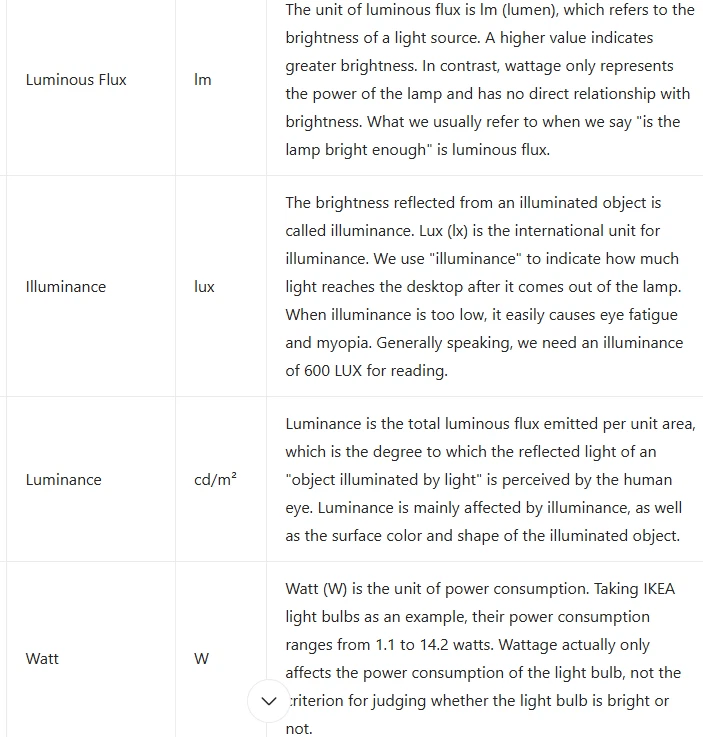
Different types of light bulbs offer different levels of brightness and color, which can alter the appearance of a room and even affect your mood within that space. To choose the right type of light bulb, we can begin by understanding the following five technical terms related to light bulbs: luminous flux, illuminance, luminance, wattage, and lumens. The perception of light bulb brightness varies from person to person. "Perceiving it as bright" or "perceiving it as dim" is a subjective concept. To address this issue, many experts have developed the terms "luminance" mentioned above to avoid confusion regarding individual perceptions of brightness. The wattage, lumens, color temperature, and other details are usually indicated on the packaging of light bulbs or light fixtures. The table below explains their definitions:
When choosing a light bulb, should you look at brightness, lumens, wattage, or color temperature?
The "W" (watts) you often see on light bulbs is a unit of power consumption. For example, IKEA light bulbs consume 1.1-14.2 watts. Wattage only affects the bulb's power consumption, not its brightness. Brightness is measured in lumens, and for the same brightness, lower wattage means more energy saving. A 5-watt LED bulb or a 13-watt energy-saving spiral bulb can be brighter than a 60-watt tungsten filament bulb. And if you want more light than a 100-watt tungsten filament bulb, a 9-watt LED bulb or a 23-watt energy-saving spiral bulb is sufficient. Under the same illuminance, LED lights consume only half the wattage of energy-saving light bulbs. Besides brightness and power consumption, the choice of light bulb is also closely related to color temperature. A lower Kelvin number indicates a warmer, more yellowish light, while a higher Kelvin number indicates a whiter light. Below, we've listed the points to illustrate the relationship between choosing different types of light bulbs and their brightness, lumens, wattage, and color temperature:
Brightness: First, we need to understand "lumens." The brightness of light is measured in lumens. A standard incandescent light bulb typically produces 450 lumens from a 40-watt bulb. A 100-watt bulb typically produces 1,600 lumens. In rooms requiring higher illuminance, such as kitchens or home offices, we can choose bulbs with higher lumen output. In low-light spaces, such as hallways or closets, only 450 to 800 lumens of light output may be needed.
Color Temperature When discussing the color of light, the technical term "color temperature" is indispensable. Color temperature (CCT) is measured in Kelvin scales, with lower temperatures indicating warmer hues. Light with a color temperature of 2700K to 3000K corresponds to the warm yellow or white hue of an incandescent bulb, while a 4000K bulb emits pure white light. The optimal bulb for natural light is a 5000K bulb, which emits a cool hue that mimics sunlight. From a desk lamp perspective, according to European and American research, cool white light (color temperature 6000K) is helpful for arithmetic, writing, and exams; warm yellow light (color temperature 2700K) is helpful for group discussions and brainstorming activities. Therefore, an excellent desk lamp can be flexibly adjusted to cool white or warm yellow light to meet the lighting needs of any event.
Color Rendering Index (CRI) refers to how well an object's color appears under lamp light compared to its color under ideal or natural light. Incandescent bulbs typically have a CRI of 100, which is the highest possible value. Fluorescent bulbs are usually between 50 and 98, while LED bulbs are between 80 and 98. Color rendering index (CRI) is also a key factor to consider when choosing smart LED table lamps. A more precise definition of CRI is "the ability of a light source to render colors of objects." Generally, sunlight has a CRI of 100, and CRI 80 is for basic reading. For industries with high color accuracy requirements, such as printing, publishing, photography studios, and design studios, the CRI requirements for ambient lighting are higher, even exceeding CRI 95. A CRI of 80% or higher (Ra) is ideal. A natural light CRI of 100% represents the degree of color rendering visible on colored objects. Higher CRI is better; it is recommended to choose table lamps with a CRI of at least 80% (Ra).
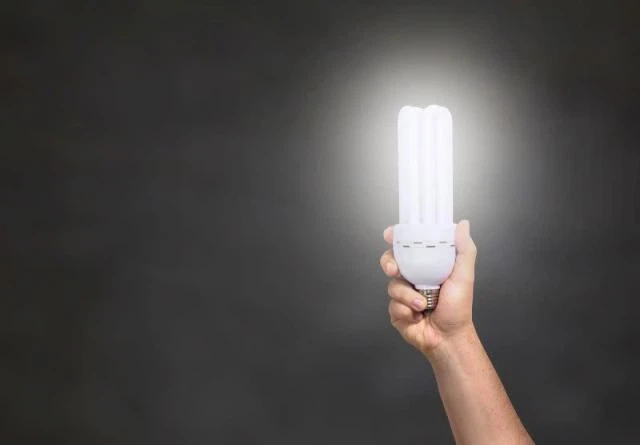
Fluorescent bulbs vs. LED bulbs: Which is better? First, fluorescent bulbs cannot be dimmed; they remain constant. In recent years, we've seen increasingly more "LED lights" online, on television, and in stores, emphasizing their distinct characteristics from traditional incandescent and energy-saving bulbs. Our previous understanding of LEDs was mostly limited to indicator lights in home appliances or other electronic products, or the little green lights on zebra crossings; we rarely thought of using LEDs for other purposes. In the past, due to technological limitations, LEDs struggled to effectively emit sufficient light for home lighting. On the other hand, the impression of commercially available LED bulbs was generally that they were extremely expensive, inefficient, and potentially flickering. However, in recent years, with the advancement of technology, the above problems have been solved through technological maturity, leading to their widespread adoption in our daily lives-in fact, streetlights and car lighting are gradually being replaced by LED lights!
So, what are the actual differences between LED lights and traditional lights? What are the advantages of LED lights? Here are five reasons why you should immediately switch to LED lights:
Energy Saving
Durability
Safety
Smart Lighting
Environmental Protection
I. Energy Saving
The biggest selling point of LED bulbs is their energy saving. Because of this characteristic, they are used in various mobile devices; for example, the camera flashes in our mobile phones are mostly composed of LEDs. When it comes to household lighting, a typical incandescent bulb only provides about 10-20 lumens (lm) of brightness per watt. In comparison, energy-saving bulbs are called energy-saving because they can provide 80 lumens per watt, significantly increasing lighting efficiency. However, this still falls short of modern LED lights, as household LED lights can provide over 100 lumens per watt, 5-10 times more than traditional incandescent bulbs! Specifically, according to data from the U.S. Department of Energy, switching to LED bulbs can reduce annual electricity bills for lighting by more than 70%!
II. Durability
On the other hand, LED bulbs are also very durable. Under typical usage, they can provide over 50,000 hours of illumination, compared to a maximum of 2,000 hours for traditional incandescent bulbs – a significant difference. In a typical household setting, with approximately eight hours of lighting per day and proper operation, a single LED bulb can practically last forever.
In fact, due to their durability, although LED bulbs are slightly more expensive than traditional bulbs, considering that the lifespan of one LED bulb is equivalent to several traditional bulbs, switching to LEDs is the most cost-effective approach.
III. Safety
If there are children in the home, lighting safety is also a major consideration. Compared to traditional tungsten filament lamps, halogen lamps, or incandescent lamps, LED bulbs do not emit noticeable heat. In fact, while ceiling lighting may be relatively safe, table lamps or floor lamps in living rooms are light sources that children may come into contact with, and traditional bulbs can easily cause burns. In contrast, even after prolonged use, LED lights rarely exceed 50 degrees Celsius.
On the other hand, we find that the recycling of energy-saving light bulbs is usually subject to strict government regulations. This is because the materials used in the manufacture of energy-saving bulbs contain mercury, a chemical that is extremely harmful to human health, and therefore requires careful handling. Therefore, even energy-saving light bulbs release a certain amount of harmful substances when damaged. This contrasts sharply with the safety and environmental friendliness of LED lights.
IV. Smart Lighting
Another advantage of LEDs is their ease of customization; dimming and color temperature adjustment are readily available. Many people may not know that energy-saving light bulbs, due to their operating characteristics, cannot be used with dimmers. This means they maintain a fixed brightness and cannot be adjusted according to usage scenarios using rotary controls. In contrast, most modern LED lights are dimming-enabled; simply use a dimmer to adjust the brightness to meet different lighting needs.
On the other hand, due to the lower voltage required to drive brightness, LED bulbs are easily integrated with IC circuits, making them readily compatible with today's popular smart home appliances. In fact, many LED bulbs and lamps already support remote control of ambient lighting via smartphones!
V. Eco-Friendly
The final point is a synthesis of all the above characteristics-eco-friendliness. We only have one Earth, and with rising environmental awareness, we should all do what we can to contribute to the planet. Traditional lighting fixtures consume a lot of energy, both in terms of replacement frequency and energy consumption. Every day, global lighting consumes a significant amount of our natural resources. The introduction of LED lighting has not only significantly reduced the frequency of light bulb purchases but also reduced energy consumption for lighting. More importantly, due to the lower environmental impact of the materials, the recycling process can be simplified, further reducing the carbon footprint. Why should you start using LED lights now? Because it's not just about saving your money, but also about contributing to a healthier planet!
Choosing the right lighting is also crucial. How should you choose the color temperature for three different areas in your home? Light is important, but lighting fixtures are also a very important factor! Floor lamps, reading lamps, pendant lamps, table lamps, etc., all have very different characteristics, which will affect the amount of light emitted. Choosing only the color temperature might yield the desired result, but if the lighting fixtures aren't suitable, the atmosphere will lack something. Below, we introduce the characteristics of the living room, bedroom, and study, along with the appropriate lighting fixtures and lighting conditions:

Living Room: Maintain a sense of openness in the space using neutral white light.
The living room is the main area for family relaxation, so the lighting requirements are primarily bright and warm. Therefore, we recommend choosing neutral light with a color temperature of around 4000K, as white light helps people concentrate and maintains a sense of openness in the space. Additionally, you can pair it with a warm floor lamp or table lamp to create a cozy atmosphere and add depth. In terms of ambient light and lighting fixtures, the living room is usually the largest space in the home and the first space you see upon entering. A floor lamp can instantly make a living room visually striking! The floor lamp is so important in the living room that it's practically part of the furniture. Therefore, its appearance must be carefully considered to ensure harmony and visual appeal with the sofa, chairs, and other surrounding furniture.
Bedroom: Soft Warm Light Helps You Fall Asleep Quickly
The bedroom is the warmest and most relaxing space in the home. Given the various needs of bedtime rituals, the choice of a bedroom lamp becomes even more crucial. Bedtime stories are a vital part of many parent-child bedtime rituals. Whether it's reading together as a family or reading alone, choose a floor lamp that emits a warm, warm light, as white light can disrupt sleep and interfere with your biological clock. Since lighting should promote relaxation before sleep, warm, neutral light with touches of yellow is ideal, with a color temperature around 2700K-3000K. The light source should ideally not shine directly into the eyes; soft light promotes relaxation. Furthermore, a bedroom lamp for a bedtime ritual should be intuitive and convenient to operate, with knobs for adjusting color temperature and brightness, and touch-sensitive switches and mode selections, allowing for effortless operation during the relaxing pre-sleep period.
Study: Warm White Light Helps Children Maintain Reading Concentration
The study is a space for work or study, so we usually create a quiet and simple environment to improve concentration. High concentration involves significant eye strain, therefore, the choice of light bulbs in a study directly impacts eye comfort. It's recommended to choose warm white light with a color temperature of around 3500K-4000K for a study. High-intensity white light is too glaring, while warm yellow light is not conducive to concentration and can easily induce drowsiness. Pay attention to the direction of the light source; avoid lighting from behind the chair or desk, as backlighting creates uncomfortable shadows and accelerates eye fatigue. Many modern desk lamps are suitable for reading and work. If the existing study lighting is insufficient, supplemental lighting such as recessed lighting or desk lamps can be used.
In terms of desk lamp selection, the "small size" of a study room is a key feature designed to enhance concentration. Therefore, in addition to small size, the choice of desk lamp should also focus on clean lines and a visually uncluttered design. Whether doing homework or using a computer, the desktop will inevitably be cluttered with keyboards, books, stationery, and other items. Therefore, choosing clip-on or wall-mounted smart lamps can save space and promote focus by keeping things tidy. Long desks and computer desks should also be paired with desk lamps that have a sufficiently wide lighting range to evenly illuminate the desktop, allowing focused eyes to remain in ample light for the most comfortable visual experience.
https://www.benweilight.com/lighting-tube-bulb/4000k-led-t8-tube.html
Shenzhen Benwei Lighting Technology Co.,Ltd
Telephone: +86 0755 27186329
Mobile(+86)18673599565
Whatsapp :19113306783
Email:bwzm15@benweilighting.com
Skype: benweilight88
Web: www.benweilight.com