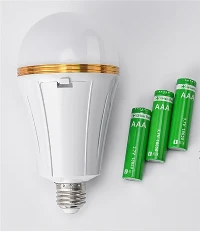
Here's what you can do during a power outage, with a focus on emergency and rechargeable LED lights.
1, Using Emergency & Rechargeable LED Lights
Automatic emergency lights (common in many homes) – These stay plugged in and charge continuously. When the power goes out, they turn on automatically. You can usually switch them on/off with a button. Most are required to provide at least 90 minutes of light.
Rechargeable LED lights (flashlights, lanterns, work lights) – You need to turn them on manually. Make sure they are fully charged beforehand. If they have a battery level indicator, check it regularly.
Dual‑purpose LED bulbs – These look like normal bulbs but have a built‑in battery. When the power fails, they switch to battery mode and stay lit.

2, What Else to Do During a Power Outage
Ensure safety – Gather your family in one room. Use your phone's flashlight temporarily to avoid tripping in the dark.
Get your lights ready – Locate your emergency and rechargeable LED lights. Place them in commonly used rooms before nightfall if possible.
Check your breakers – See if a tripped circuit is the cause. If not, ask neighbors if they also lost power – that tells you if it's a local outage.
Contact your utility – Report the outage to your power company so they know and can dispatch crews.
Protect electronics – Unplug computers, TVs, and sensitive devices to prevent damage from power surges when electricity returns.
Keep the fridge closed – A full fridge stays cold for about 4 hours; a freezer keeps for 24–48 hours if unopened.
Check your emergency kit – Make sure you have water, food, medications, and extra batteries for your lights.
3, Alternative Lighting Options (if you don't have LED lights)
Battery‑powered flashlights – Best for moving around.
Camping lanterns – Provide room‑filling ambient light.
Headlamps – Free your hands for tasks.
LED candles – Safer than real candles (no fire risk).
Glow sticks – Disposable, but handy for short‑term use.
4, Important Safety Warnings
Avoid open flames – Never use traditional candles, kerosene lamps, or oil lamps unless absolutely necessary – they are a serious fire hazard.
Generator safety – If you use a generator, operate it outdoors in a well‑ventilated area, far from windows and doors, to prevent deadly carbon monoxide poisoning.
Do not overcharge – Once power returns, unplug rechargeable lights once they're fully charged to preserve battery life.
5, Tips for Buying an Emergency/Rechargeable LED Light
If you're shopping for one, look for:
Auto‑on feature – Turns on instantly when power fails.
Brightness – 300–600 lumens is good for a room; 100–200 lumens for a flashlight.
Battery life – Check the runtime on low mode (longer is better).
USB charging port – Lets you charge your phone from the light in an emergency.
Alternative charging – Models with hand‑crank or solar panels are great for long‑term preparedness.
Stay calm, use your LED lights wisely, and remember that most outages are fixed within a few hours, you can see more emergency and rechargeable led lamp information on https://www.benweilight.com/lighting-tube-bulb/emergency-light-bulb.html