In the controlled-environment cultivation of pitaya (dragon fruit), supplemental lighting has become a vital tool for overcoming seasonal constraints and enabling off-season flowering and fruiting. A common question among growers when purchasing lights is: "What color temperature (in Kelvin) should I choose?" In reality, pitaya is a classic long-day flowering plant; what truly matters is not a single color-temperature value, but rather the combination of spectral composition and photoperiod (duration of light exposure). This article clarifies these concepts from the perspectives of cultivation and lighting selection.
Color Temperature vs. Spectrum: Distinguishing the Concepts
Color temperature (measured in Kelvin, K) is a term originally used in the lighting industry to describe whether "white light" leans toward a cooler (bluer) or warmer (yellower) tone-for instance, 3000K appears yellowish, while 6500K appears bluish-white. However, plants do not "perceive" color temperature; instead, they respond to specific wavelengths of light, such as blue light (400–500 nm), red light (600–700 nm), and far-red light (700–750 nm).
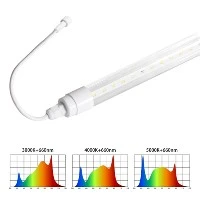
Consequently, two light sources with the same 3000K rating can have vastly different spectral profiles. When purchasing lights, one should look beyond color temperature and examine the spectral distribution curve and the ratio of red to blue light. Color temperature should serve only as a preliminary screening criterion, not as the sole standard for selection.
Key Spectra for Triggering Pitaya Flowering: Red and Far-Red Light
As a long-day plant, pitaya determines whether to initiate bud formation by sensing the length of the night. Both research and practical cultivation experience demonstrate that interrupting the night with a short period of light (night-time supplemental lighting) effectively induces flower bud differentiation. Red and far-red light play the primary role in this process, as they interact directly with the plant's phytochrome system.
Blue light, meanwhile, primarily influences stem thickness and internode length; while it has a weaker effect on triggering flowering, it helps prevent stems from becoming excessively elongated or weak. Therefore, lighting intended to promote flowering should prioritize red light, supplemented by blue light-rather than simply opting for "cool white" light with a high color temperature.
Recommended Color Temperature Ranges: Selection Based on Growth Stages
Configurations can be roughly categorized by growth stage:
Vegetative Growth Phase (Branch Development): Use neutral white light (4000K–5000K) or a spectrum with a red-to-blue ratio of approximately 3:1; this balances robust branch development with photosynthetic efficiency.
Flowering Induction Phase (Bud Initiation): Use warm white light (2700K–3000K) or a specialized spectrum with a high proportion of red light-optionally supplemented with a small amount of 730nm far-red light.
Post-Flowering/Fruit-Setting Phase: Light intensity can be reduced; a balanced spectrum in the 3000K–4000K range is sufficient.
Note that these are general guidelines based on common practice. Actual results may vary depending on the specific variety (e.g., red-fleshed, white-fleshed, or yellow-skinned), local climate, and management techniques. It is advisable to conduct small-scale trials before implementing on a larger scale.
Supplemental Light Duration and Intensity: Key Factors for Success
Many growers find that even after switching to the "correct" color temperature, their plants still fail to bloom-often because the duration or intensity of the light is inadequate. A common practice during seasons with insufficient natural daylight is to provide supplemental lighting for about 4 hours-typically between 10:00 PM and 2:00 AM-to signal "long-day" conditions to the plants.
Regarding light intensity, a level of approximately 30–50 μmol/m²/s at the top of the branches is generally sufficient to induce flowering. Excessive intensity is unnecessary and only leads to higher electricity costs and increased investment in lighting equipment. Proper spacing and mounting height are also essential to ensure uniform light coverage, preventing uneven flowering (where some areas bloom while others remain dormant).
Practical Tips for Purchasing Supplemental Lights for Pitaya (Dragon Fruit)
Look at the full spectrum, not just the Kelvin (K) value: Request a spectral distribution chart from the supplier to verify the proportion of red light.
Check the IP (Ingress Protection) rating: Given the humid environment of a greenhouse, choose fixtures with an IP65 rating or higher. Consider Luminous Efficacy: A higher luminous efficacy (μmol/J) translates to lower long-term electricity costs-a crucial factor for dragon fruit, which requires extended periods of supplemental nighttime lighting.
Support for Customization: Given that optimal conditions vary by latitude and dragon fruit variety, lighting systems with adjustable spectra offer greater flexibility.
Prioritize Warranty and Heat Dissipation: Since the lights operate continuously throughout the night, the quality of the heat dissipation design directly determines their service life.
Summary
The key to triggering flowering in dragon fruit is extending the photoperiod via supplemental nighttime lighting, with a spectral composition dominated by red and far-red light. For the flowering induction phase, a spectrum consisting primarily of warm white light (2700K–3000K) or red-dominant light is recommended; for the vegetative growth phase, a spectrum in the 4000K–5000K range is sufficient. Furthermore, the duration of supplemental lighting, light intensity, and the uniformity of light distribution are equally important; these factors must work in tandem to consistently improve flowering rates.
If you are planning a supplemental lighting strategy for a dragon fruit cultivation site, or if you require plant growth lights with spectra customized for specific varieties or greenhouse structures, please contact our technical team. Simply provide us with your cultivation area, greenhouse height, and target harvest period, and we will be happy to offer free recommendations for lighting configurations along with a price quote.