What distinguishes stadium lamps from flood lights?
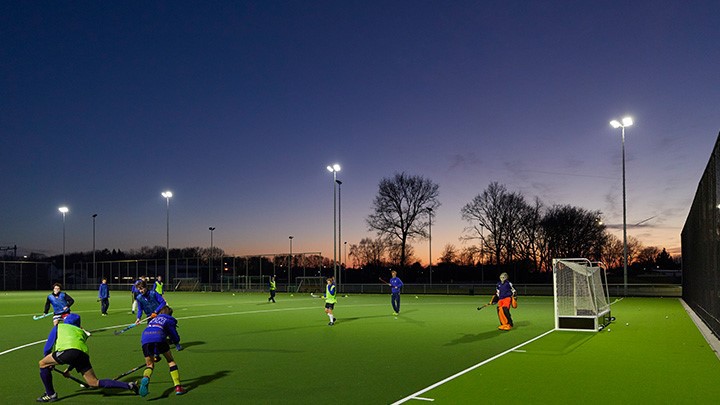
The luminary that produces wide and brilliant artificial illumination is called a floodlight. It is applicable to almost all athletic disciplines. The main style of lighting is described by flood lights. However, the flood bulb would have a unique design when it came to lighting up the enormous arena.
First, to transmit light over a lengthy distance, the lenses must first be modified. The concept is to maintain a broad beam angle of lighting over the football field while reducing light scattering, which causes light pollution.
Second, the sophisticated aerodynamic form of our field lighting fixtures was implemented to lower air resistance. The open structural form of our LED lights enhances air circulation. For the lights placed on elevated mast poles, the function is crucial. Additionally, it is preferable to use lightweight luminaires because occasionally we may need to attach up to 20 to 40 flood lights to the post. We may need to strengthen the shaft if the lights are particularly weighty. Even the lamps themselves are similar in price to the price! We use a premium aluminum material that is both robust and light.

How Can Flood Lights & Spot Lights Be Distinguished?
The beam aspect of a flashlight and a floodlight is the main distinction between them. While flood lights have a beam angle of over 100° to 120*, spotlights have a lesser 25° to 50° beam angle. The illumination region of floodlights is greater than that of highlighting, as seen in the image above. They have various applications in the world of athletics. Flood lights have the ability to illuminate sizable areas, such as the grass. What purpose does limelight serve? It may be utilized as accent illumination. The stadium roof can be fitted with RGB color-changing spotlights. During breaks, we can have colored lights with a very narrow beam angle of between 5° and 10°. It offers entrancing illumination effects.
How Much Power Is Required to Illuminate a Stadium?
so as to illuminate the entire sports arena. It requires discharge lamps ranging in power from 40,000 to 200,000 watts. The precise wattage needed will vary depending on the size, ceiling height, pole height, and style of lights used in the arena. If a sports area needed 1000 lux or 3000 lux, the entire amount of power consumed would be totally different. By moving to LED lights, the power usage of 2000 watt per fixture metal halide, halogen, or HPS lamps can be reduced by half or more. Say, a 500W to 100W LED produces luminosity that is roughly equivalent to that of HID illumination. The benefit is a decrease in the ongoing expense of illumination. It is as a result of a decrease in overall power.

How many Lumens are on a football field?
A flood light's total luminosity is measured in lumens. We can evaluate the brightness of the new and old lights when replacing metal halide lights with LEDs.
Conclusion
Because of this, our high-power L ED arena floodlights are in line with the standards set by the FIFA World Cup, the Olympics, and Premier League games. Our in-house created Premium Optics ensures extremely brilliant and shadow-free illumination (4K broadcasting supported). As well as the light beam's exceptional capacity to cover a lot of territory. The effect on the players and onlookers is lessened by the anti-glare technology.
We are aware of the illumination requirements because we successfully finished several projects for the Premier League. We provide free lighting design in order to precisely forecast the result of the illumination in order to provide you with the best option. Our illumination specialists have the expertise to manage various football venues, whether they are for amateur or professional games. To produce the bright and uniform lighting across the baseball grounds, we mix the use of different wattage and beam angles. Depending on the size of your field, the number and height of the light poles, and the amount of illumination needed. To take advantage of this service, feel free to write us at benweilight.com.