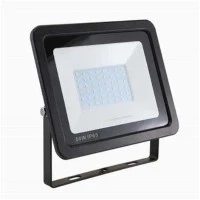
What is the role of the LED strip design?
The lighting industry has seen a paradigm shift since the introduction of LED lights. From the first candlestick lamp to Edison's revolutionary light bulb to the realization of connected lighting; The road to innovation in the lighting industry is just the beginning. LED lights are the latest technological advance in the industry and have successfully paved the way for a variety of applications that were once unimaginable. Whether it's controlling lamps, tracking and analyzing them to capture data, or even using them to transmit data, LED lights are a technological marvel.

LED strip 1, the concentration level is improved
LED lamps can be harmoniously controlled over a variety of color temperature ranges, thus achieving a human-centered approach to lighting. Correlation color temperature (CCT) is the color appearance of an LED lamp, measured in Kelvin. According to research, refreshing light can increase employee productivity. LED lights help to create a better working environment and make a positive contribution to improving work efficiency. LED lights can be adjusted to the desired color temperature to create a human-centered work area. Light with a higher red or yellow content (below 2,700K) is more relaxing, while light with a blue content (above 4,500K) is more biologically active. As a result, a typical office environment has a light level of about 400 Lux and a color temperature between 2,700 and 6,500 Kelvin. These levels affect activation centers in the brain, which in turn improves alertness and concentration.
LED strip 2, regulate circadian rhythm and improve health status
Modern society is characterised by scattered working hours and sedentary lifestyles. It takes people away from the basic framework of their biological clock. Lighting plays an important role in regulating circadian rhythms - biological events that occur repeatedly at regular intervals. People-oriented lighting can satisfy people's needs naturally and serve for people's interests. LED lights are not only convenient for the eyes, but also help maintain improved responsiveness to environmental timeliness.

LED strip 3, control and automation
Human-centered lighting is a combination of LED lights, equipment, Internet of Things networking and design. The semiconductor powers the LED lights, allowing them to be tunably controlled over a network. Human-centred lighting design can be used as a connecting system that can be further configured to achieve its purpose. It can be connected to intelligent lighting control devices (dispatching devices), such as microwaves and occupancy sensors, which can detect whether an area is occupied and turn lights off and on, respectively. In addition, it is now possible to automatically synchronize LED lights with astronomic-based event timing through these control devices.
The above is the sharing about the role of LED light design, I believe that after reading the above summary, we have had a certain understanding of this knowledge, want to know more about the LED light strip information, you can go to the customer service for consultation.