What "Hardcore" Conditions Must an LED High Bay Light Meet Under 80-90°C Ambient Temperatures?
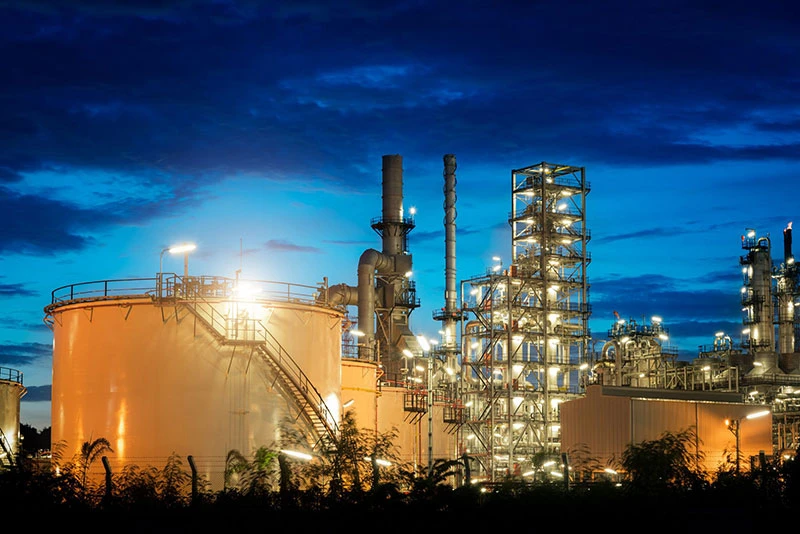
In extreme industrial environments such as steel smelting plants, glass manufacturing workshops, paper mill drying areas, and large boiler rooms, ambient temperatures often soar to 80°C or even 90°C.
For ordinary LED fixtures, this high-temperature environment is nothing short of a "deadly purgatory." Conventional LED lights experience accelerated lumen depreciation, a sharp reduction in lifespan, or even direct burnout in environments exceeding 50°C.
So, to operate stably over the long term in temperatures of 80-90°C, what hardcore conditions must a qualified LED High Bay Light (Industrial & Mining Light) actually meet?
1. The Core Pain Point: Why is High Temperature the "Number One Killer" of LEDs?
Before diving into the conditions, let's understand a basic rule of physics: although LEDs are cold light sources, their chips (junctions) generate a tremendous amount of heat during operation.
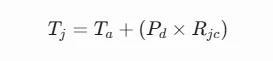
Where Tj represents the junction temperature, Ta is the ambient temperature, Pd is the input power, and Rjc is the thermal resistance.
When the ambient temperature Ta is already as high as 90°C, the temperature difference available for chip heat dissipation is extremely small. If the junction temperature Tj exceeds 120°C, it leads to:
- A sharp decline in luminous efficacy (the light becomes dim).
- Accelerated aging of the phosphor, causing severe color shifting (turning blue or yellow).
- Gold wire breakage, resulting in direct diode failure (dead light).
Therefore, every single aspect of a high-temperature resistant LED high bay light must be engineered to "fight against heat."
2. Four "Hardcore" Entry Conditions for 80-90°C High-Temperature LED High Bay Lights
To operate safely within this temperature range, the fixture must undergo a systematic, complete redesign of its structure, materials, and electrical engineering:
2.1 Split-Type Structural Design (External/Remote Power Supply)
This is the most critical structural breakthrough for high-temperature resistant fixtures.
- The Pain Point: The electrolytic capacitors inside LED drivers are extremely sensitive to temperature. Ordinary electrolytic capacitors have a lifespan of only a few thousand hours at 105°C, and they will rapidly degrade and fail inside a 90°C fixture cavity.
- The Solution: A split-type design must be used. Physically isolate the driver from the light-emitting LED cavity, or install the driver in a cooler area (e.g., under 50°C) such as a distribution box or remote corridor using extension cables.
2.2 Aerospace-Grade Active/Passive Heat Dissipation Architecture
At a 90°C ambient temperature, conventional die-cast aluminum heat sinks can no longer meet the demands.
- Superconducting Heat Pipe/Phase-Change Cooling: Copper pipes containing special refrigerants must be embedded inside the heat sink, utilizing liquid-vapor circulation to export heat away from the chip at near-sonic speeds.
- High-Purity Aerospace Aluminum (1070 Pure Aluminum): Large-area needle-like or hollowed-out finned heat sinks made via cold forging provide double the convection performance compared to standard die-cast aluminum (ADC12).
2.3 "Super-Heat-Resistant" Component and Material Configurations
Every single accessory on the fixture must possess an extremely high thermal limit:
- LED Chips: High-temperature resistant chips packaged on ceramic substrates (such as industrial-grade chips from Cree or Nichia) must be used. Their maximum allowable junction temperature should reach 150°C or higher.
- Lens Material: Do not use the PC (polycarbonate) or PMMA (acrylic) lenses commonly found in standard high bay lights, as they easily yellow, deform, or even melt above 90°C. High-transmittance borosilicate glass lenses must be used instead.
- Sealing Gaskets: High-grade fluororubber (Viton) or specially formulated silicone gaskets must be utilized to ensure they do not harden or crack over long periods of high-heat exposure, maintaining an IP65/IP66 protection rating.
2.4 Smart Thermal Rollback (Over-Temperature Protection)
Just in case of emergencies-such as an unexpected spike in workshop temperatures exceeding 95°C-the fixture must have a self-protection mechanism.
- Smart Driver: The driver should feature a built-in temperature sensor (NTC). When it detects that the fixture's temperature is approaching a critical threshold, the driver will automatically and flicker-free lower the output power (e.g., by 30%). This reduces its own heat generation to protect the fixture from burning out, and automatically restores full brightness once temperatures drop.
3. Core Parameter Comparison Table for High-Temperature High Bay Lights
When procuring or selecting products for clients, you can quickly determine whether a light can truly withstand 80-90°C temperatures using the following indicators:
| Parameter Dimension | Standard LED High Bay Light (Not for high-heat areas) | Professional High-Temperature High Bay Light (80-90°C environments) |
| Operating Ambient Temp (Ta) | -30°C to +45°C | -40°C to +90°C |
| Max Allowable Junction Temp (Tj) | Approx. 105°C - 115°C | > 150°C |
| Lens Material | PC / PMMA (prone to yellowing and melting) | Tempered Glass / High-Borosilicate Glass |
| Driver Structure | Integrated/built-in driver | Split-type / Remote external installation |
| Sealing & Protection | Standard silicone ring (ages quickly under high heat) | Special Fluororubber (Viton) / High-heat resistant silicone |
| Design Lifespan | May be under 5,000 hours in high temperatures | > 50,000 hours at 90°C ambient |
4. Conclusion & Inquiry Call-to-Action
In heavy industries like metallurgy, chemical processing, and glass manufacturing, an unexpected lighting failure means more than just lost productivity-it can lead to serious safety hazards. Therefore, choosing the "right" high-temperature resistant lighting is essentially buying an insurance policy for your enterprise's safe production.

As a professional manufacturer with years of experience in industrial lighting, we deeply understand every pain point of high-temperature working conditions. Our self-developed Special High-Temperature Resistant LED High Bay Light Series:
- Features split-type driver designs and aerospace-grade heat pipe cooling technology.
- Comes standard with high-borosilicate glass lenses and Viton gaskets, supporting a 5-year extended warranty under 90°C ambient conditions.
- Has been successfully deployed in multiple major steel plants and glass furnace workshops.
Don't let high temperatures become a hazard to your production line! Contact us using the information below. Our experienced industrial lighting engineers will provide you with free on-site lighting simulation, thermal feasibility assessment, and sample testing support within one business day!
✨Contact✨
🙋♀️Harriet
📫Email: bwzm88@benweilighting.com