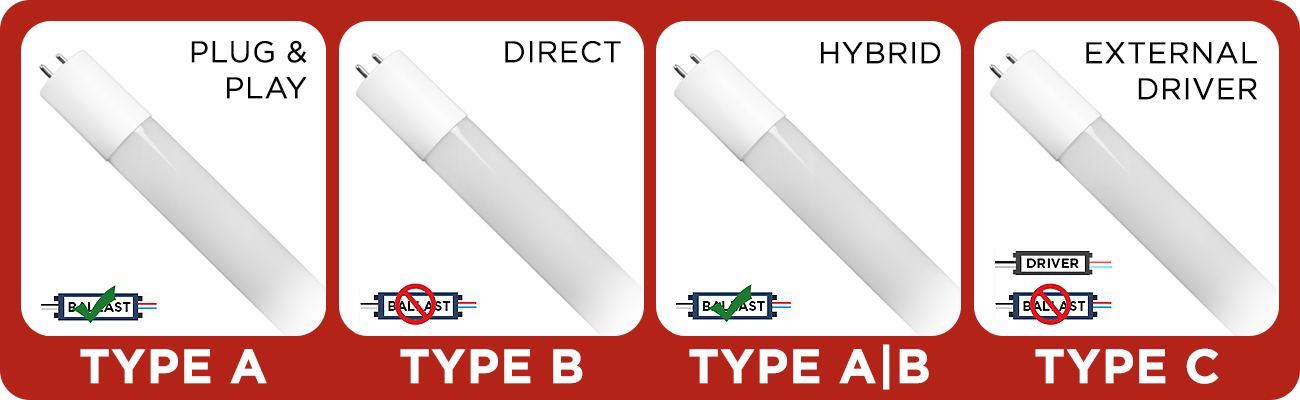
LED tubes are classified into Type A, Type B, and Type C based on how they are installed and whether they require a ballast (a component used in traditional fluorescent lighting). Here's a breakdown of their differences:
1. Type A LED Tubes (Ballast-Compatible)
Works with the existing fluorescent ballast (no rewiring needed).
Easy installation – Simply replace the fluorescent tube with the LED tube.
Pros:
Quick and simple retrofit.
No electrical modifications required.
Cons:
If the ballast fails, the LED tube won't work.
Less energy-efficient than Type B or C (since the ballast consumes extra power).
Ballast compatibility issues may arise with older systems.
2. Type B LED Tubes (Ballast-Bypass / Direct Wire)
Requires bypassing or removing the ballast (direct line-voltage connection).
More energy-efficient since no ballast is involved.
Pros:
Higher efficiency (no ballast power loss).
Longer lifespan (ballasts can fail over time).
Cons:
Requires rewiring (not a simple plug-and-play solution).
May void warranties if not installed by a licensed electrician.
3. Type C LED Tubes (External Driver)
Uses an external LED driver (separate power supply).
Most reliable and efficient option for commercial applications.
Pros:
Best performance and longevity.
Driver can be replaced independently.
Cons:
More complex installation (requires an external driver).
Higher upfront cost.
Which One Should You Choose?
Type A – Best for quick, hassle-free replacements (but depends on ballast health).
Type B – Best for energy savings and long-term use (requires rewiring).
Type C – Best for high-performance and large-scale installations.