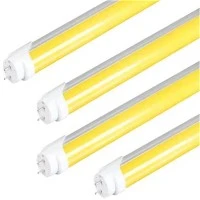
RGBW LED tubes combine brilliant colour capabilities with superior white light for both ornamental and utilitarian uses, marking a substantial development in lighting technology. These tubes are becoming more and more common in smart home systems, stage sets, shop displays, and architectural lighting. It is crucial to break down their main parts and investigate the underlying concepts that allow for their adaptability in order to completely understand how they work. This article explores the technological underpinnings of RGBW LED tubes, offering a thorough rundown of their construction and functionality.
Overview of RGBW LED Tubes
Four different light-emitting diodes (LEDs) are combined in RGBW LED tubes, a form of LED lighting: Red (R), Green (G), Blue (B), and White (W). RGBW tubes include a dedicated white LED, in contrast to conventional RGB LED tubes, which only combine red, green, and blue light to produce white (sometimes producing lower-quality whites or colour errors). In addition to improving energy economy and colour rendering, this innovation adds more natural white light for real-world uses.
These tubes are made for dynamic lighting situations that call for both excellent white illumination and color-changing effects. Task lighting in business areas, accent lighting in museums, and mood lighting in residences are a few examples.
Important RGBW LED Tube Components
We must first look at the fundamental elements of RGBW LED tubes in order to comprehend how they operate:
A. Chips for LEDs
The LED chips in the core of an RGBW LED tube are as follows:
The fundamental colours required to create millions of hues by additive colour mixing are produced by red, green, and blue LEDs.
White LED: A specific type of white diode that is frequently offered in a variety of colour temperatures, such as warm white and cold white. By combining RGB channels, this improves colour accuracy and efficiency without requiring the need to "simulate" white light.
Surface-mounted device (SMD) or chip-on-board (COB) LEDs are used in modern RGBW tubes, and they are grouped throughout the tube's length. The white LED can be either a separate diode designed for pure white output or a blue LED coated with phosphor, which is a typical feature of most white LEDs.
B. LED Controller
One essential part that controls the power to the LEDs is the LED driver. It transforms input AC electricity, such as 120V or 240V, into the low-voltage DC power that the LEDs need. In order to maintain constant brightness and avoid flickering, drivers also stabilise current. To allow for independent control of each diode, drivers for RGBW tubes frequently include several output channels, one for each of the colour channels (R, G, B, and W).
C. Control circuitry and microcontroller
A microcontroller (MCU) controls colour mixing, dimming, and interface with external controllers for RGBW tubes. The MCU modifies the intensity of each LED channel in accordance with the signals it receives from control systems (such as DMX, Bluetooth, and Wi-Fi). Advanced versions use Pulse Width Modulation (PWM) to seamlessly adjust colour transitions and brightness.
D. Optics and Diffuser
The light from separate LEDs is combined into a consistent output using a diffuser lens or coating. This element guarantees smooth colour transitions and reduces colour banding, or uneven colour distribution. The beam angle and light dispersion characteristics of the tube are also influenced by the diffuser material (such as acrylic or polycarbonate).
E. Thermal Management and Heat Sink
When operating, LEDs produce heat, which, if left unchecked, can shorten their lifespan and performance. To disperse heat, RGBW tubes use thermally conductive polymers or aluminium heat sinks. While high-power tubes may incorporate active cooling (such as tiny fans), some designs rely on passive cooling (heat sinks).
F. Connectors and Housing
Internal components are shielded from external elements (such as dust and moisture) and physical harm by the outside housing, which is usually composed of aluminium or polycarbonate. RGBW tubes frequently include shunted or bi-pin bases that work with fluorescent tube fixtures; nevertheless, ballasts may need to be removed or bypassed for retrofitting.
RGBW LED Tube Operating Principles
Two fundamental ideas underpin the operation of RGBW LED tubes: precise electrical control and additive colour mixing. We describe their process in detail below:
A. Mixing Colours Additively
RGBW tubes provide a broad range of colours and white light by using additive colour mixing:
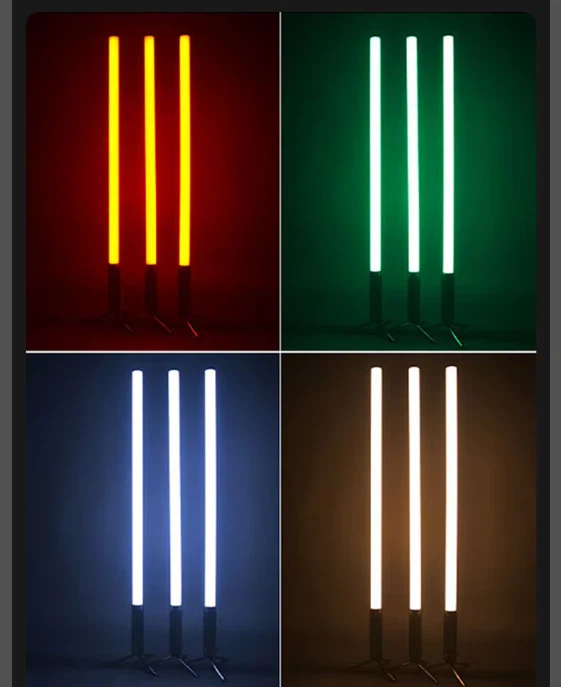
Red, Green, and Blue Channels: The tube can produce millions of colours by varying the intensity of each RGB LED. For instance, mixing all three at equal intensities results in white light (albeit this "simulated white" is sometimes impure), but combining red and green at full strength results in yellow.
Dedicated White Channel: The white LED provides better colour rendering and energy efficiency by either complementing or replacing the RGB-generated white. Users have the option of pure white light, RGB-generated colours, or a hybrid mode (e.g., RGB for colours plus W for brightness).
B. Protocols and Control Systems
External systems that transmit orders to modify colour, brightness, or dynamic effects are used to operate RGBW tubes. Typical procedures consist of:
Large systems may be precisely controlled thanks to the DMX512 standard for stage and architectural lighting.
Commercial buildings use DALI (Digital Addressable Lighting Interface) to manage lighting in a scalable and addressable manner.
Integration with smart home systems, such as Google Home and Alexa, is made possible via wireless protocols like Wi-Fi, Bluetooth, and Zigbee.
By interpreting these signals, the microcontroller modifies the PWM duty cycle for every LED channel, changing the brightness of each one. For example, a command to generate "warm white" may turn on the white LED at 2700K and decrease the RGB channels. Adjusting Colour Temperature and Dimming
RGBW tubes allow for colour temperature adjustment and dimming:
Dimming: This technique reduces apparent brightness without compromising colour quality by lowering the PWM duty cycle, which quickly turns LEDs on and off.
White Tuning: If the tube employs a tunable white diode, the white LED may switch between warm white (2700K) and cool white (6500K). As an alternative, bespoke white tones may be produced by blending the white channel with RGB.
D. Control of Heat
Thermal sensors are used by the driver and microcontroller to continually check the temperature. The device may use thermal foldback to reduce brightness if the tube overheats in order to avoid damage. Effective heat dissipation guarantees peak performance and prolongs the life of LEDs, which are typically certified at 25,000–50,000 hours.
E. Regulation of Power
Even when input voltages fluctuate, the LED driver maintains a steady current flow. For RGBW tubes to maintain consistent brightness across all channels, constant current drivers are recommended.
RGBW's Benefits Over RGB LED Tubes
Better White Light: Dedicated white LEDs create whiter, more natural-looking whites than RGB-generated whites.
Increased Energy Efficiency: When white light is required, using a white diode saves electricity since all three RGB channels don't need to be turned on.
Enhanced Colour Rendering Index (CRI): RGBW tubes are perfect for applications that need precise colour representation (like art galleries) since they attain CRI values above 90.
Flexibility:Without sacrificing quality, users may alternate between bright colours and useful white lights.
RGBW LED Tube Applications
Architectural lighting is the use of dynamic colour transitions to highlight interior designs or building facades.
Retail displays: Using eye-catching colours or movable white tones to increase product exposure.
Entertainment Venues: Adding ambient effects or immersive stage lighting to theatres and bars.
Smart Homes: Using voice commands to synchronise illumination with daily routines, music, or movies.
Issues and Things to Think About
Complex Control Systems: Programming knowledge and appropriate controllers are needed for RGBW tubes.
Higher Cost: Compared to single-color tubes, additional components (such as white LEDs and sophisticated drivers) raise the initial costs.
Compatibility Issues: Rewiring or ballast removal may be necessary when retrofitting fluorescent fixtures.
Final thoughts
RGBW LED tubes combine the practicalities of premium white light with the artistic possibilities of RGB colour mixing to provide a flexible lighting solution. To provide effective, dynamic, and dependable illumination, their essential parts-LED chips, drivers, microcontrollers, and thermal systems-cooperate. RGBW tubes are positioned to become increasingly important in both ornamental and practical applications as lighting technology advances, giving consumers previously unheard-of flexibility over their lighting settings.
Consumers and experts may balance cost, performance, and aesthetic objectives when using RGBW LED tubes into their projects by being aware of their components and working principles.
https://www.benweilight.com/lighting-tube-bulb/rgbw-led-tube/rgbw-led-tube-light.html