Which supermarket lighting design and how to arouse your desire to buy
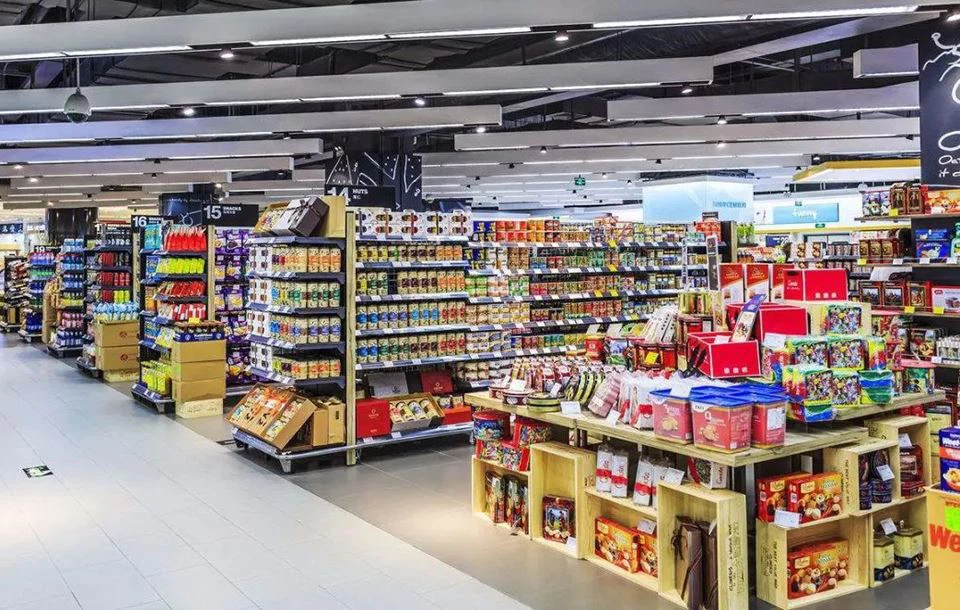
Modern lighting in supermarkets can be said to keep pace with merchandising technology. Because the appropriate lighting can make the product more attractive and increase the desire of customers to buy the product. There are basically three kinds of lights used in supermarkets, namely, basic lights, secondary lights and atmosphere lights.
Basic lighting
This is the basic lighting in the store. On the outside, the illuminating lights used for window lighting, the outer edge lights of the shops that illuminate the sidewalks, and the ceiling lights; on the inside, the basic lights and safety passage instructions.
Secondary lighting
The secondary lighting has functions that can not be accomplished by basic lighting and can perform some special performance of the product. The secondary lighting can use spotlights and floodlights, which are mainly used to enhance the lighting of the window, so that the shelves, containers and commodities are displayed brighter and attract the attention of customers. This type of lighting already has the function of selling goods. The secondary lights mainly include the following two types:
Downlight
It is the light shining down from the ceiling. It can effectively illuminate a certain position above the counter. This position should be selected so as not to stimulate the eyes of customers by the reflected light generated by the glass cabinet or counter surface. The effect of downward lighting can be achieved with metal halide spotlights.
Showcase lighting
It is mainly used to overcome the glare phenomenon caused by the reflected light generated by the glass cabinet and the glass sliding door. The display cabinet light is easy to conceal. In addition to illuminating the goods strongly, it can also illuminate upwards to highlight the outline of the goods. It can also be used to illuminate the upper part of the wall to create a comfortable atmosphere. The function of the secondary light is mainly to help customers judge and compare products, so as to make the best choice of products, and also help the salesperson to quickly and effectively get the products that customers need.
Atmosphere lighting
Atmospheric lighting can eliminate dark shadows and create different effects in special displays. It can not only illuminate goods, but also directly illuminate the walls to create an atmosphere. It can directly illuminate the model person, and even can be used to illuminate the advertising board with the product template. Atmosphere lighting has the most direct relationship with display personnel.
In the shop window, the atmosphere lighting can be added with filters to create various colors of light, resulting in dramatic effects; in the store, the atmosphere lighting can make the display of goods more distinctive, and the atmosphere lighting requires more brightness due to the introduction powerful.
To achieve dramatic effects with atmospheric lighting in the display area, two problems need to be solved, namely, brightness and color. Most of the display lights in the store are irradiated from above or from the side. Because the light shines from the bottom to the top, it is easily blocked by display devices or commodities and forms shadows. As for the side illumination, it is more suitable for furniture display.
If the lighting arrangement is improper, it will produce glare due to reflection, irritate the eyes of customers, and make customers disgusted and leave. Therefore, when arranging the spotlight, the downward illumination angle should not exceed 45°. If there is still glare less than 45°, you can install a light shield or louver at the bulb foot to control the light illumination angle.
The importance of lighting in merchandise displays cannot be overemphasized. The role of lighting is very huge, supermarkets should be more sensitive to this problem, and often improve the lighting techniques, so that the window display and indoor merchandise display are constantly updated.