Why Do Cheap LED Lights Easily Burn Out? Avoid Low-Quality LED Pitfalls
Most people have encountered this problem: affordable LED bulbs, light strips and ceiling lamps that cost only a dozen or tens of dollars work perfectly with high brightness when first installed. However, after several months or half a year of use, they start to flicker, dim partially, or have individual beads stop lighting up-a common industry issue known as "LED burnout".
Many people blame improper use or unstable voltage for the failure. In fact, the short service life and frequent burnout of low-cost LED lights are mostly caused by manufacturers cutting corners on raw materials, craftsmanship and accessories to reduce costs. This article explains the core causes of LED burnout in plain language, focusing on the two hidden culprits-excessive leakage current and low-quality chips-to help you uncover the flaws of cheap LED lights.
1. What Is LED Burnout?
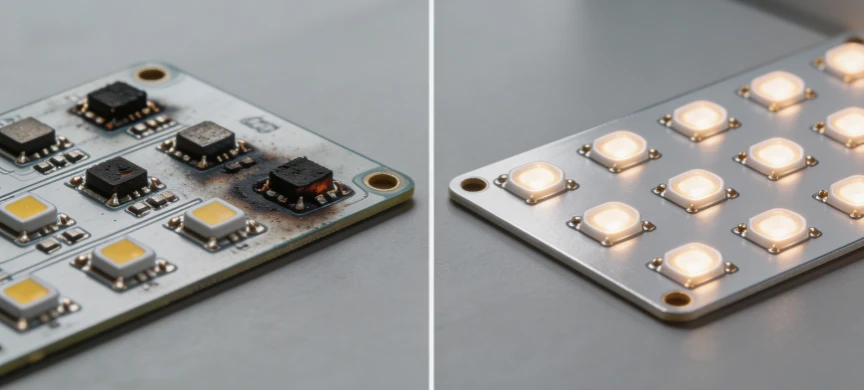
Simply put, LED burnout means the light bead fails completely and stops emitting light, falling into two main categories. The first is gradual burnout: the light slowly dims, flickers frequently, and finally dies out completely. The second is sudden burnout: the lights go black or partially stop working without warning during normal use.
Unlike durable branded LED lights, the burnout of cheap LED lights is not occasional failure, but an inevitable result of inherent hardware defects. Leakage current and chip quality are the two primary root causes.
2. Hidden Killer: Excessive Leakage Current Gradually Wears Out LED Beads
Leakage current sounds technical, but its principle is simple. LEDs are unidirectional conductive light-emitting components. During normal operation, current flows forward steadily to produce light with almost no energy loss.
Leakage current refers to unwanted reverse stray current generated during LED operation. High-quality LED lights have extremely low leakage current that is negligible. In contrast, to cut costs, manufacturers of cheap LED lights skip precision testing procedures and adopt low-precision accessories, resulting in severely excessive leakage current.
This leakage does not burn out the lights immediately, but continuously damages the core PN junction of LED beads. It is like a faucet that cannot be fully closed, causing persistent wear and tear. Over time, the PN junction suffers continuous breakdown and aging, reducing luminous efficiency, causing light decay and flicker, and eventually leading to open circuits and complete light failure.
Worse still, leakage current causes chain damage. Most cheap LED lights adopt a series bead design. The aging of a single bead with excessive leakage current will disrupt the current of the entire string, causing partial or overall light failure-this is why low-cost light strips and panels often burn out in patches. In addition, small manufacturers lack anti-static production processes. Static electricity easily damages LED beads, spiking leakage current and leading to premature failure.
3. Core Flaw: Low-Quality Chips Determine a Short Service Life
As the "heart" of LED lights, chips directly determine the service life and stability of lamps, and are the most common area for cost-cutting. The cost gap between high-end and low-end chips can be more than ten times, creating a huge difference in lamp lifespan.
Premium LED lights adopt brand-new wafers from reputable manufacturers, featuring high purity, stable structure, strong anti-static capability, current shock resistance and high-temperature resistance, ensuring stable lighting for tens of thousands of hours. Cheap LED lights, however, use recycled, defective or leftover chips with inherent flaws from the start.
These low-quality chips contain numerous internal impurities and irregular circuit structures, with latent defects before leaving the factory. Slight current fluctuations or temperature rises during use can easily break or burn out internal circuits. Meanwhile, their unstable forward voltage leads to fluctuating operating current, accelerating self-aging and worsening leakage current, thus creating a vicious cycle.
Furthermore, low-quality chips have poor anti-static performance. Daily static electricity from human contact, household appliances or switch current fluctuations can easily break down their tiny electrode structures, directly disabling the PN junction and causing sudden LED burnout-this is the main reason why many cheap LED lights fail unexpectedly after a short period of use.
4. Additional Cost-Cutting Shortcomings That Accelerate LED Burnout
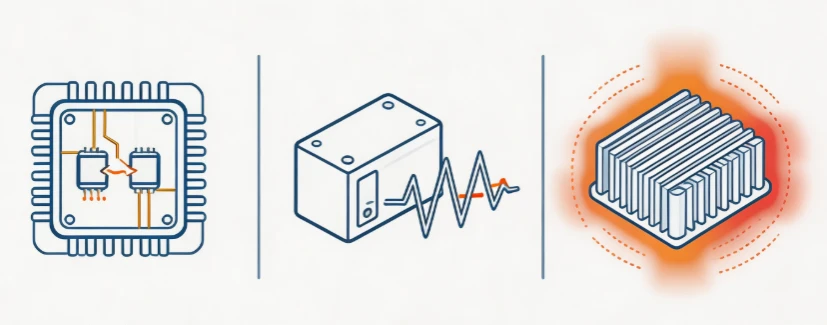
Besides leakage current and inferior chips, more cost-cutting measures further shorten the lifespan of cheap LED lights and exacerbate burnout issues:
4.1 Rough Packaging Craft Leading to Broken Wires
Formal LED lights adopt pure gold wire packaging with high temperature resistance and deformation resistance to adapt to long-term thermal expansion and contraction. Cheap LED lights replace gold wires with inferior alloy wires and adopt inaccurate welding temperature control. Heat generated during operation causes drastic wire expansion and contraction, leading to easy wire breakage and open-circuit burnout. In addition, non-dust-free packaging processes allow dust and impurities to enter the lamp interior, forming conductive points that continuously burn and damage LED beads.
4.2 Inferior Driver Power Causing Unstable Current
The driver power acts as the "voltage stabilizer" of LED lights, stabilizing current and filtering fluctuations. Cheap lamps omit voltage stabilization circuits and use low-temperature inferior capacitors (with temperature resistance reduced from 85°C to 65°C), which are prone to overheating and failure. Unstable current continuously impacts fragile low-quality beads, amplifying the defects of leakage current and chips and greatly accelerating burnout.
4.3 Poor Heat Dissipation Design Causing High-Temperature Damage
LED lighting generates heat, and un dissipated heat will burn chips and aggravate leakage current. Most cheap LED lights use thin iron shells, inferior plastic heat dissipation structures, or even no dedicated heat dissipation design, leading to accumulated heat. Long-term high temperatures double the aging rate of LED beads, causing lamps that should last for years to age and fail within just a few months.
5. Purchase Guide: How to Choose LED Lights and Avoid Burnout
It is clear thatthe low price of cheap LED lights is achieved by sacrificing service life and stability. Though low-cost lamps seem cost-effective, frequent replacement and maintenance costs end up being higher. Consumers only need to follow 3 simple rules to avoid pitfalls:
1. Avoid ultra-low-cost no-brand lights: LED lights priced far below the market price definitely have cut corners on chips, craftsmanship and accessories. Prioritize regular branded products with quality inspection certification.
2. Do not blindly pursue ultra-high brightness: To attract customers, cheap lights boost brightness by forcibly increasing current. The seemingly brighter effect comes at the cost of bead lifespan, causing rapid burnout.
3. Focus on heat dissipation and driver quality: Choose LED lights with aluminum heat dissipation bases and formal constant-current drivers. Stable current and reliable heat dissipation greatly reduce leakage current and bead aging risks.
Conclusion
LED burnout is never bad luck, but a quality problem. Excessive leakage current and inferior chips are the fundamental causes, while rough craftsmanship and shoddy accessories act as accelerating factors. The saying "cheap goods are never good" is perfectly reflected in LED lamps.
Instead of frequently replacing faulty cheap lights, it is more cost-effective and hassle-free to choose high-quality LED lamps once and for all. They deliver stable, eye-friendly lighting, eliminate frequent maintenance and replacement troubles, and save more money in the long run.