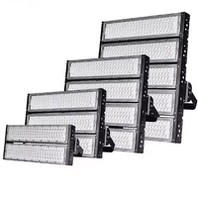
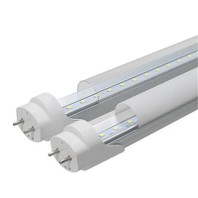
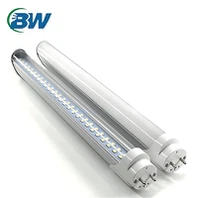
Stadiums and venues for athletics can benefit greatly from LED stadium lighting. Compared to conventional metal halide and HID lighting, LED stadium lights have a number of benefits. Due to their lower power consumption and 4-5 times longer lifespan than conventional lights, LEDs will undoubtedly save you money on energy and upkeep expenses. In addition, LEDs operate considerably colder than HID and metal halide lamps, which eases the burden on air conditioning systems. The fact that LED arena lights do not buzz or flash like conventional lighting systems is another fantastic benefit.
Traditional lamps, on the other hand, work according to a distinct theory.
When metal and halogen components mix, metal halides are the byproduct. They consist of substances like uranium hexafluoride and sodium chloride (salt) (the fuel used in nuclear energy reactors). By running an electric current through a mixture of mercury and metal halide vapor, metal halide lights emit light. They operate very identically to other gas-discharge lamps (such as mercury vapor lamps), with the main distinction being the gas's makeup.
What benefits do LED stadium lights have over conventional illumination, then?
1. Lifetime of LED Stadium Lights
The extended service life of LED stadium lights over conventional lighting options is unquestionably their greatest benefit. The typical lifespan of LED arena lights is between 50,000 and 100,000 working hours. That is 2-4 times longer than the majority of sodium vapor and metal halide lamps. It lasts 40 times longer than the typical light lamp.
Two significant benefits result from less regular replacement: reduced personnel expenses for maintenance and lower parts prices (because the bulbs simply do not last for a long time).
2. Electricity Savings of LED Stadium Lights
The energy usage of an LED stadium light is less than 10% to 20% of the expense of operating a halogen bulb for the same period of time. This translates into significant energy cost savings.
3. Protection Increased with LED Field Lights
Perhaps the most frequently disregarded benefit of LED arena flood lights is safety. When it comes to illumination, heat release is the biggest risk. When compared to conventional bulbs like metal halide, which use more than 60% of the total energy used to operate them, LEDs generate almost no forward heat. Thus, only 40 percent of the energy used to operate metal halide lights is truly used to produce light (which also makes them extremely inefficient compared to LEDs). Additionally, LED arena lights can function well on low-voltage electrical networks because they use less energy. In the event of a mishap, these are typically much secure.
4. Excellent Color Reproduction Index (CRI) for LED Stadium Lights
LED-Stadium-Lighting-Effect
In comparison to a perfect light source, the CRI measures how well a light can show an object's true color (natural light). A high CRI is typically a preferred quality (although of course, it depends on the required application). When it comes to CRI, LED stadium lights typically have very high (excellent) scores.
Perhaps the easiest way to understand CRI is to compare conventional lighting options like sodium vapor lamps directly to LED outdoor arena lighting, which has a high CRI (which generally have poor CRI ratings and are in some cases almost monochromatic).
5.Brightness
Most halogen lights are much less brilliant than LEDs. In reality, you can attain the same level of brightness with only 7 LED bulbs as you would with 20 halogen lamps in a normal downlight. At the same power usage, the lumen levels of metal halide and LED can differ significantly. For instance, a 400 watt LED arena flood light emits light that is roughly equivalent to that of a 1000 watt metal halide.
6.Lower Temperature
Since LED stadium flood lights use energy more effectively than HID lamps and turn more of it to light than either of the other two, they produce significantly less heat. When used in confined or recessed light sources, this is a huge benefit. It is also a huge advantage when there is a lot of lighting being used; in the past, the heat from the lighting would have impacted the temperature in the room or indoor exercise, increasing the demand on the air conditioner. Since LED stadium floodlights produce less heat, air conditioner usage is decreased in these conditions.
Compared to Metal Halide lights, LED Stadium lights produce less heat. Metal halide heat generation can be quite unexpected. One of the main issues with metal halide illumination is this. It considerably increases the room's temperature. There is a significant danger of burning due to the higher heat generated by these metal halide lights.
7. LED Stadium Lights are Good for the Atmosphere
The environmental problems associated with conventional illumination options like mercury vapor lights are not present in LED stadium lights. These conventional methods require special treatment at the end of the product's usable life because they contain mercury inside the lightbulb. These factors are not relevant when using LED arena floodlights.
8. No Ultraviolet Light
Concerns have been expressed about how the electrical fields created by CFLs' UV rays may impact the interior atmosphere. Those who are subjected to them for an extended length of time may experience health issues. In this regard, LED stadium lights are neutral, providing aesthetically pleasing illumination for interior areas.
9. Corresponding Color Warmth (CCT)
There is a large variety of correlated color temperature (CCT) numbers for LED arena lights. They come with a variety of choices, including a "warm," yellowish radiance, a "cool," white light, and others.
10. Instant on/off switches are provided by LED stadium lights.
Instantaneous lighting control is provided by LED stadium lights. As with metal halide lights, there is no preheating phase. Furthermore, there is no gadget degradation as a consequence of frequent swapping.
11. The capacity to dim LED stadium lights is excellent.
The operating range of LED stadium lights ranges from zero to one hundred percent of their maximum wattage. It should be noted that in order to dim, they do need components unique to LED technology (meaning you cannot use the dimming equipment for any other traditional lighting technology). The fact that LEDs become more effective as the power is decreased is a benefit of using them at less than maximum power. Additionally, the lifetime of the illumination itself is extended as a result. With technologies like metal halides, which become less effective at lower power levels and frequently cannot be dimmed at all, both of those benefits are missing.
12. Compared to metal halide, LED stadium lights are less expensive to buy in the long run.
The original expense of buying the unit prevents extensive use of metal halide lighting. Unfortunately, the expense of light bulbs, maintenance, and energy will make this form of lighting significantly more expensive than LED lights for industrial and business lighting.

Benwei stadium flood light
【Power】500W 1000W 1500W
【Input Voltage】AC85-265V,400V
【Lighting Effect】150lm/W
【CRI】Ra≥70
【IP Rate】IP66
【Beam Angle】30°/60°/90°optional
【CCT】2700-6500K
【PF】PF≥0.95
【Surge Protection】≥4KV