LED Lamp Dimming: What You Need to Know
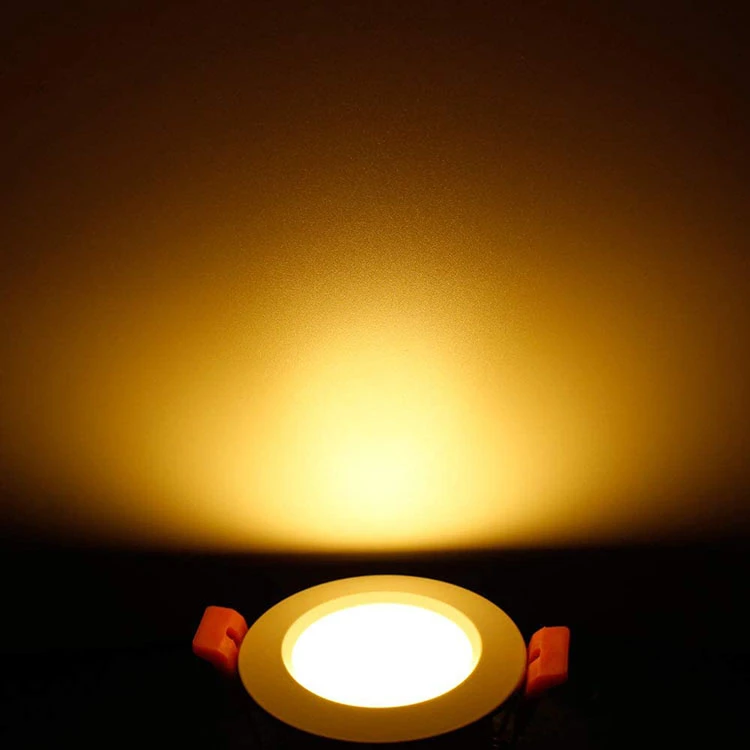
Your illumination cost can be significantly reduced by switching to LED lights from conventional bulbs. But if your house has dimmers, you might be asking if LED lights can be dimmed.
The simple response is "yes" It is true that LED lights can be dimmed. There are a few crucial factors, though, that you should think about.
Make certain to purchase dimmable LED lights.
The bulk of LED lights today can be dimmed, but some cannot. As a result, choose adjustable LED lights when shopping for LED bulbs. This information is probably contained in the product summary window.
What occurs then if an LED light source that cannot be dimmed is used on a dimmer?
Your LED light will, at best, not fade correctly. In the worst situation, the light might be harmed.
The issue is that adjustable LED lights contain unique technology. They are able to appropriately react to shifts in the levels due to this. Non-dimmable LED bulbs, on the other hand, have no such additional circuitry and can only be fully ON or OFF. In essence, this means that if they are exposed to pulsating or low currents, their circuits won't be capable and could be harmed.
The long and the short of it is that non-dimmable LED lights shouldn't be used with a dimmer.
Make sure your existing dimmers are compatible with the new LED bulbs.
How can I immediately determine if my previous dimmers will function flawlessly with new LED bulbs?
We frequently get this inquiry. Sadly, merely glancing at your existing switch won't inform you whether it will function with new Lights. Dimmer switches that are common and everyday occasionally function well with Lights and occasionally don't. You must try your previous dimmers in order to determine if they are functional with LEDs.
Some kinds of dimmers don't work well with LEDs because of their minimal power requirements. You may observe the following if the dimmer is not completely functional with LEDs:
LED light bulbs have a smaller dimmer range (typically 60% to 80% range as opposed to 100% with conventional lights), so they might not fully turn off at the lowest dull level. Usually, this happens because the regulator thinks the LED light is off because it uses such a low power.
The ideal plan of action would be to purchase an LED dimmer if you encounter either or both of these problems.
The two most typical kinds of dimmers used in homes are:
Leading edge dimmers are typically not compatible with new LED light bulbs because they were made to operate with conventional lights.
Dimmers with a trailing edge are designed especially for LED lights. Therefore, we advise you to purchase a trailing edge dimmer if your previous dimmer is not performing well with LEDs.

Their variety of wattages is the primary distinction between these two dimmers. Incandescent lights use a lot of energy, as you may be aware (that is, they are high wattage). Only high-wattage applications are compatible with leading edge dimmers. But LED lights use a tiny amount of electricity (that is, they are low wattage). Leading edge dimmers therefore struggle to understand or manage their circuits.
However, trailing edge dimmers are unaffected by lesser power ranges, and as a result, they are compatible with LED lights.