365nm vs. 395nm: Why a 30nm Difference Matters for Aflatoxin Detection in Figs?
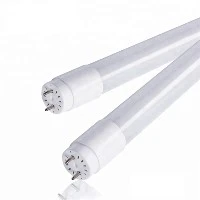
In the field of food safety screening and agricultural processing, LED Ultraviolet (UV) tubes have become indispensable tools for detecting mycotoxins. When it comes to detecting Aflatoxin-a common contaminant in dried fruits like figs-the industry frequently debates two primary wavelengths for 120cm DC24V fixtures: 365nm and 395nm.
A seemingly minor difference in wavelength can be the deciding factor between a successful catch and a dangerous oversight. This article provides a technical analysis of why 365nm is the gold standard for this application.
1. The Detection Principle: The "Fluorescent Fingerprint"
Aflatoxins (specifically B1, B2, G1, and G2) possess natural photo-luminescent properties. When exposed to specific UV energy, the toxin molecules undergo an energy level transition, emitting a visible glow.
- 365nm (UVA1): Located in the core long-wave UV spectrum, its photon energy perfectly matches the excitation requirements of aflatoxins, producing a bright blue or green fluorescence.
- 395nm (Near-UV): Positioned at the edge of the visible spectrum, its energy is lower, resulting in significantly lower excitation efficiency for toxin molecules.
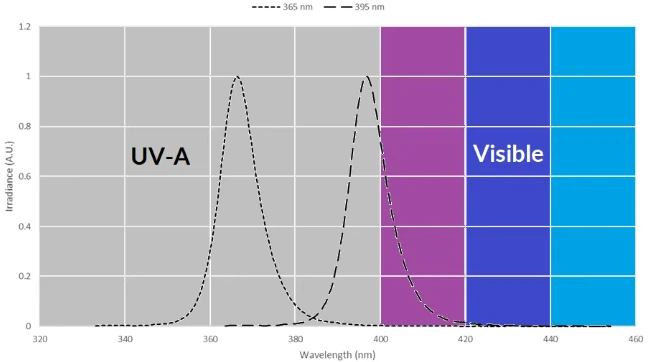
2. Comparison Table: 365nm vs. 395nm for 120cm DC24V Tubes
| Technical Metric | 365nm (Professional Grade) | 395nm (General Grade) |
| Excitation Efficiency | Extremely High: Perfectly covers the toxin excitation spectrum. | Extremely Low: Struggles to trigger fluorescence in trace toxins. |
| Visible Light Interference | Minimal: Clean background with high fluorescence contrast. | Severe: Intense purple light masks weak fluorescent signals. |
| Fig Screening Clarity | Sharp: Clearly identifies toxin "hotspots" on or inside the fruit. | Blurred: Purple glare causes eye fatigue and missed detections. |
| Industry Compliance | Aligns with food safety standards (e.g., GB/T 18979). | Suitable for decorative lighting, not for food safety. |
| Cost to Accuracy Ratio | High precision justifies the investment. | Low cost, but high risk of false negatives. |
3. Why 365nm is Non-Negotiable for Fig Inspection
Figs are highly susceptible to Aspergillus contamination during drying and storage. In real-world inspection scenarios, 365nm offers irreplaceable advantages:
A. Superior Fluorescent Contrast
Figs have a naturally deep-colored skin. A 395nm tube emits a significant amount of visible purple light, which reflects off the fruit surface and creates visual noise. In contrast, 365nm is essentially "invisible" to the human eye. In a darkroom environment, it makes contaminated areas pop like "stars in the night sky," making even minute mold spots unmistakable.
B. Industrial System Integration (DC24V)
Utilizing the 120cm DC24V specification allows for large-area coverage (ideal for conveyor belt screening) while maintaining low-voltage safety. 365nm LEDs, when paired with high-quality constant current drivers, provide the spectral stability required for reliable qualitative analysis.
C. Mitigating "False Negative" Risks
Experiments show that low concentrations of aflatoxin show almost no reaction under 395nm. Using 395nm for food quality grading introduces a massive safety risk and the potential for significant trade losses due to contaminated shipments.
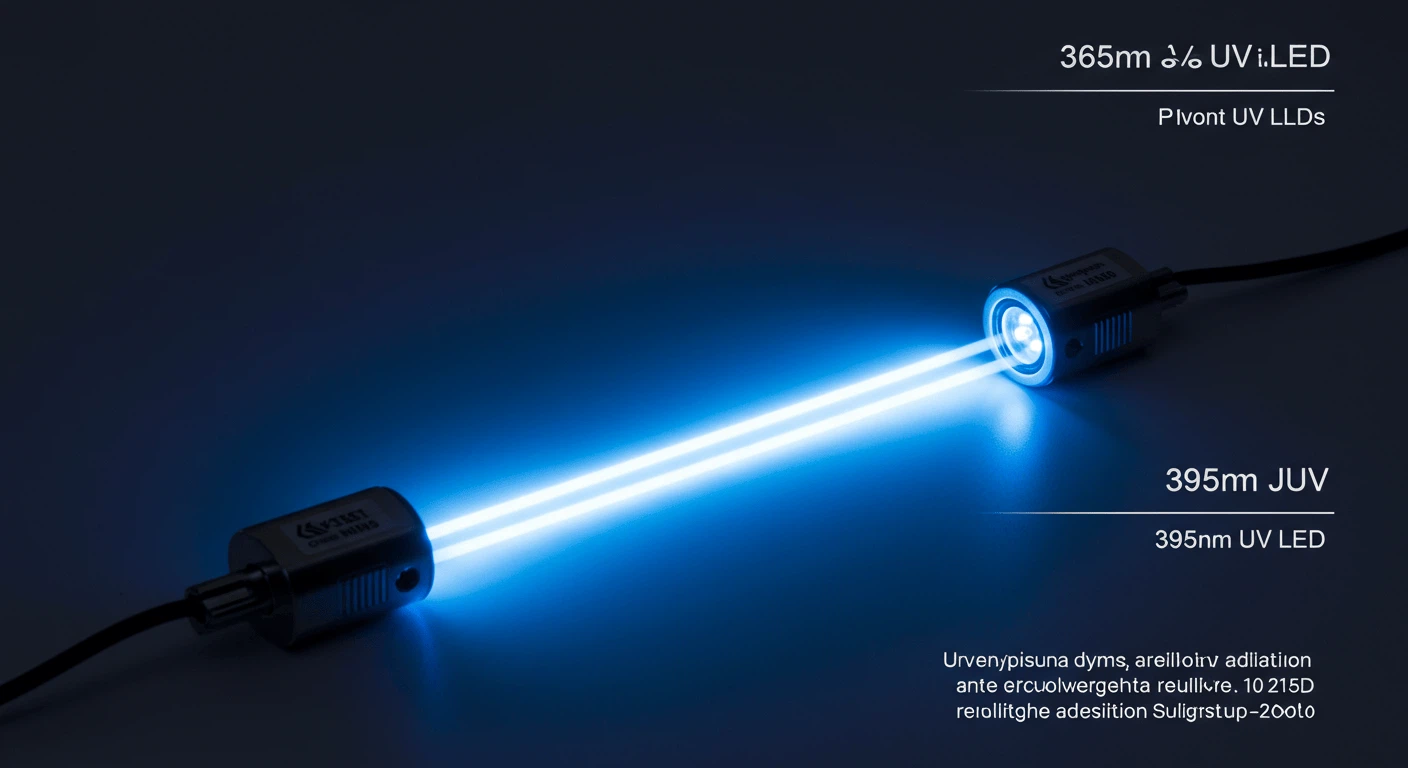
4. Professional Procurement Recommendations
- Verify Wavelength: Always confirm that the LED chip's peak wavelength is within the $365 \pm 5nm$ range.
- Thermal Management: For a 120cm high-power UV tube, heat dissipation is critical. Opt for tubes with thick aluminum PCBs to prevent wavelength shifting or rapid light decay caused by overheating.
- Operational Environment: UV inspection must be performed in a darkened area or a light-shielded box to maximize the sensitivity of the 365nm wavelength.
For the detection of aflatoxin in figs, 365nm is the only professional choice. While 395nm may be more cost-effective, it fails to meet the rigorous optical standards required for food safety. For LED lighting providers aiming for high-quality, high-standard solutions, deploying precision 365nm UV systems is the first line of defense in food security.